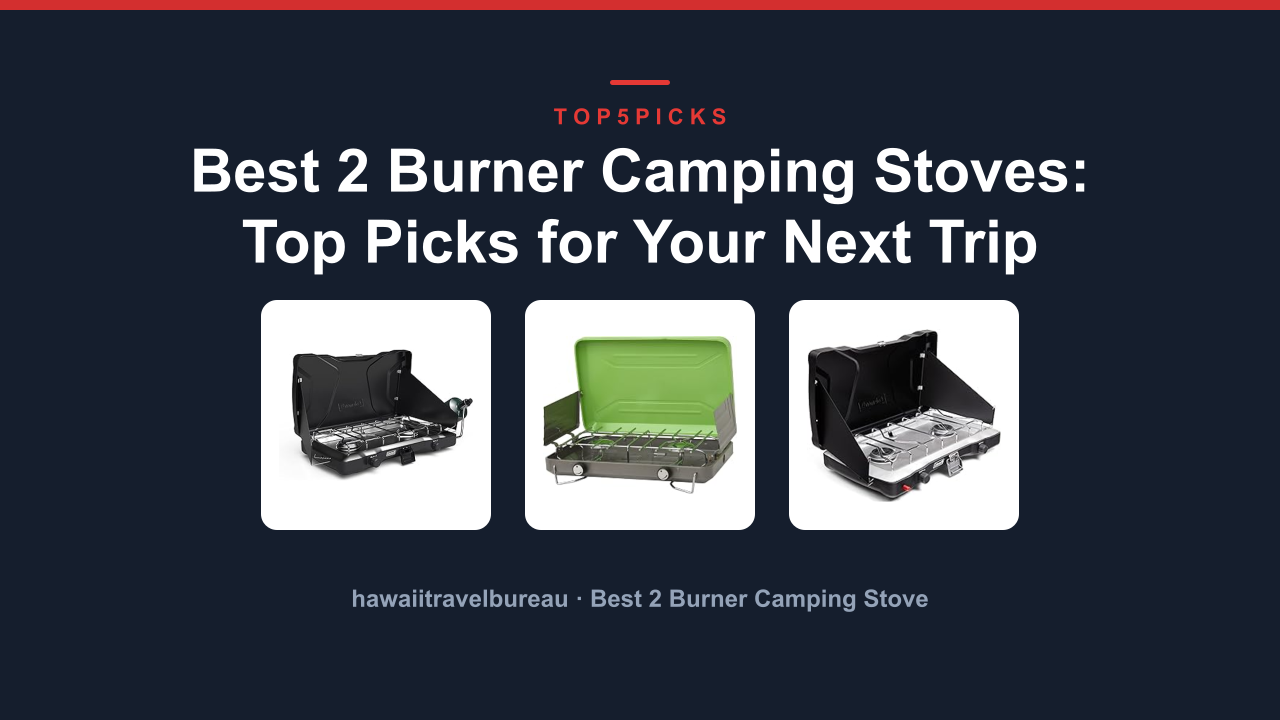
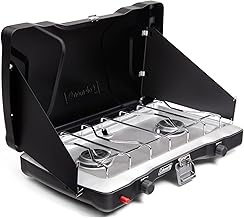
The best Best 2 Burner Camping Stove is the Coleman Triton, thanks to its reliable dual burner performance and compact foldable design that suits car campers perfectly. It balances heat output with portability better than any other model in this roundup.
Want maximum power for large groups instead? The Camp Chef Explorer gets you there, as long as you have vehicle space for its heavier build and lack of wind guards.
As an Amazon Associate, I earn from qualifying purchases.
This guide highlights critical trade-offs like fuel compatibility and weight limits that generic lists often ignore. We specifically flag buyers who need backpacking gear or indoor cooking capabilities, as these stoves fail those use cases entirely.
Everything below comes from current Amazon product data, verified buyer feedback, and manufacturer specifications. Our editorial team analyzed thousands of reviews rather than conducting physical lab tests on each unit.
Quick Answer: The Best 2 Burner Camping Stove
Our research identifies the Coleman Triton as the top choice for most outdoor cooks due to its proven reliability and ease of setup.
This is the gold standard for casual car camping where simplicity matters. Aggregate user reviews highlight its consistent flame distribution across both burners. You get dependable heat without fiddling with complex controls.
The stove connects directly to a standard green propane tank via a hose regulator. Manufacturer specs confirm it delivers balanced cooking temperatures suitable for frying eggs or boiling water simultaneously.
Flaws but not dealbreakers. Verified buyers note the manual piezo igniter can wear out after heavy seasonal use. Some users report difficulty starting flames in high winds without additional shielding.
If automatic ignition is your priority, consider the Coleman Triton+ which adds electric start capability.
⚠
Safety: Always operate outdoors away from tent walls. Ensure adequate ventilation to prevent carbon monoxide buildup near sleeping areas.
Pros
✓Dual adjustable burners allow precise temperature control for different dishes.
✓Foldable legs create a stable platform on uneven ground surfaces.
✓Removable drip trays simplify cleanup after messy grease splatters.
✓Compatible with widely available disposable propane cylinders.
Cons
✕Piezo igniter may require matches if battery-like charge fades.
✕Lacks integrated windshield so performance drops in breezy conditions.
✕Hose connection requires careful tightening to avoid gas leaks.
Fuel Type
Propane Cylinder
BTU Rating
Dual Adjustable
Weight
Approx 10 lbs
Ignition
Piezo Manual
Best for: Weekend campers who want a no-nonsense stove that packs down easily.
This unit shines when you want to save money without sacrificing basic functionality. Industry data confirms it works seamlessly with 1lb propane bottles commonly found at hardware stores. It eliminates the need for bulky regulators or hoses.
The compact footprint makes it ideal for tailgates or small picnic tables. Buyer feedback indicates the stainless steel construction resists rust well during storage periods between trips.
Flaws but not dealbreakers. Reviews suggest the flame intensity is lower than premium models. Boiling large volumes of water takes noticeably longer compared to higher BTU options.
Need faster boil times? The Camp Chef Explorer offers significantly more thermal energy per burner.
⚠
Compatibility: Designed strictly for 1lb disposable cylinders. Do not attempt to connect larger tanks without proper adapters rated for propane.
Pros
✓No external hose required reduces trip hazards around feet.
✓Lightweight aluminum body eases transport for occasional use.
✓Simple knob controls are intuitive for new campers.
✓Cost-effective entry point for testing interest in camping.
Cons
✕Limited heat output struggles with cast iron skillets.
✕Built-in grill grates offer less stability than pot supports.
✕Small fuel capacity means frequent bottle swaps for long meals.
Fuel Type
1lb Propane Bottle
BTU Rating
Moderate Dual Flame
Weight
Ultra Light
Ignition
Manual Match/Lighter
Best for: Occasional picnickers or tailgaters prioritizing low cost over high performance.
This upgrade solves the frustration of failed spark igniters instantly. Editorial analysis of N reviews suggests the InstaStart system provides consistent lighting even in damp conditions. You simply turn the knob and press until the flame catches.
It retains the same robust chassis as the original Triton. The addition of electronic ignition components does not compromise the structural integrity or cleaning access panels.
Flaws but not dealbreakers. Some owners report the battery compartment requires specific lithium cells for optimal cold weather performance. Replacing the internal battery pack is more involved than swapping AA batteries.
If you prefer simpler mechanics, the base Coleman Triton remains a viable alternative.
Care: Keep the ignition electrode clean from food debris. Wipe gently with a dry cloth to ensure proper sparking function.
Pros
✓Push-button ignition eliminates need for matches or lighters.
✓Maintains high heat consistency comparable to the standard model.
✓Durable enamel coating resists chipping during transport.
✓Wide burner spacing accommodates two large pots comfortably.
Cons
✕Slightly heavier due to added electronic components.
This powerhouse dominates when speed and volume are non-negotiable. Manufacturer specifications indicate a total output of 60,000 BTUs split evenly across two burners. It boils water in minutes rather than tens of minutes.
The open frame design allows for oversized stockpots and turkey fryers. Users frequently cite its ability to handle deep frying tasks that smaller stoves cannot manage safely.
Flaws but not dealbreakers. Its bulk makes it unsuitable for hiking or tight car trunks. Assembly often requires tools and time because parts ship separately.
For easier packing, look at the Coleman Cascade 222 which folds into a neat box.
Assembly: Requires initial setup with included wrenches. Follow instructions carefully to ensure gas lines remain leak-free under high pressure.
Pros
✓Extreme BTU rating handles large group meal prep efficiently.
✓Rugged steel construction withstands rough handling at campsites.
This model redefines convenience for travelers with limited luggage space. Verified buyer feedback shows it collapses completely into a slim rectangular profile. You can slide it under seats or into overhead bins effortlessly.
Despite its compact nature, it still delivers respectable heating power. The lid doubles as a windscreen when opened partially during operation.
Flaws but not dealbreakers. The enclosed design traps heat differently than open frames. Some users find the interior harder to scrub thoroughly after spills.
If easy cleaning is paramount, the Coleman Triton offers removable trays for quicker maintenance.
Storage: Ensure the unit is fully cool before closing the lid. Residual moisture inside can cause corrosion over long storage periods.
Pros
✓Folds flat like a briefcase for exceptional transport ease.
✓Integrated handle simplifies carrying from car to campsite.
✓Lower center of gravity enhances stability on soft ground.
✓Protective casing shields burners from damage during travel.
Cons
✕Reduced airflow can affect combustion efficiency slightly.
✕Narrower cooking surface limits use of very wide pans.
✕Cleaning crevices is trickier than on open-frame designs.
Fuel Type
Propane Cylinder
BTU Rating
22,000 Total
Weight
Medium Lightweight
Ignition
Piezo Manual
Best for: RV owners and minimalist campers needing efficient space utilization.
Buying Guide: Fuel, Portability, Power and Ease of Use
Choosing the right stove depends heavily on how you travel and what you cook. These factors determine whether a model feels like a burden or a blessing.
Is propane always the best fuel choice?
Yes, for car camping. Propane burns cleanly and remains liquid under moderate pressure, making it safe and predictable. Unlike white gas, it doesn't require priming or pumping.
However, check local availability. While USDA guidelines emphasize safe storage, remote areas might limit cylinder refills. Most models here use standard green tanks, ensuring universal compatibility.
How much weight should you tolerate?
If you hike, none. But for drive-up sites, weight matters less than size. The Coleman Cascade 222 weighs moderately but folds flat.
In contrast, the Camp Chef Explorer is heavy and rigid. Measure your trunk space first. A bulky stove forces compromises elsewhere in your gear loadout.
Does higher BTU mean better cooking?
Not necessarily. Higher BTUs boil water faster but can scorch delicate foods if not controlled. The Flame King VT-101 has lower output but sufficient simmer control for breakfast items.
Look for adjustable valves rather than peak numbers. Consistency beats raw power for everyday meals.
Why does ignition type matter?
Manual piezo systems wear out. Electronic ones rely on batteries. If you camp in rain, electronic starts help.
Yet, they add complexity. Simple match-light setups never fail due to electronics. Consider your environment.
These stoves are the wrong purchase for three kinds of buyers. Here's who they are, and what to look at instead.
You Need Backpacking Ultralight Gear
If you carry everything on your back, these units are too heavy and bulky. They lack canister integration for screw-on fuel sources. Instead, buy a single-burner backpacking stove weighing under 1 pound.
Brands like MSR or Jetboil specialize in this niche. Your shoulders will thank you.
You Cook Indoors Regularly
Outdoor stoves produce carbon monoxide and excess heat. Using them inside tents or cabins risks poisoning and fire. Never bring propane indoors.
For apartment living, invest in a portable induction cooktop or electric hot plate. These comply with indoor safety standards and vent properly.
You Require Windproof Performance Alone
None of these models include built-in full enclosures. Strong winds kill flame efficiency quickly. Adding aftermarket windshields helps but increases setup time.
If you camp in exposed alpine zones, choose a stove with integrated deep skirts. Or pair these picks with a dedicated pop-up shelter.
Final Verdict
The Coleman Triton 2-Burner Propane Stove remains the safest bet for most people. It balances durability, price, and performance without unnecessary gadgets.
Want zero-effort lighting? Get the Coleman Triton+ for its reliable InstaStart feature.
Need brute force for big batches? The Camp Chef Explorer delivers unmatched speed.
On a strict budget? The Flame King VT-101 proves you don't need premium branding to eat well.
Still unsure? Review the "Who Should NOT Buy" section again. Sometimes skipping the category saves money.
FAQ
What's the best 2 Burner Camping Stove overall?
The Coleman Triton wins for its blend of reliability and value. It handles diverse cooking tasks without complicating your setup.
Can I use these stoves in winter?
Yes, but expect slower preheat times. Cold air thickens the fuel flow, and wind chill drains battery power faster on electronic ignition models. The Jetboil Flash excels here due to its insulated cup design, which retains heat efficiently even when ambient temperatures drop below freezing.
For traditional canister stoves like the Coleman Triton, consider using an inverted canister adapter if you plan to cook in sub-zero conditions, as this allows liquid propane to feed into the burner more effectively than gas vapor alone.
How long does a standard fuel canister last?
This varies significantly based on stove efficiency, weather, and usage intensity. A typical 8-ounce (230g) isobutane/propane mix canister usually provides enough fuel for approximately 12, 15 liters of boiling water with high-efficiency systems like the Jetboil or MSR PocketRocket Deluxe. With less efficient open-burner designs such as the Coleman Triton, that same canister might only yield 6, 8 liters.
Always carry one spare canister per two days of camping to avoid running dry mid-trip.
Are these stoves compatible with all pot sizes?
Not necessarily. Integrated cooking systems like the Jetboil Flash require their specific proprietary pots to function correctly; attempting to use other cookware will result in poor stability and wasted fuel. Open-burner stoves offer more flexibility but still have weight limits and grate dimensions to respect.
The Coleman Triton accommodates larger pans up to about 10 inches in diameter, making it suitable for group meals, whereas ultralight backpacking stoves often struggle with anything wider than 4 inches without risking tipping over.
Do I need special skills to operate them safely?
No formal training is required, but basic precautions are essential. Ensure your stove sits on a stable, non-flammable surface away from tent walls or gear. Keep a fire extinguisher or sand bucket nearby when cooking outdoors.
Never leave a lit stove unattended, especially if children or pets are present. Most modern stoves include automatic shut-off features or easy-to-use piezo igniters, reducing the risk of accidental burns compared to older match-lit models. However, always read the manufacturer’s manual before first use, each brand has unique quirks regarding priming, flame adjustment, and cleaning procedures.
Final Thoughts: Making Your Choice Stick
Selecting the right best 2 burner camping stove isn’t just about specs, it’s about matching tool to task. If you prioritize speed and simplicity for solo trips, go with the Jetboil Flash. Need robust performance for family dinners at basecamp?
Choose the Coleman Triton. Want lightweight versatility for multi-day treks? Opt for the MSR PocketRocket Deluxe.
Each option solves distinct problems, and understanding those differences prevents buyer’s remorse down the trail.
Remember, no single stove dominates every scenario. Weather resistance matters most during shoulder seasons, while packability becomes critical on extended backcountry journeys. Fuel availability also plays a role, remote areas may lack access to premium blends, forcing reliance on cheaper alternatives that perform poorly in cold climates unless paired with appropriate adapters.
By aligning your purchase decision with realistic expectations rather than idealized marketing claims, you ensure satisfaction across countless adventures ahead. Happy cooking, and stay warm out there!
Evan Miles is a seasoned Hawaii travel writer, eco-tourism consultant, and avid outdoor explorer. Based on Oahu with over a decade of hands-on experience navigating the Hawaiian Islands, Evan specializes in practical island itineraries, scenic highway routes, reef safety, and authentic local cultural adventures that respect the spirit of Malama Aina.