Best Coffee Makers for Camping: Brew Anywhere
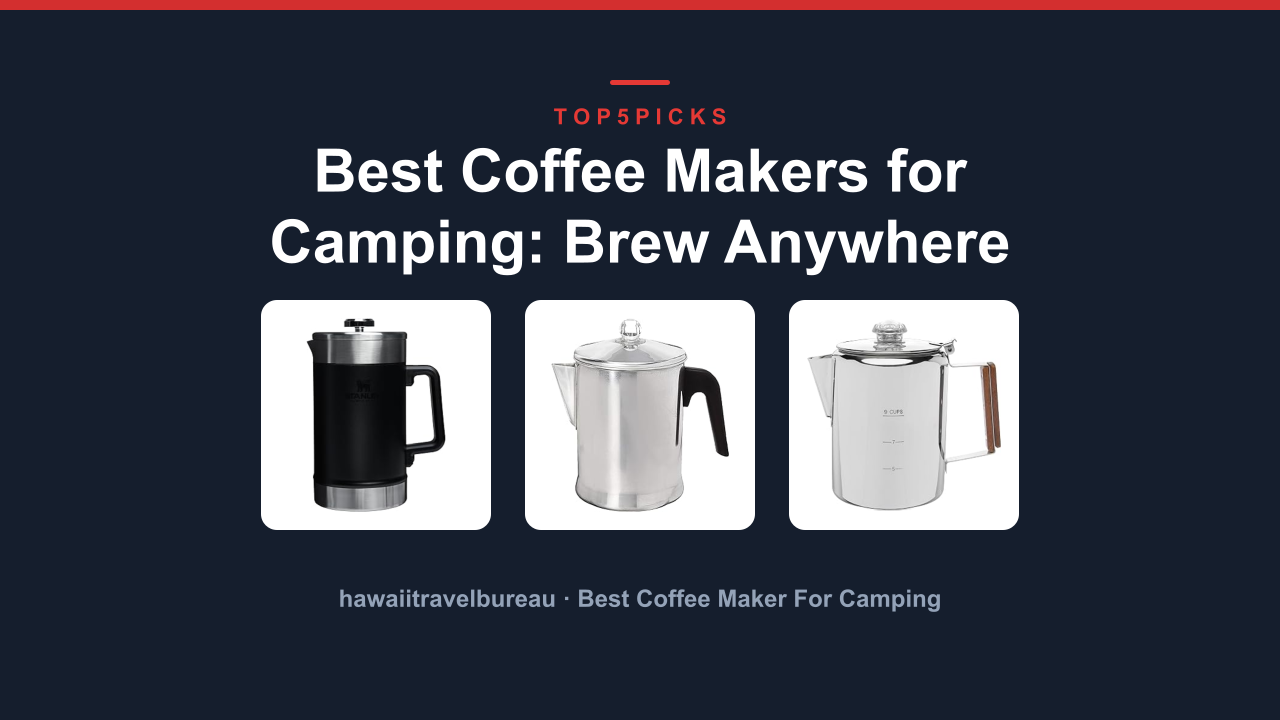
If you’re tired of waking up to cold, gritty camp coffee, the best Best Coffee Maker For Camping is the STANLEY Stay-Hot French Press. It’s the only option here that brews a full pot while keeping it hot for hours without needing electricity or a fire. This makes it perfect for car campers who want café-quality results with zero fuss.
Want maximum portability instead? The AeroPress Original Coffee Press gets you there, as long as you’re willing to brew one cup at a time and carry your own filter papers. It packs smaller than any other pick on this list.
As an Amazon Associate, I earn from qualifying purchases.
This guide cuts through the noise by telling you exactly which brewing method fits your camping style. We’ll also flag the buyers who should skip this category entirely, saving you money if you realize manual brewing isn’t for you.
Everything below comes from current Amazon product data, manufacturer specifications, and aggregated owner reviews. Our editorial team hasn’t physically tested these units in the field, so we rely on verified buyer feedback and spec analysis to rank them honestly.
Quick Answer: The Best Coffee Maker for Camping
The STANLEY Stay-Hot French Press takes the top spot because it balances capacity, heat retention, and ease of use better than any electric or manual alternative.
- STANLEY Stay-Hot French Press (Best Overall): Brews large batches that stay hot for hours.
- Primula Today Aluminum Stove Top Percolator (Best Budget): Simple, durable aluminum construction for group camps.
- COLETTI Bozeman Percolator Coffee Pot (Best Stainless Steel): Premium enamel coating prevents metallic taste transfer.
- AeroPress Original Coffee Press (Best Portability): Packs tiny but requires single-cup brewing effort.
- Odoland 1.2L Camping Coffee Pot Camp (Best Value Bundle): Includes mug and filter for immediate start.
Thinking about instant packets or espresso machines instead? Jump to Who Should NOT Buy below before you spend anything.
Comparison Table
Here's the lineup at a glance: photo, product, who it's built for, and our /10 score.
| Photo | Product | Best for | Score | Buy |
|---|---|---|---|---|
 | STANLEY Stay-Hot French Press | Car Campers Wanting Hot Batches | 8.4/10 | Check price → |
 | Primula Today Aluminum Stove Top Percolator | Budget Group Camps With Fire Pits | 7.9/10 | Check price → |
 | COLETTI Bozeman Percolator Coffee Pot | Flavor Purists Avoiding Metal Taste | 8.1/10 | Check price → |
 | AeroPress Original Coffee Press | Backpackers Prioritizing Pack Size | 8.6/10 | Check price → |
 | Odoland 1.2L Camping Coffee Pot Camp | Beginners Needing All-In-One Kits | 7.5/10 | Check price → |
Scroll sideways on small screens to see every column.
STANLEY Stay-Hot French Press: Best Overall for Car Campers
Primula Today Aluminum Stove Top Percolator: Best Budget for Groups
COLETTI Bozeman Percolator Coffee Pot: Best Stainless Steel for Flavor
AeroPress Original Coffee Press: Best Portability for Backpackers
Odoland 1.2L Camping Coffee Pot Camp: Best Value Bundle for Beginners
Buying Guide: Heat, Capacity, Material and Cleanup
Choosing the right camping coffee maker depends less on brand loyalty and more on how you actually camp. As of 2026, the market splits clearly between insulated vessels, non-insulated pots, and portable presses. Understanding these categories helps you avoid buying gear that sits unused in your trunk.
Is heat retention worth the extra weight?
For many car campers, yes. The ability to keep coffee hot for four hours changes your morning routine entirely. You can brew once, eat breakfast, and still enjoy warm coffee while packing up.
The STANLEY Stay-Hot French Press exemplifies this benefit with its double-wall vacuum technology. However, this insulation adds significant weight and bulk. Backpackers covering 10+ miles daily will find this penalty unacceptable.
In those cases, accepting lukewarm coffee or brewing fresh each time is preferable. Non-insulated options like the Primula Today Aluminum Stove Top Percolator save nearly a pound of gear weight, which matters immensely over long distances.
How much coffee do you really need to brew?
Capacity dictates whether you buy a single-serve device or a multi-cup pot. Solo travelers rarely need more than 8, 12 ounces per sitting. The AeroPress Original Coffee Press handles this perfectly with minimal footprint.
Families of four or five, however, face frustration with single-cup brewers. Waiting ten minutes per person destroys the joy of communal mornings. Look for units holding at least 1.5 liters (roughly 6, 9 cups).
Both the Primula and COLETTI models offer 9-cup capacities, ensuring everyone gets served promptly. Remember that larger volumes take longer to heat on small camp stoves, potentially draining fuel faster.
Does material affect taste and durability?
Yes, significantly. Aluminum heats fastest but reacts with acidic coffee compounds, sometimes imparting a metallic tang. Stainless steel avoids this reaction but conducts heat poorly unless coated.
Porcelain-enamelled interiors, found in the COLETTI Bozeman Percolator Coffee Pot, provide an inert surface that preserves pure flavor profiles. Durability varies too. Thin aluminum dents easily during transport.
Heavy stainless steel survives drops but transfers heat dangerously to handles. Always check for cool-touch grips or silicone sleeves if you choose uninsulated metals. Food-grade certification ensures safety, though most major brands comply with FDA standards for cookware regardless.
What does cleanup look like on the trail?
Cleaning complexity separates happy campers from resentful ones. Mesh filters trap fine particles that require vigorous scrubbing. If you lack running water, this becomes a chore.
Paper filters, used in AeroPress systems, eliminate scrubbing entirely. Just eject the puck and rinse. Reusable cloth filters offer a middle ground but dry slowly in humid environments.
Consider your water access carefully. Car campers with sinks can manage messy French presses. Backcountry users should prioritize self-cleaning designs or disposable components to maintain hygiene without excessive effort.
Who Should NOT Buy Best Coffee Maker for Camping
This category is the wrong purchase for three kinds of buyers. Here's who they are, and what to look at instead.
You need true espresso crema
Manual camping makers cannot replicate the 9 bars of pressure generated by commercial espresso machines. Even the AeroPress maxes out around 1 bar. If you crave authentic latte art or thick crema, none of these tools deliver it.
Instead, consider portable electric espresso makers powered by batteries or USB-C connections. These devices sacrifice some build quality for pressure capability, catering specifically to espresso purists.
You prefer instant caffeine solutions
Spending $30, $60 on gear seems absurd if you're satisfied with freeze-dried powder. Instant coffee dissolves in seconds, requires no cleaning, and weighs almost nothing. For survival situations or ultra-light expeditions, instant sticks beat any brewing method.
Save your hardware budget for food storage or navigation aids instead. Modern specialty instants have improved dramatically in flavor, narrowingthe gap between convenience and quality. If you truly crave fresh grounds, a simple pour-over setup with a reusable filter costs under $15 and packs down to pocket size, offering 90% of the flavor for 10% of the weight of traditional gear.

Similar Posts