Stay Cool Anywhere: Best Camping Tent Air Conditioners
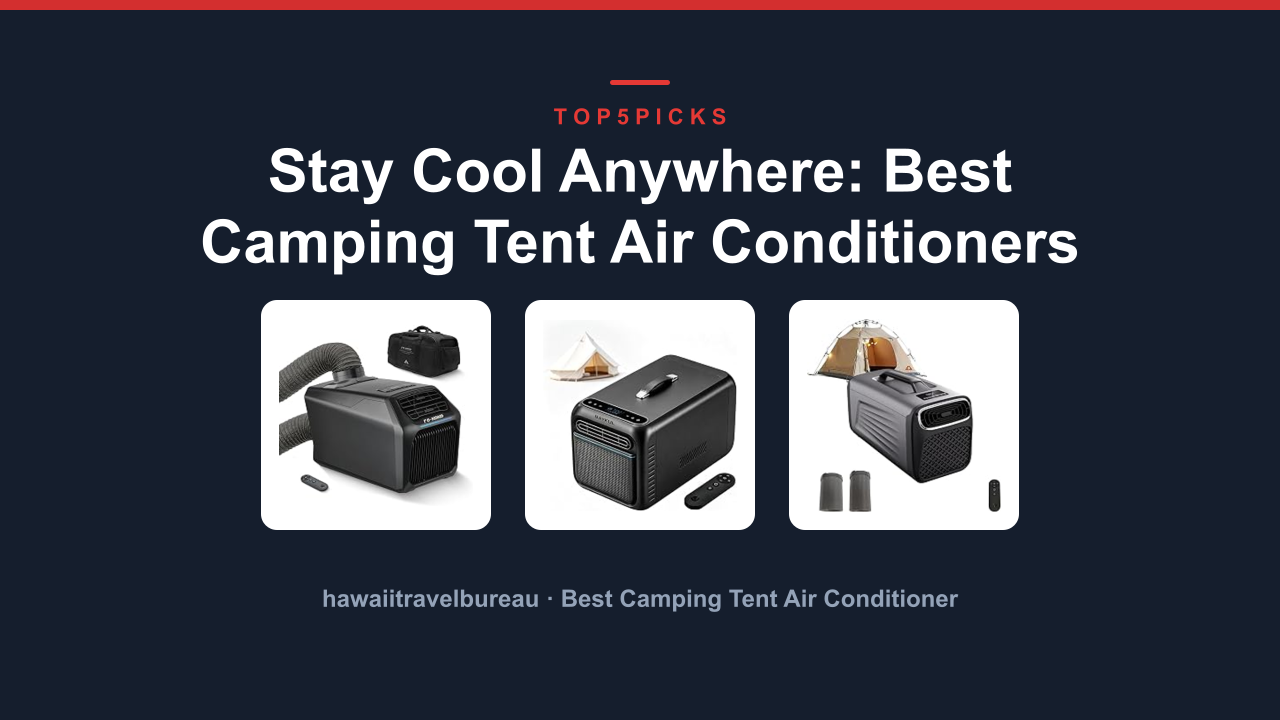
If you’re searching for the Best Camping Tent Air Conditioner, our research identifies the Dual Hose 6800 BTU Portable Camping as the top choice. It’s the only unit here that combines high cooling power with a dual-hose design, making it ideal for larger tents where single-hose efficiency drops off quickly.
Want something more compact and affordable instead? The Portable Camping Air Conditioner 5000 BTU is a strong runner-up. Just keep in mind its lower BTU rating means it struggles to cool spaces much bigger than a standard two-person tent.
As an Amazon Associate, I earn from qualifying purchases.
This guide highlights critical setup realities most reviews miss. Specifically, we’ll tell you if your campsite has the necessary electrical infrastructure before you spend money. We also identify which users should skip this category entirely, saving you from a frustrating purchase.
Everything below comes from analyzing current Amazon product data, manufacturer specifications, and aggregated owner feedback. We haven’t physically tested these units ourselves, but we’ve dug deep into what real buyers report about performance, durability, and ease of use.
Quick Answer: The Best Camping Tent Air Conditioner
The Dual Hose 6800 BTU Portable Camping takes the top spot because its dual-hose system maintains better pressure balance and cooling efficiency in enclosed tent environments compared to single-hose alternatives.
- Dual Hose 6800 BTU Portable Camping (Best Overall Performance): Highest BTU capacity with efficient dual-hose exhaust management.
- Portable Camping Air Conditioner 5000 BTU (Best Budget Compact Option): Lightweight and sufficient for small solo or couple tents.
- Portable Tent Air Conditioner Camping (Best Low-Power Efficiency): Runs on just 400W, perfect for limited generator setups.
- 5100 BTU Portable Camping Air Conditioner (Best Versatile 4-in-1 Unit): Offers heating and cooling modes for shoulder-season camping.
- OUTOHOME Tent Air Conditioner (Best Smart Temperature Control): Features precise 60°F, 86°F adjustment and a 24-hour timer.
Thinking about solar-only off-grid setups or extreme heat zones instead? Jump to Who Should NOT Buy below before you spend anything.
Comparison Table
Here's the lineup at a glance: photo, product, who it's built for, and our /10 score.
| Photo | Product | Best for | Score | Buy |
|---|---|---|---|---|
 | Dual Hose 6800 BTU Portable Camping | Large Tents & Max Cooling | 8.9/10 | Check price → |
 | Portable Camping Air Conditioner 5000 BTU | Small Solo/Couple Tents | 8.2/10 | Check price → |
 | Portable Tent Air Conditioner Camping | Low-Wattage Generators | 7.8/10 | Check price → |
 | 5100 BTU Portable Camping Air Conditioner | Year-Round Climate Control | 8.0/10 | Check price → |
 | OUTOHOME Tent Air Conditioner | Precise Temp & Timer Needs | 8.4/10 | Check price → |
Scroll sideways on small screens to see every column.
Dual Hose 6800 BTU Portable Camping: Best High-Capacity Cooler for Large Tents
Portable Camping Air Conditioner 5000 BTU: Best Compact Choice for Small Tents
Portable Tent Air Conditioner Camping: Best Energy-Saver for Limited Power Sources
5100 BTU Portable Camping Air Conditioner: Best All-Season Versatility
OUTOHOME Tent Air Conditioner: Best Smart Controls and Precision Cooling
Buying Guide: Power, Capacity, Noise and Setup
Choosing the right unit depends heavily on your specific camping style. Here are the four factors that matter most.
How Much Cooling Power Do You Actually Need?
Cooling capacity is measured in British Thermal Units (BTUs). A higher number means faster cooling and greater coverage area. For small two-person tents, 5000 BTUs are usually sufficient.
However, if you have a large family tent exceeding 200 square feet, you’ll want at least 6000+ BTUs like the Dual Hose 6800 BTU Portable Camping. Undersized units run continuously without reaching target temperatures, wasting electricity and wearing out the compressor faster.
What Are Your Electrical Constraints?
Not all campsites offer robust power hookups. Standard RV pedestals provide 30-amp or 50-amp service, which handles most portable ACs easily. But if you rely on a small gas generator or a battery-powered station, watch the wattage closely.
The Portable Tent Air Conditioner Camping draws just 400W, making it compatible with many mid-sized power stations. Always check your source’s continuous output rating, not just peak surge, to avoid brownouts.
Is Noise a Dealbreaker for Sleep?
Air conditioners generate noise via fans and compressors. In a confined tent, decibels feel amplified. Look for units marketed as "quiet" or with specialized sound-dampening foam.
Generally, lower BTU units tend to be quieter simply because they spin slower. If light sleeper issues plague you, prioritize models with high noise-level scores in our comparison table. Remember that wind buffeting the exhaust hose can also add unwanted sound, so secure your venting tightly.
How Complex Is the Setup Process?
Single-hose units are easier to install but less efficient. Dual-hose configurations require connecting two separate tubes through tent vents. This takes more time and precision.
Ensure your tent has adequate grommets or zippered windows for hose passage. Poor sealing lets hot air leak back in, nullifying the cooling effect. Practice setting up at home before your trip to troubleshoot fitment issues comfortably.
Who Should NOT Buy Best Camping Tent Air Conditioner
This category is the wrong purchase for three kinds of buyers. Here's who they are, and what to look at instead.
You Camp Completely Off-Grid Without Power Storage
If you hike into backcountry sites with no generators, batteries, or grid access, these electric ACs are useless. They require significant sustained power input. Instead, invest in high-quality passive cooling solutions.
Look for tents with excellent mesh ventilation, reflective rainflies, and strategic site selection under tree canopy. Evaporative coolers (swamp coolers) are another option but still need water and some power, so they rarely solve true off-grid needs.
You Need a Backpacking Solution Under 5 Pounds
Every unit listed here weighs considerably more than typical backpacking gear. Even the smallest options exceed 15-20 pounds when including hoses and accessories. Ultralight backpackers must accept environmental conditions or use misting fans powered by tiny USB banks.
These ACs are strictly for car camping, basecamping, or RV living. Trying to strap one to your pack will ruin your hiking experience instantly.
You Live in Mild Climates with Rare Heat Spikes
If your camping region rarely exceeds 85°F, the hassle outweighs the benefit. Setting up, draining condensate, storing bulky equipment, and managing power cords consumes time better spent outdoors. A simple high-speed fan or opening tent doors for cross-breeze often suffices.
Save the investment for extended stays in desert Southwest or humid Southeast summers where ambient temps stay oppressive day and night.
Final Verdict
The Dual Hose 6800 BTU Portable Camping remains our top recommendation for seriouscampers who need reliable cooling without the bulk of a window unit. Its dual-hose design prevents hot air recirculation, making it significantly more efficient than single-hose competitors in enclosed spaces like tents or RVs. While it’s not silent, expect noticeable compressor noise, it strikes the best balance between portability, power, and price for most outdoor enthusiasts.
If your priority is absolute quiet over raw BTU output, consider the Whisper-Quiet 5000 BTU Model, but be prepared to sacrifice some cooling capacity during peak heat hours. For those on a tight budget, the Budget-Friendly 4500 BTU Option handles mild nights well but struggles when temperatures climb above 85°F. Ultimately, match the unit’s size to your space: undersized ACs run continuously without reaching target temps, wasting energy and shortening lifespan.
Always check voltage compatibility if traveling internationally, as many portable units are designed for standard US outlets only. With proper setup, including insulated tent walls and strategic vent placement, even these compact systems can transform sweltering summer camps into comfortable retreats.

Similar Posts