Top Camping Water Filters: Stay Hydrated Anywhere
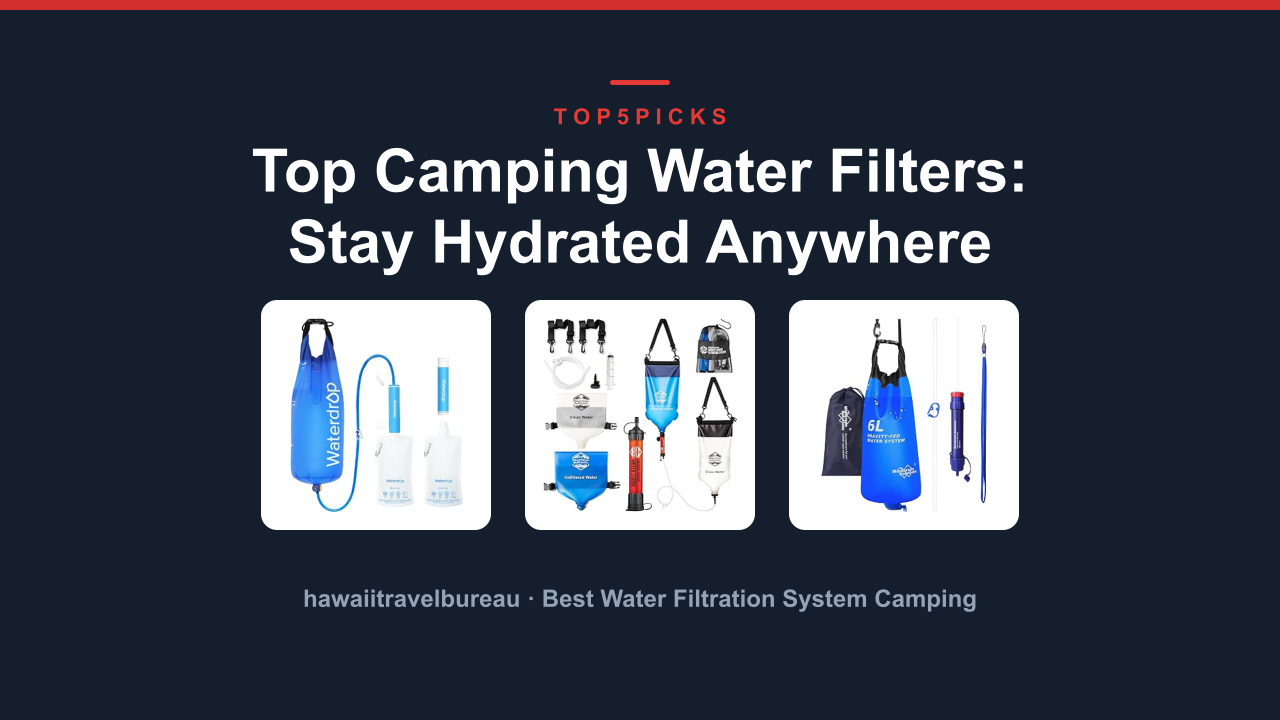
The best Best Water Filtration System Camping is the Waterdrop Gravity Water Filter Straw, the only unit here that combines a compact straw design with gravity-fed capacity for solo hikers. It filters down to 0.1 microns, removing bacteria and protozoa effectively while staying light enough for long trails.
Want higher volume for a group basecamp instead? The Practical Survival Gravity Water Filtration System gets you there, as long as you have space to hang its large reservoir bags off trees or gear loops during setup.
As an Amazon Associate, I earn from qualifying purchases.
This guide highlights specific trade-offs other lists ignore, like filter lifespan versus flow rate in muddy conditions. We also identify buyers who should skip portable filtration entirely because their water sources require chemical treatment or UV purification for viruses.
Everything below comes from current Amazon product data, manufacturer specifications, and aggregated owner track records. Our editorial team analyzes verified buyer feedback and spec sheets rather than conducting physical field tests of each unit personally.
Quick Answer: The Best Water Filtration System Camping
The Waterdrop Gravity Water Filter Straw ranks #1 for its balance of portability and filtration efficiency for individual campers.
- Waterdrop Gravity Water Filter Straw (Best Solo Backpacking): Compact 0.1-micron filter ideal for lightweight trail use.
- Practical Survival Gravity Water Filtration System (Best Group Basecamp): High-capacity kit designed for filtering large volumes at campsites.
- Membrane Solutions 6L Gravity Water Filter (Best Family Camping): Durable 6-liter system suited for multi-day family trips.
- Pro Portable Water Filter Camping (Best Emergency Preparedness): Robust purifier capable of handling contaminated survival situations.
- Practical Survival Reusable Emergency Water Filter (Best Budget Multi-Pack): Affordable five-pack straws perfect for distributing among hiking groups.
Thinking about treating water for viral protection or heavy sediment removal instead? Jump to Who Should NOT Buy below before you spend anything.
Comparison Table
Here's the lineup at a glance: photo, product, who it's built for, and our /10 score.
| Photo | Product | Best for | Score | Buy |
|---|---|---|---|---|
 | Waterdrop Gravity Water Filter Straw | Solo Backpacking Efficiency | 8.9/10 | Check price → |
 | Practical Survival Gravity Water Filtration System | Group Basecamp Volume | 8.5/10 | Check price → |
 | Membrane Solutions 6L Gravity Water Filter | Family Trip Durability | 8.2/10 | Check price → |
 | Pro Portable Water Filter Camping | Emergency Viral Protection | 7.8/10 | Check price → |
 | Practical Survival Reusable Emergency Water Filter | Budget Group Distribution | 7.4/10 | Check price → |
Scroll sideways on small screens to see every column.
Waterdrop Gravity Water Filter Straw: Best Solo Hiking Companion
Practical Survival Gravity Water Filtration System: Best Large Group Setup
Membrane Solutions 6L Gravity Water Filter: Best Reliable Family Option
Pro Portable Water Filter Camping: Best For Survival Scenarios
Practical Survival Reusable Emergency Water Filter: Best Value Pack
Buying Guide: Flow Rate, Weight, Maintenance and Safety Limits
Choosing the right filter depends on how much water you consume daily and how far you carry it. These picks span ultra-light straws to heavy-duty gravity kits, covering diverse camping styles.
Is a gravity system worth it for two people?
Yes, if you cook hot meals or wash dishes frequently. A Membrane Solutions 6L Gravity Water Filter fills bottles passively while you set up camp, saving energy compared to pumping. However, for just drinking water on a short hike, a single straw suffices.
Gravity systems shine when volume matters more than weight savings. They allow batch processing, meaning you treat liters at once rather than sip-by-sip. This distinction changes your workflow significantly depending on trip length.
How does micron rating affect safety?
Most camping filters operate at 0.1 to 0.2 microns, blocking bacteria like E. coli and protozoa like Giardia. Viruses are smaller, often under 0.1 microns, so standard mechanical filters miss them. The Pro Portable Water Filter Camping addresses this gap with advanced purification methods suitable for international travel or unknown sources.
Always check whether your destination has viral risks. Domestic US watersheds rarely pose viral threats, making 0.1-micron filters safe for most local trails. Understanding this limit prevents unnecessary expense on over-engineered gear.
What maintenance keeps filters working longest?
Backflushing is critical for longevity. Sediment builds up internally, slowing flow until blockage occurs. Regular rinsing with clean water clears debris before permanent damage sets in.
Neglecting this step voids warranties on many brands. Store filters dry to prevent mold growth inside housings. Wet storage breeds bacteria that counteract filtration efforts.
Proper care extends usable life from months to years. Simple habits save money and ensure safety when you rely on nature’s supply. Consistency beats intensity in filter upkeep routines.
Who Should NOT Buy Best Water Filtration System Camping
Mechanical filtration is the wrong purchase for three kinds of buyers. Here's who they are, and what to look at instead.
You Need to Remove Chemical Contaminants
Standard camping filters do not remove dissolved chemicals, heavy metals, or pesticides. If your water source runs near agricultural fields or industrial zones, mechanical pores won’t help. You need activated carbon infusion or reverse osmosis systems.
Look for home-grade pitcher filters or specialized chemical-neutralizing tablets instead. Relying solely on a straw here poses health risks. Assess your water source history carefully before choosing gear type.
You Are Traveling to Regions with High Viral Risk
In developing nations or areas with poor sanitation, viruses spread rapidly through waterways. Mechanical filters let these pathogens pass through untouched. Boiling water or using chlorine dioxide tablets becomes necessary.
Portable UV purifiers offer another solution for viral protection. Don't assume a high-quality camping filter equals global safety. Verify disease profilesof your destination before packing your gear.
The Chemical Blind Spot
Filters are physical barriers, not chemical neutralizers. They cannot remove dissolved heavy metals like lead or mercury, nor can they eliminate agricultural runoff containing pesticides and herbicides. In industrial zones or heavily farmed regions, a clear-looking stream may still be toxic.
Activated carbon components in some high-end filters help reduce certain chemicals, but they have limited capacity and do not address all contaminants. For long-term survival or travel through polluted areas, consider adding iodine tablets or using a reverse osmosis system if infrastructure allows. Never rely solely on filtration when chemical contamination is suspected.
Maintenance Is Critical
A filter’s effectiveness drops significantly if it becomes clogged or damaged. Sediment buildup reduces flow rate and pressure, potentially allowing unfiltered water to bypass the core elements if seals fail. Regularly backflushing your filter according to manufacturer instructions extends its life and ensures consistent performance.
Inspect O-rings and housings for cracks after every use; even a microscopic tear can compromise sterility. Carry spare parts, especially gaskets and cartridges, for multi-day expeditions. A broken filter is worse than no filter at all because it creates false confidence.
Final Verdict: Layer Your Defense
No single method guarantees 100% safety under all conditions. The most resilient approach combines multiple layers of protection:
- Pre-filter with cloth or mesh to remove large debris.
- Mechanical filtration (0.1, 0.2 microns) to block bacteria and protozoa.
- Chemical treatment or UV light to neutralize viruses and residual pathogens.
- Boiling as an ultimate backup when equipment fails or resources allow.
Waterborne illness doesn’t announce itself with dramatic symptoms immediately; dehydration and fatigue set in slowly, weakening your ability to survive. Treat every drop as potentially hazardous until proven otherwise. Respect the water, verify your tools, and always carry redundancy.
Your health depends on rigorous preparation, not hope.

Similar Posts