Has It Ever Snowed on Oahu? The Surprising Truth
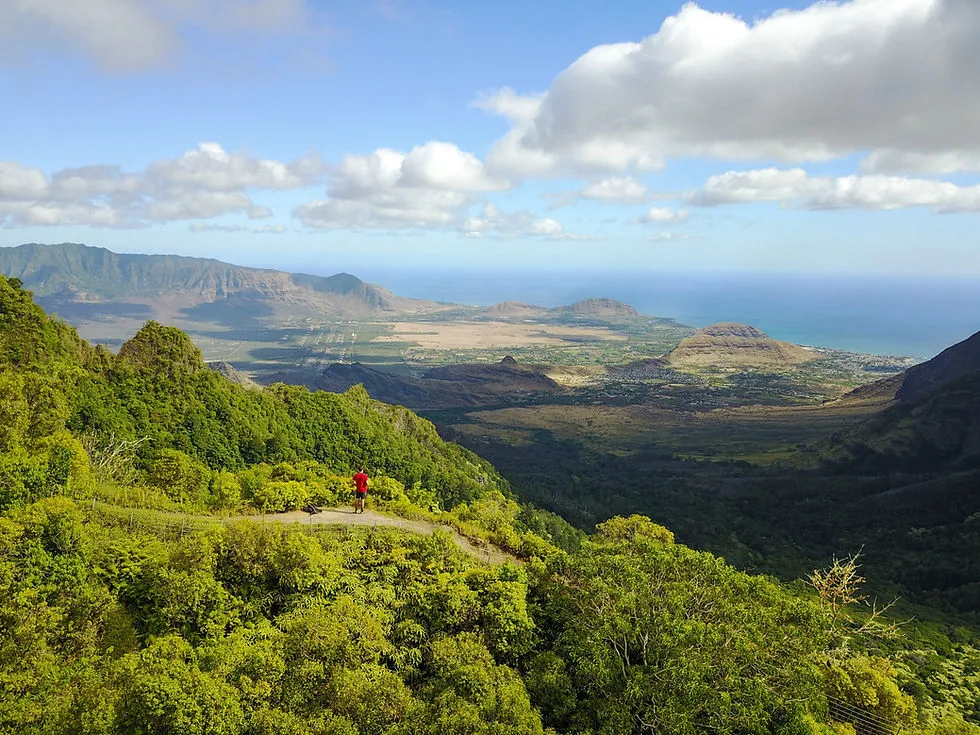
No, it has never snowed on Oahu in recorded history. While Hawaii is famous for tropical beaches, travelers and weather buffs often wonder if the island's tallest peaks ever catch a winter flurry. The answer remains a clear no across all historical weather logs.
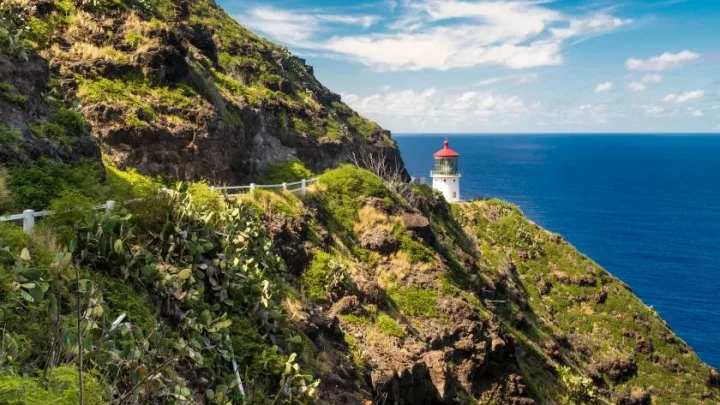
Oahu's highest point, Mount Kaʻala, reaches an elevation of 4,025 feet. Official climate records from the National Oceanic and Atmospheric Administration confirm that this summit sits thousands of feet below the altitude needed for frozen crystalline precipitation. Let us look at the atmospheric physics, weather history, and common misconceptions behind this persistent question.
Image source: Bing (Web (fair-use with source credit))
Quick Answer
It has never snowed on Oahu in recorded history. Oahu's highest point is Mount Kaʻala at 4,025 feet. Freezing temperatures in Hawaii require elevations above 9,000 feet.
Reports of Oahu snow are actually hail or graupel.
Has It Ever Snowed on Oahu? The Definitive Historical Record
Weather records for the Hawaiian Islands extend back into the 19th century. Across that entire timeline, official meteorological stations have never recorded measurable snowfall anywhere on Oahu.
Honolulu holds an all-time record low temperature of 52°F, recorded in January 1969 and February 1902. Even on the coldest winter nights, low-elevation coastal towns stay well above the freezing mark.
Higher up in the Waiʻanae Mountain Range, Mount Kaʻala hosts a Federal Aviation Administration tracking station and research equipment. The coldest temperatures recorded on this summit hover in the mid-to-upper 30s. Without sub-freezing surface temperatures, delicate snow crystals cannot form or reach the ground intact.
The state of Hawaii does experience regular snowfall, but only on neighboring islands with massive volcanic peaks. Oahu simply lacks the vertical reach required to touch the freezing line of the central tropical Pacific.
Atmospheric Reality: Why Oahu's Elevation Falls Short of the Freezing Level
To understand why Oahu never sees snow, you have to look at the atmospheric freeze line. In the tropics, the freezing level (the 0°C or 32°F isotherm) typically sits between 10,000 and 12,000 feet above sea level during the winter months.
Temperature drops with altitude at a standard environmental lapse rate of roughly 3.5°F for every 1,000 feet of elevation gain. Even when a strong winter storm pulls colder air into Hawaii, the ocean acts as a massive thermal buffer. Pacific surface waters around Oahu stay between 75°F and 80°F year-round.
This warm maritime boundary layer modifies cold air masses before they hit island shores.
A persistent trade wind inversion also caps vertical cloud growth between 5,000 and 8,000 feet most days. This inversion traps moisture in the lower atmosphere. Above this cap, the air is often dry.
As a result, clouds over Oahu rarely reach the upper-level sub-zero temperatures necessary for dendritic ice crystal formation.
Documented Anomalies: Investigating Historical Cold Snaps and Winter Storm Claims
Oahu does experience severe winter weather systems known as Kona lows. These subtropical low-pressure systems pull chilly, unstable air from the north across the islands. They bring torrential rains, gale-force winds, and dramatic drops in mountain temperatures.
During intense winter events in 1969, 1979, and February 2019, deep upper-level cold pools swept across Oahu. Residents reported extreme wind chill values and shivering conditions across the central Wahiawa plateau.
Even during these rare meteorological extremes, the freezing line hovered near 8,500 feet. Mount Kaʻala, sitting at 4,025 feet, remained at least 10 degrees too warm for snow. Any precipitation that fell from the sky was cold rain or convective ice pellets.
The table below outlines Oahu's coldest recorded benchmarks against true freezing criteria.
| Metric / Event | Recorded Temperature | Elevation | Snow Potential |
|---|---|---|---|
| Honolulu All-Time Low (1969) | 52°F (11.1°C) | 10 ft | Zero |
| Wahiawa Winter Cold Snap | 45°F (7.2°C) | 950 ft | Zero |
| Mount Kaʻala Extreme Low | 36°F (2.2°C) | 4,025 ft | None (Above Freezing) |
| Standard Freezing Level (Winter) | 32°F (0°C) | 10,000–12,000 ft | True Snow Zone |
Graupel, Small Hail, and Rime: Deconstructing the "White Caps" on Oahu's Ridges
Every few years, viral photos circulate showing white-capped ridgelines along the Koʻolau or Waiʻanae ranges. These images often spark debates online, but the white material on the ground is never authentic snow.
These events are caused by three specific cold-weather phenomena:
- Graupel (Soft Hail): Forms when supercooled water droplets collect and freeze onto falling snowflakes inside high-altitude convective clouds. It falls as small, soft, white pellets that can coat roads and mountain peaks like slushy snow.
- Small Hail: Thunderstorms generate strong updrafts that suspend water droplets in cold upper air until they form hard ice pellets. Hail falls rapidly through warm lower air without melting, creating a temporary white blanket on tropical ridges.
- Rime Ice: Supercooled fog blows across cold summit structures and trees, freezing instantly on contact into jagged ice deposits.
While a heavy graupel shower looks identical to snow on a smartphone camera, the structural physics are completely different. True snow requires crystalline, low-density ice structures that form gently in sub-freezing air.
Elevation Breakdown: How Oahu Compares to Hawaii's True Snow Zones
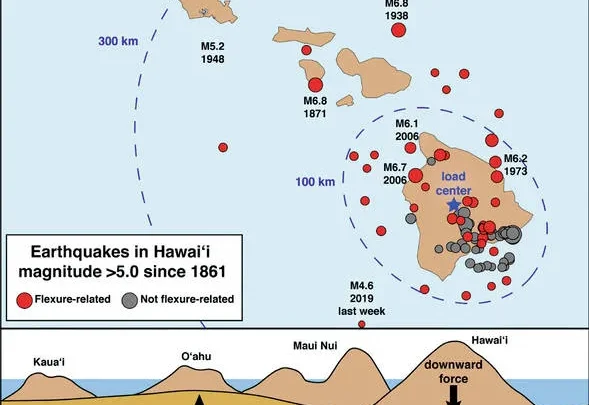
Hawaii has world-famous snowfields, but they belong exclusively to the Big Island and Maui. The island chain features dramatic elevation differences created by volcanic hotspots over millions of years.
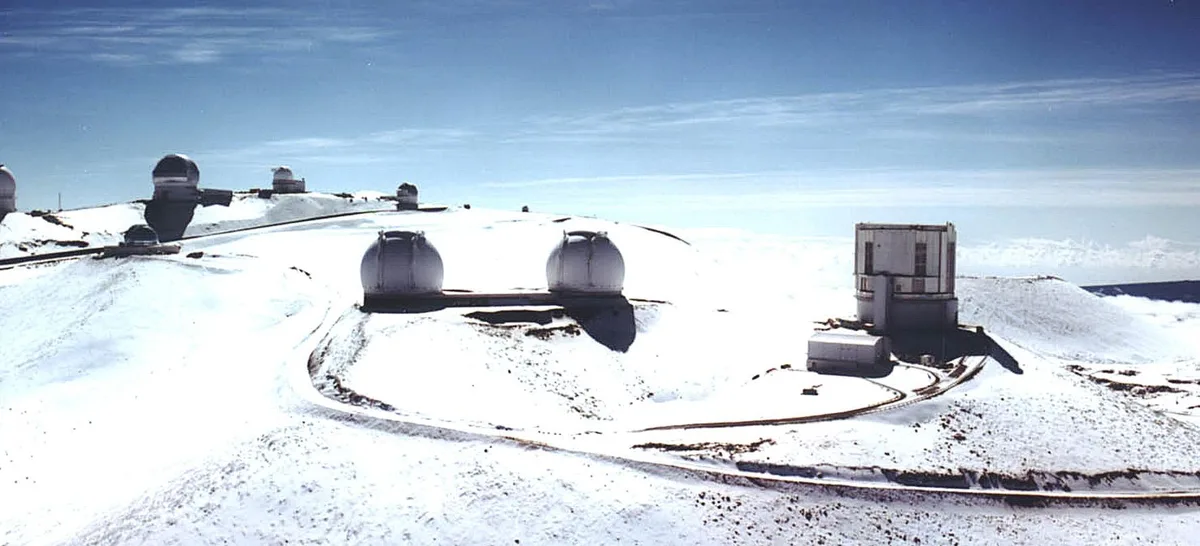
Image source: Bing (Web (fair-use with source credit))
Mauna Kea and Mauna Loa on Hawaii Island both soar past 13,600 feet. At these elevations, winter blizzards produce deep snowdrifts, prompting official blizzard warnings from the National Weather Service. On Maui, Haleakalā rises past 10,000 feet and receives snow every few seasons.
In February 2019, a historic polar storm dropped snow down to 6,200 feet at Polipoli Spring State Recreation Area on Maui. That event set the record for the lowest elevation snowfall ever documented in Hawaii. Even at that historic low mark, the snow line stayed more than 2,000 feet above Oahu's tallest peak.
As of 2026, topographic measurements confirm the vast gap between Oahu's summit and the true alpine zones of the neighboring islands:
| Summit / Region | Island | Elevation (ft / m) | Snow Frequency |
|---|---|---|---|
| Mauna Kea | Hawaii Island | 13,796 ft (4,205 m) | Multiple times per winter |
| Mauna Loa | Hawaii Island | 13,678 ft (4,169 m) | Multiple times per winter |
| Haleakalā | Maui | 10,023 ft (3,055 m) | Every 1 to 3 years |
| Polipoli State Park (Record Low) | Maui | 6,200 ft (1,890 m) | Once in recorded history (2019) |
| Mount Kaʻala | Oahu | 4,025 ft (1,227 m) | Never |
| Puʻu Kalena | Oahu | 3,504 ft (1,068 m) | Never |
| Konahuanui | Oahu | 3,150 ft (960 m) | Never |
Could a Record-Breaking Polar Surge Ever Trigger Flurries on Mount Kaʻala?
Meteorologists occasionally look at extreme scenarios to see what it would take. For snow to reach Mount Kaʻala, Hawaii's freezing level would need to drop more than 6,000 feet below its normal winter boundary.
That drop would require an unprecedented upper-level polar trough to push directly over the central Pacific. The system would also need deep moisture and strong upward lift occurring at the exact same moment.
Even during powerful arctic outbreaks across the North Pacific, the surrounding ocean works against freezing conditions. Water has a high specific heat capacity. As cold air moves over thousands of miles of open tropical water, the lower atmosphere warms up rapidly.
Because of this marine warming effect, atmospheric scientists consider true snowfall on Oahu virtually impossible under the present climate regime. Mount Kaʻala will continue to see gusty winter downpours and chilly mountain fog, but not genuine snow.
Frequently Asked Questions About Oahu Weather and Hawaii Snowfall
What is the lowest temperature ever recorded on Oahu?
The lowest official temperature recorded in Honolulu is 52°F, logged in 1902 and 1969. In higher residential valleys and central plateaus like Wahiawa, temperatures occasionally dip into the mid-40s during winter nights. The summit of Mount Kaʻala has dropped into the mid-30s during rare cold snaps.
Which Hawaiian island gets the most snow?
Hawaii Island receives the vast majority of the state's snowfall each year. Mauna Kea and Mauna Loa both rise above 13,600 feet, which places their summits well above the regional freezing level. Winter storms regularly coat these volcanic peaks with several feet of snow, creating true alpine conditions.
Why does snow fall on Maui but not Oahu?
The difference comes down to mountain elevation. Maui's Haleakalā summit stands at 10,023 feet, allowing it to penetrate the winter freeze line during strong cold fronts. Oahu's tallest peak is Mount Kaʻala at just 4,025 feet, which leaves it thousands of feet below the altitude needed for snow.
Can it hail or produce graupel on Oahu?
Yes, severe thunderstorms and Kona lows occasionally drop hail and graupel on Oahu. Strong convective updrafts freeze moisture high in the atmosphere, dropping ice pellets before they can melt. When these pellets accumulate on mountain ridges, people often mistake the white ground cover for authentic snowfall.
Has it ever snowed in Honolulu?
It has never snowed in Honolulu. The city sits at sea level along the southern coast of Oahu, where maritime air keeps temperatures warm year-round. Even during the coldest winter storms in recorded history, Honolulu surface temperatures have never come close to the 32°F freezing mark.

Similar Posts