Is There Vog on Oahu Today? Current Air Quality Report
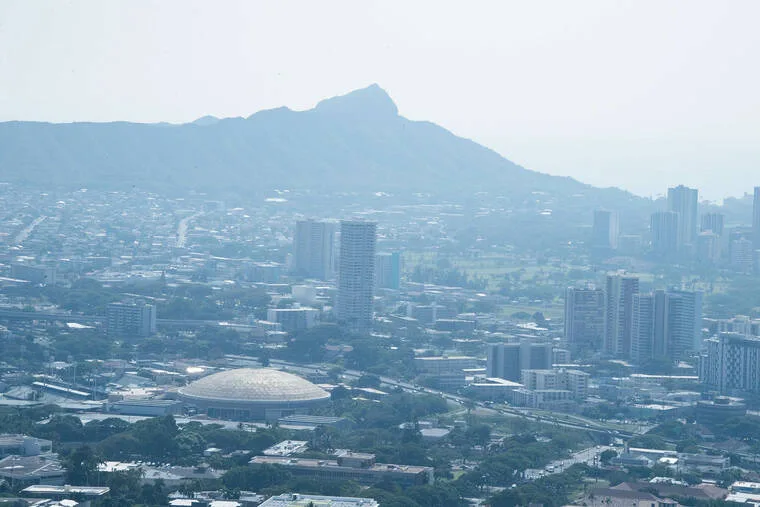
Waking up to a gray, hazy skyline over Diamond Head leaves many people wondering if there is vog on Oahu today. Vog, short for volcanic smog, drifts across the Hawaiian Islands whenever volcanic gases interact with sunlight, moisture, and changing wind patterns.
Whether Oahu has vog today depends on real-time activity at Kīlauea and the current wind direction. Under the standard EPA National Ambient Air Quality Standards, fine particulate levels can shift rapidly from clean to unhealthy when the breeze turns south. Here is how you can check current conditions, understand the forecast, and protect your lungs.
Image source: Web (Bing) / staradvertiser.com (Web image (fair-use with source credit))
Quick Answer
To know if there is vog on Oahu today, check the wind direction. Normal northeast trade winds blow volcanic emissions away from Oahu. Southerly Kona winds push volcanic haze directly over the island.
Look at live air monitors on Oahu right now. An Air Quality Index over 50 usually indicates vog or trapped particulates.
Is There Vog on Oahu Right Now? The Quick Answer
If trade winds are blowing from the northeast at 10 to 20 miles per hour, Oahu is almost certainly clear of vog. Normal trade winds push sulfur dioxide plumes from the Island of Hawaiʻi southwest out over the open ocean.
If winds have shifted out of the south or southwest, vog is likely present or heading your way. These southerly breezes carry the volcanic plume 200 miles northwest across Maui County and directly over Oahu.
You can visually confirm vog by looking at the horizon. If the Koʻolau or Waiʻanae mountain ranges look washed out behind a dusty, yellowish-gray veil, you are likely looking at volcanic haze.
The Two Factors That Decide If Vog Reaches Oahu Today
Vog does not appear on Oahu by accident. Its presence relies entirely on two physical conditions working at the same time.
First, an active vent must be actively releasing sulfur dioxide ($SO_2$). Kīlauea on the Island of Hawaiʻi is the primary source. When the volcano pauses its eruptive activity, vog production drops significantly across the entire island chain.
Second, the regional wind pattern must carry the plume toward Oahu. Hawaii's weather generally falls into two distinct setups:
- Northeast Trade Winds: The dominant weather pattern. Strong trades act as a natural shield, sweeping volcanic emissions away from the smaller islands.
- Kona Winds: Southerly or southwesterly winds. These occur frequently during winter months and pull volcanic emissions directly up the island chain toward Honolulu, Kapolei, and the North Shore.
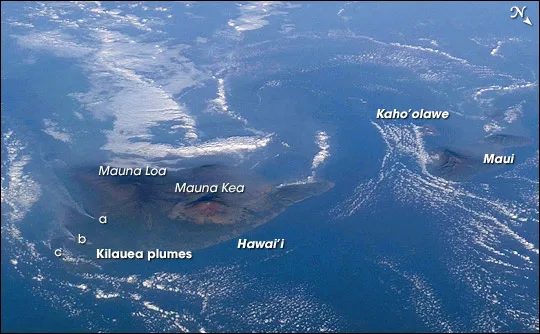
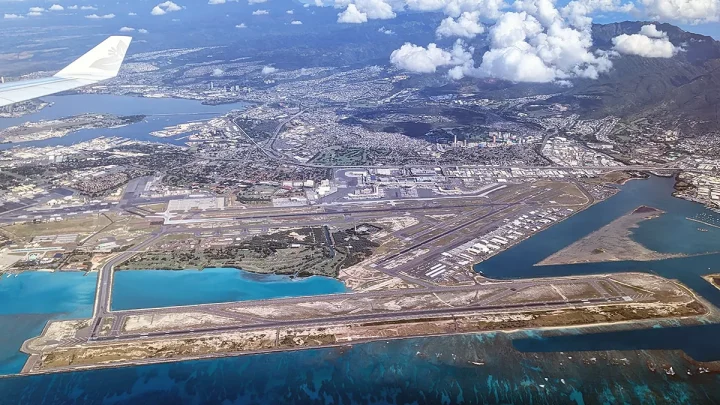
Image source: Web (Bing) / eol.jsc.nasa.gov (Web image (fair-use with source credit))
As of 2026, researchers track these shifts with high precision. When Kona winds combine with a low atmospheric inversion layer, the haze gets trapped near ground level. That is when Oahu experiences its thickest vog conditions.
How to Check Oahu's Live Air Quality in 3 Steps
You do not have to guess about current air quality. You can confirm local conditions in less than two minutes using official monitoring networks.
Step 1: Check Current Wind Direction
Start by checking the local marine or surface winds via the National Weather Service. Look at the wind vector:
- Winds from $010^\circ$ to $080^\circ$ (Northeast) mean clean ocean air.
- Winds from $180^\circ$ to $240^\circ$ (South/Southwest) mean volcanic air is moving toward Oahu.
Step 2: Read Oahu's Live PM2.5 Monitors
Check real-time sensor stations across the island on AirNow, run by the EPA and state partners. Look at the monitors in Honolulu, Pearl City, and Kapolei. Pay specific attention to $PM_{2.5}$ readings, which measure the tiny aerosol particles that make up aged vog.
Step 3: Consult the UH VMAP Model
View the Vog Measurement and Prediction Project (VMAP) mapping tool hosted by the University of Hawaiʻi at Mānoa. This dispersion model forecasts gas and sulfate aerosol concentrations across each island up to 48 hours in advance.
| Tool / Source | What It Measures | Best Used For |
|---|---|---|
| NWS Honolulu | Wind speed and direction | Predicting if vog will arrive today |
| AirNow / HDOH | Real-time $PM_{2.5}$ and AQI values | Checking current air safety levels |
| UH VMAP Forecast | 48-hour volcanic plume dispersion | Planning outdoor activities tomorrow |
What Vog Does to Oahu's Air: $SO2$ vs. Fine Particulate Matter ($PM{2.5}$)
Vog is not a single gas. It changes chemically as it travels across the ocean from the Big Island to Oahu.
At the volcanic vent, emissions are mostly raw sulfur dioxide ($SO_2$) gas. As $SO_2$ reacts with sunlight, oxygen, and atmospheric moisture during its 200-mile journey, it converts into fine sulfate aerosols. These microscopic droplets are categorized as $PM_{2.5}$ (particulate matter 2.5 micrometers or smaller).
[Volcanic Vent] SO2 Gas + Sunlight + Moisture
       │
       ▼ (200-mile oceanic transit)
[Reaches Oahu] Acidic Sulfate Aerosols (PM2.5)
Because Oahu sits downwind, residents rarely encounter high levels of raw $SO_2$ gas. You will rarely smell the sharp, matchstick odor common near Halemaʻumaʻu crater.
Instead, Oahu primarily receives acidic $PM_{2.5}$ particles. These fine particulates penetrate deep into lung tissue and enter the bloodstream. They cause throat tickles, burning eyes, sinus pressure, and headaches even without a noticeable sulfur smell.
Oahu Vog Action Guide: What to Do Based on Live AQI Levels
Once you check your local Air Quality Index (AQI), use this decision guide to plan your day.
Air Quality Index (AQI) Check
  │
  ├─► Green (0-50): Safe for all outdoor activities
  │
  ├─► Yellow (51-100): Sensitive groups should monitor mild symptoms
  │
  ├─► Orange (101-150): Sensitive groups move strenuous exercise indoors
  │
  └─► Red (151+): Everyone limits heavy exertion outdoors; run HEPA filtration
Green (AQI 0–50): Good
- Air quality is ideal.
- Perfect for hiking, beach outings, and outdoor sports.
- Windows can stay wide open for trade wind ventilation.
Yellow (AQI 51–100): Moderate
- Unusually sensitive individuals may notice mild throat irritation or eye fatigue.
- If you have severe asthma, keep your quick-relief inhaler handy.
- Outdoor recreation remains fine for the general public.
Orange (AQI 101–150): Unhealthy for Sensitive Groups
- People with asthma, COPD, or cardiovascular issues should reduce outdoor exertion.
- Switch high-intensity outdoor workouts to an air-conditioned indoor space.
- Close home windows if leeward winds are pushing haze into living areas.
Red (AQI 151+): Unhealthy
- Everyone may begin to feel respiratory irritation or eye stinging.
- Avoid prolonged or heavy exertion outdoors.
- Run indoor air purifiers equipped with true HEPA filters.
Is It Vog, Marine Haze, or City Smog? How to Tell the Difference
You can tell the difference between vog, sea haze, and urban smog by looking at color, humidity, and physical symptoms. While they all reduce visibility across Oahu, each one behaves differently in the atmosphere.
Vog appears as a dry, yellowish-gray or brownish tint across the sky. Unlike regular fog, it does not burn off when midday temperatures rise. It also triggers distinct upper respiratory symptoms like sinus pressure, a scratchy throat, and stinging eyes.
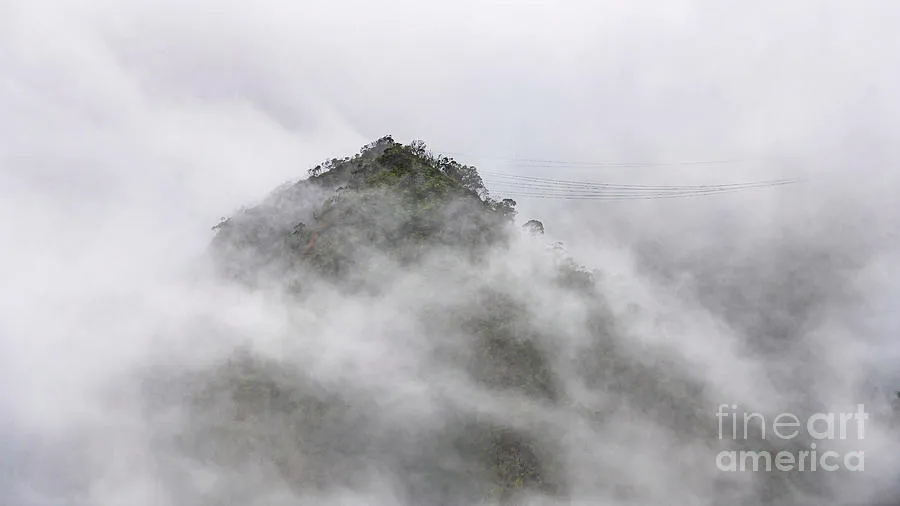
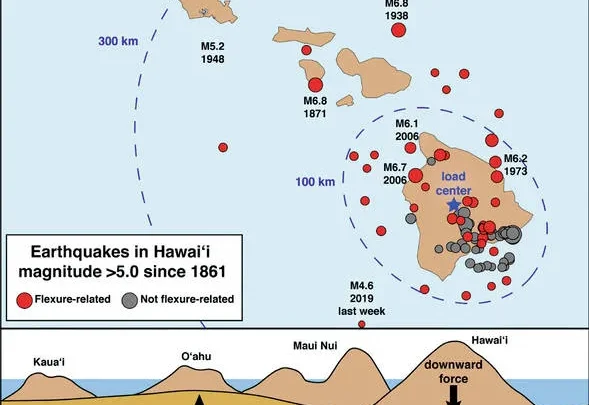
Image source: Bing (Web (fair-use with source credit))
Marine haze looks milky white or light blue. It consists of sea salt spray and water vapor. It peaks during humid, muggy summer afternoons and dissipates as relative humidity drops.
It rarely causes headaches or airway irritation.
Urban smog produces a thin brown band sitting low over downtown Honolulu and the H-1 corridor during morning rush hour. It clears quickly once the afternoon sea breeze or trade winds pick up.
| Characteristic | Volcanic Smog (Vog) | Marine Haze | Urban Traffic Smog |
|---|---|---|---|
| Color | Pale yellow, gray, or dingy brown | Soft white to light blue | Thin brown or amber layer |
| Primary Cause | Fine sulfate aerosols ($PM_{2.5}$) | Sea salt and trapped water vapor | Nitrogen dioxide ($NO_2$) and ozone |
| Duration | Lasts days until winds shift | Rises and falls with daily humidity | Spikes during rush-hour traffic |
| Common Symptoms | Eye burn, sinus pain, dry cough | Generally none | Mild throat irritation near freeways |
Protecting Your Health and Home When Vog Rolls In
When vog reaches moderate or unhealthy levels on Oahu, taking a few basic indoor precautions will protect your lungs and keep your home comfortable.
Optimize Indoor Spaces
- Seal your windows and doors: Keep outdoor air from drafting inside during southerly wind events.
- Run a true HEPA air cleaner: High-efficiency particulate air filters capture over 99.7% of $PM_{2.5}$ acidic aerosols.
- Set air conditioners to recirculate: Switch your split system or central HVAC away from fresh air intake mode.
High PM2.5 Vog Event Detected
  │
  ├─► At Home: Close windows ──► Run HEPA purifier ──► Set A/C to recirculate
  │
  ├─► In Vehicle: Roll up windows ──► Press cabin air recirculation button
  │
  └─► Outdoors: Limit cardio ──► Wear fitted N95/KF94 mask if sensitive
Outdoor and Personal Protection
- Choose the right mask: Basic cloth face coverings or blue surgical masks do not block microscopic $PM_{2.5}$ particles. Use a well-fitted NIOSH-approved N95 or KF94 respirator if you must work outside.
- Stay hydrated: Drinking plenty of water helps your body clear acidic particles from your throat and mucous membranes.
- Protect your eyes: Use preservative-free lubricating eye drops if you wear contact lenses or experience dryness.
Frequently Asked Questions About Oahu Vog Conditions
Why does Oahu get vog if the volcano is on the Big Island?
Oahu gets vog when regional winds blow out of the south or southwest. These Kona winds push volcanic plumes roughly 200 miles northwest across the ocean. By the time the emissions reach Oahu, chemical reactions have converted the gas into fine particulate sulfate haze.
What are the most common physical symptoms of vog exposure?
The most common symptoms include sinus congestion, headaches, a dry scratchy throat, eye irritation, and mild coughing. People with asthma or bronchitis may also experience chest tightness, wheezing, and shortness of breath. Symptoms generally clear once trade winds return.
Does rain wash vog out of the air on Oahu?
Rain temporarily removes sulfate aerosols from the immediate air column through wet deposition. However, if southerly Kona winds continue blowing, fresh plumes from the Big Island will quickly replenish the haze as soon as the showers pass.
Can you smell vog when it reaches Honolulu?
You rarely smell strong sulfur on Oahu. The sharp rotten-egg or matchstick smell comes from raw sulfur dioxide gas, which largely converts into odorless sulfate particles during its trip across the ocean. If you notice a faint scent, it usually smells slightly acidic or metallic.

Similar Posts