How Many Airports Are in Oahu? Complete Traveler’s Guide
Planning a trip to Hawaii often leaves travelers wondering how many airports in Oahu exist for commercial flights and island hopping. The short answer depends on whether you count general aviation runways and military strips or strictly civilian terminals. Oahu features three state-run civilian airports alongside two major standalone military airfields.
According to the Hawaii Department of Transportation Airports Division, only one facility handles scheduled commercial flights from major airlines. Understanding these distinctions saves you from booking the wrong tour departure or getting lost on island freeways. Here is how the island's aviation network breaks down and what each airfield does.
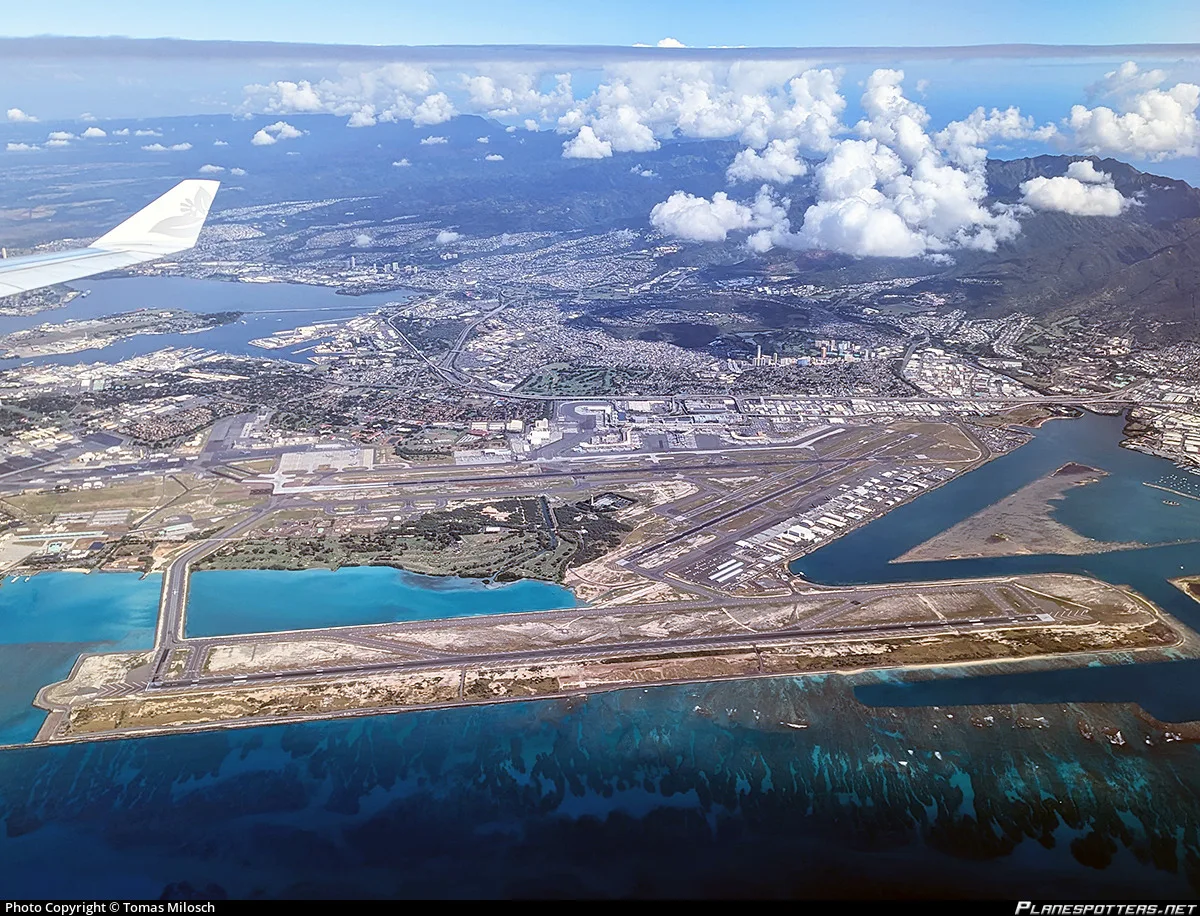
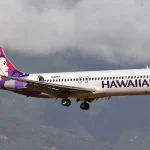
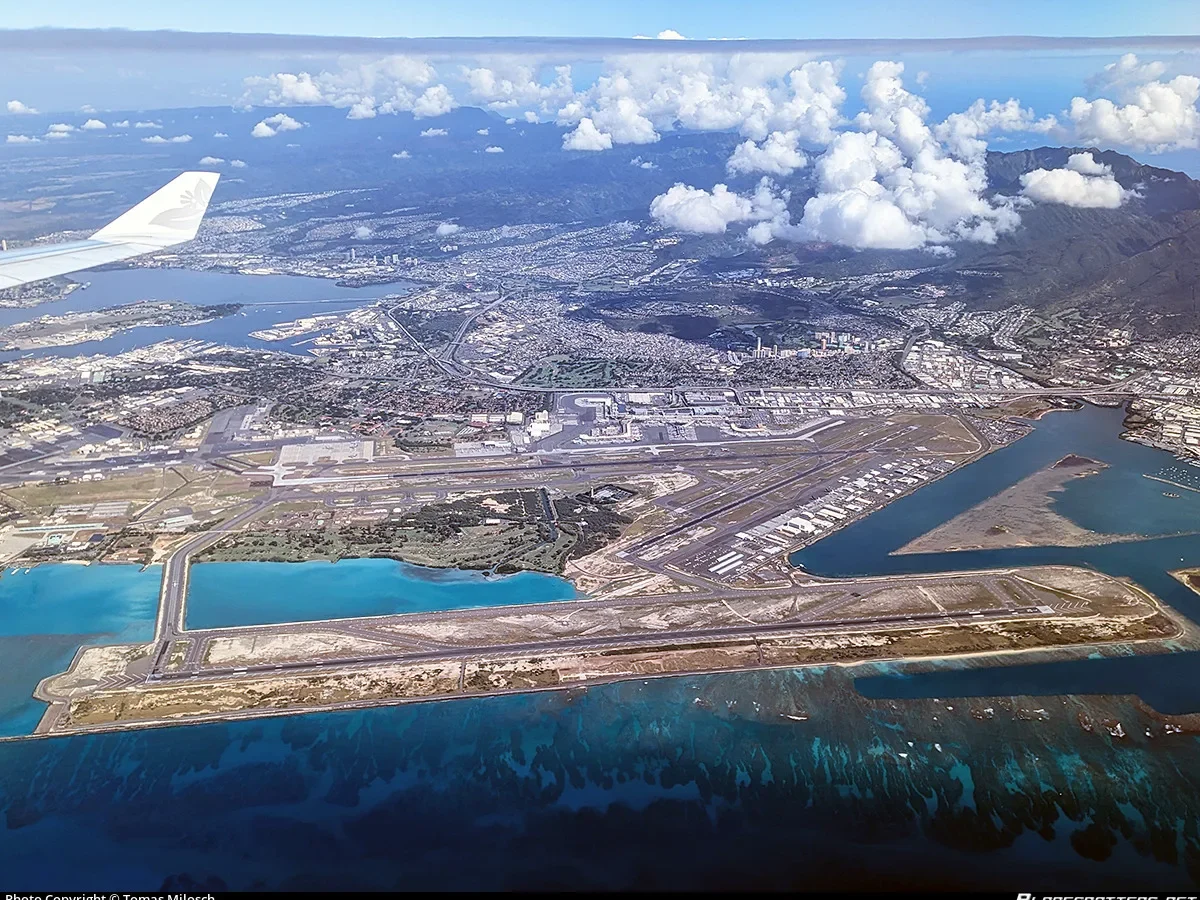
Image source: Web (Bing) / planespotters.net (Web image (fair-use with source credit))
Quick Answer
There are three public civilian airports on Oahu. Only Daniel K. Inouye International Airport handles scheduled airline flights.
The other two public airfields serve gliders, private charters, and flight training. Two additional airfields on Oahu are restricted military installations.
The Quick Count: How Many Airports Are on Oahu?
Oahu has five major active airfields across the island. The state of Hawaii owns and operates three of these facilities for public civilian aviation. The United States military operates the other two for defense operations and tactical training.
Civilian fliers only need to know about the three public facilities. If you book a seat on an airline, you will always pass through Honolulu. The other fields handle light planes, skydiving, corporate jets, and helicopter tours.
| Airfield Name | Airport Code | Location | Primary Purpose |
|---|---|---|---|
| Daniel K. Inouye International | HNL | Honolulu (South Shore) | Commercial airlines and cargo |
| Kalaeloa Airport (John Rodgers Field) | JRF | Kapolei (West Oahu) | General aviation and reliever |
| Dillingham Airfield (Kawaihāpai) | HDH | Mokulēʻia (North Shore) | Skydiving and glider operations |
| Wheeler Army Airfield | HHI | Central Oahu | Military helicopter operations |
| MCBH Kaneohe Bay | NGF | Kaneohe (Windward) | Military fixed-wing and rotor |
The 3 Civilian Public Airports on Oahu
The state runs a tiered airport system on Oahu. Each public facility serves a distinct type of aviation to prevent congestion in Honolulu's airspace.
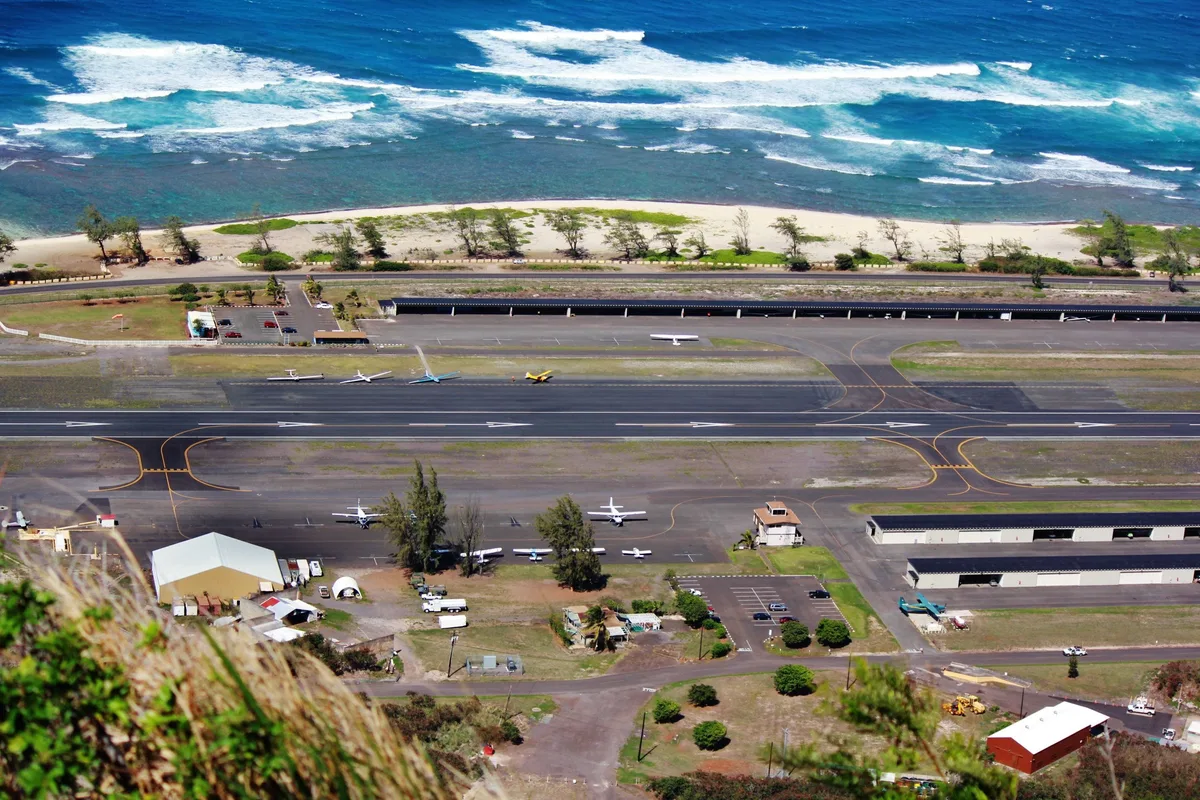
Image source: Web (Bing) / pinterest.com (Web image (fair-use with source credit))
Daniel K. Inouye International Airport (HNL)
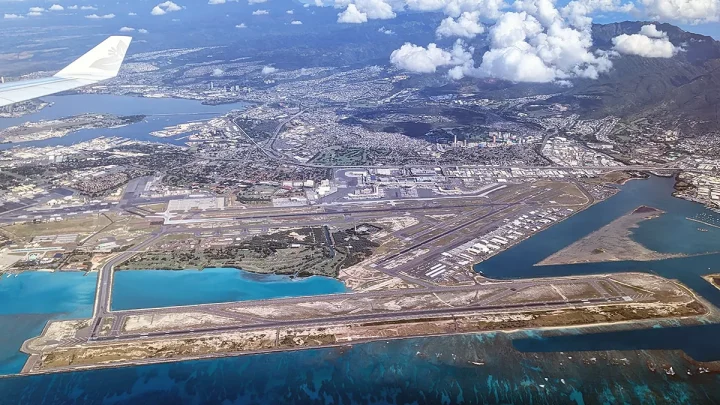
HNL is the primary international gateway for the entire state of Hawaii. It sits three miles west of downtown Honolulu and handles over 20 million passengers each year.
The airfield features four active runways, including the famous 12,000-foot Reef Runway built entirely offshore. Every major domestic carrier, international airline, and interisland jet operates from this facility.
Kalaeloa Airport / John Rodgers Field (JRF)
Kalaeloa Airport sits on the grounds of the former Barbers Point Naval Air Station in West Oahu. The state built it as a dedicated general aviation reliever facility.
This airport diverts small private planes, flight school traffic, and corporate jets away from HNL's main commercial runways. It features three operational runways and full air traffic control services.
Dillingham Airfield / Kawaihāpai Airfield (HDH)
Kawaihāpai Airfield occupies 450 acres on Oahu's scenic North Shore near Mokulēʻia. The state leases the airfield from the U.S. Army for civilian use under joint operating rules.
As of 2026, it remains the central hub for local glider soaring, skydiving schools, and scenic ultralight flights. The single 9,007-foot paved runway runs parallel to the ocean and the Waiʻanae mountains.
Oahu's Active Military Airfields (And Why You Can't Land There)
Oahu hosts a substantial defense presence with two standalone military air bases. Civilian planes cannot land at these bases without prior military permission and security clearance.
- Wheeler Army Airfield (HHI): Located in central Oahu next to Wahiawa. It serves as the primary home for Army helicopter units, including UH-60 Black Hawks and CH-47 Chinooks.
- Marine Corps Base Hawaii / Kaneohe Bay (NGF): Sits on the Mokapu Peninsula on the windward coast. It hosts maritime patrol aircraft, tactical transport planes, and Marine rotor squadrons.
- Joint Base Pearl Harbor-Hickam (JBPHH): Hickam Air Force Base physically shares the runways at HNL. Air Force cargo transports and fighter jets take off from the same runways used by commercial airliners.
Civilian pilots must stay clear of restricted airspace surrounding these military facilities. The Federal Aviation Administration enforces strict altitude and route restrictions across Oahu to separate military maneuvers from commercial jet corridors.
Decision Guide: Which Oahu Airport Fits Your Travel Plans?
Choosing the right airfield on Oahu comes down to your flight type and where you plan to spend your time.
- If you are flying on a commercial airline: Book all flights through Daniel K. Inouye International Airport (HNL). This applies to mainland flights, international routes, and interisland island-hopper flights.
- If you are chartering a private jet to Ko Olina: Consider routing your aircraft into Kalaeloa Airport (JRF). It sits just 15 minutes away from the West Oahu resorts and avoids Honolulu freeway traffic.
- If you are booking a tandem skydive or scenic glider flight: Head directly to Dillingham Airfield (HDH) on the North Shore. Tour operators run daily flights taking advantage of the coastal thermal ridge lift.
- If you are taking flight training lessons: You will split your time between HNL and JRF. Most flight instructors use Kalaeloa for pattern work and touch-and-go practice to avoid commercial airline wake turbulence.
Navigating HNL: Terminals, Airlines, and Interisland Connections
Daniel K. Inouye International Airport divides its operations across three distinct terminal buildings. Understanding how they connect saves you from sprinting across long open-air walkways.
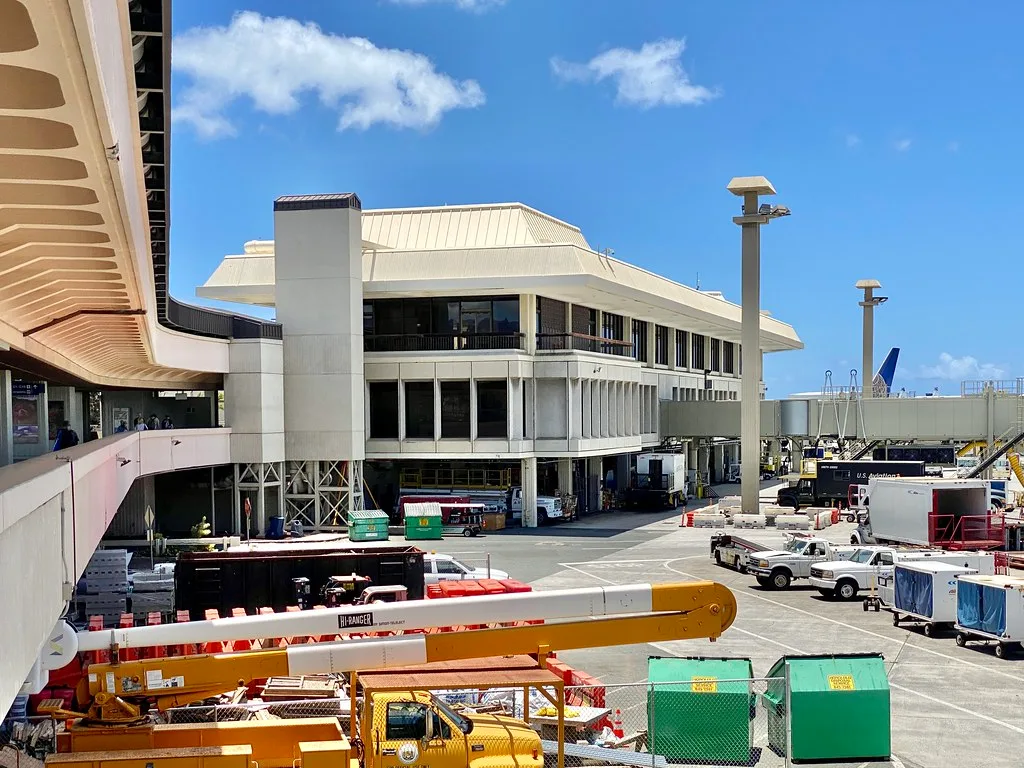
Image source: Bing (Web (fair-use with source credit))
- Terminal 1: This terminal serves Hawaiian Airlines for both interisland flights and mainland routes. It also connects directly to the Mauka Concourse, which features modern gates and expansive security checkpoints.
- Terminal 2: This is the largest facility on site. It handles all mainland domestic legacy carriers (like United, American, and Delta) alongside international airlines like ANA and Japan Airlines.
- Terminal 3: Located farther west along Aolele Street, this small single-story facility serves Mokulele Airlines for commuter flights to smaller neighbor-island strips.
Moving between Terminal 1 and Terminal 2 is easy via third-level pedestrian walkways or the Wiki Wiki Shuttle bus. If you connect to Terminal 3, you must exit the secured area and take an airport shuttle or walk roughly 15 minutes along the street.
Ground Transportation and Drive Times Across Oahu
Getting from the runway to your hotel depends heavily on local traffic patterns along the Interstate H-1 corridor. Honolulu traffic ranks among the heaviest in the country during weekday morning and afternoon rush hours.
| Destination Region | Distance from HNL | Typical Off-Peak Drive | Peak Rush Hour Drive | Best Transport Option |
|---|---|---|---|---|
| Waikiki Beach | 9 miles | 20 to 25 minutes | 45 to 60 minutes | Rideshare, taxi, or express shuttle |
| Ko Olina Resorts | 20 miles | 25 to 30 minutes | 50 to 75 minutes | Rental car or private transfer |
| Haleiwa (North Shore) | 30 miles | 40 to 45 minutes | 60 to 80 minutes | Rental car |
| Kailua / Kaneohe | 16 miles | 25 to 30 minutes | 45 to 55 minutes | Rental car or rideshare |
| Turtle Bay (Far North) | 38 miles | 55 to 65 minutes | 80 to 100 minutes | Rental car |
Car rental pickup at HNL takes place at the Consolidated Rent-A-Car (CONRAC) facility located directly across from Terminal 2. Public transit riders can also catch TheBus routes 19, 20, and 31 directly from the second-level roadway.
Common Airport Mistakes Travelers Make on Oahu
A few simple planning errors can disrupt an otherwise smooth Hawaiian vacation.
- Arriving late for agricultural inspection: Every checked bag leaving Hawaii for the mainland must pass through an USDA agricultural screening scanner before airline check-in. Failing to do this first forces you to wait in line twice.
- Assuming you can fly commercially into the North Shore: Mokulele and other airlines do not run scheduled passenger flights to Dillingham Airfield. You cannot book a commercial flight directly to Haleiwa.
- Underestimating Terminal 3 transfers: Commuter connections on Mokulele Airlines require clearing TSA security again after walking over from Terminals 1 or 2. Always allow at least 90 minutes between connecting flights.
- Returning rental cars during H-1 rush hour: Traffic heading eastbound toward the airport between 3:00 PM and 6:30 PM slows to a crawl. Build an extra 45 minutes into your departure schedule if driving from West Oahu.
Frequently Asked Questions About Oahu Airports
What is the main commercial airport on Oahu?
The main commercial airport is Daniel K. Inouye International Airport (HNL) in Honolulu. It handles all scheduled flights from mainland carriers, international airlines, and major interisland operators.
Can you fly directly into the North Shore of Oahu?
No commercial airlines fly scheduled passenger routes to the North Shore. Dillingham Airfield operates strictly for skydiving planes, scenic glider rides, and private recreational flights.
Does Oahu have more than one airport with passenger terminals?
Only Daniel K. Inouye International Airport features full passenger airline terminals. Kalaeloa Airport accommodates private jet charters, but it lacks scheduled commercial airline service.
How far is the Honolulu airport from Waikiki?
Daniel K. Inouye International Airport sits approximately 9 miles west of Waikiki Beach. Driving takes about 20 to 25 minutes in normal conditions and up to an hour during peak traffic.
How many military airfields are located on Oahu?
Oahu has two dedicated standalone military airfields: Wheeler Army Airfield and Marine Corps Base Hawaii at Kaneohe Bay. Hickam Airfield also shares runways with HNL under a joint-base agreement.

Similar Posts