How Many Volcanoes Are on Oahu? The Surprising Truth
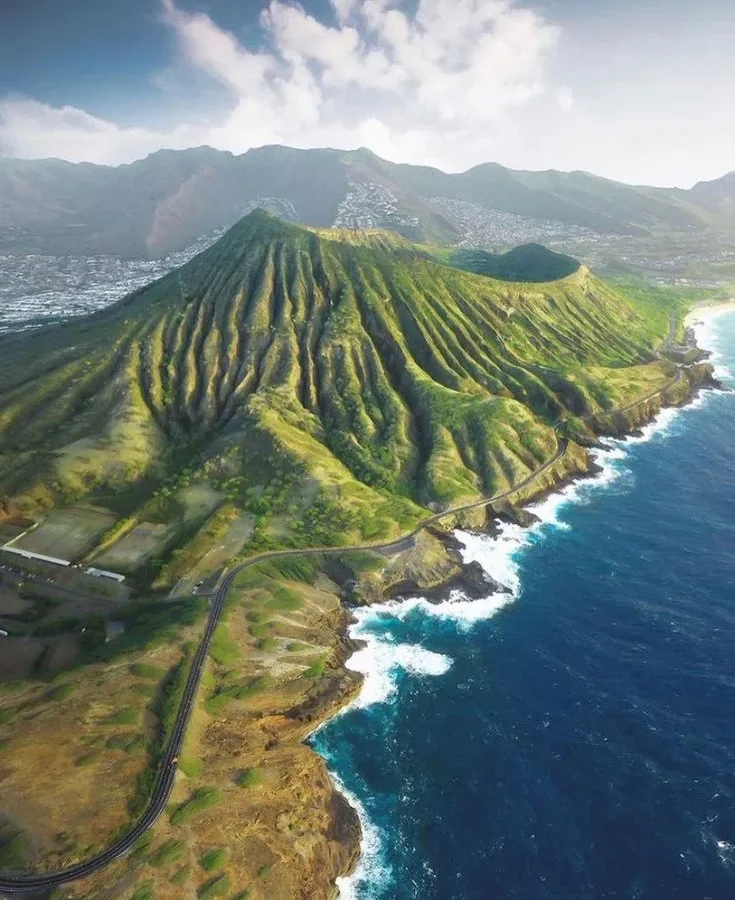
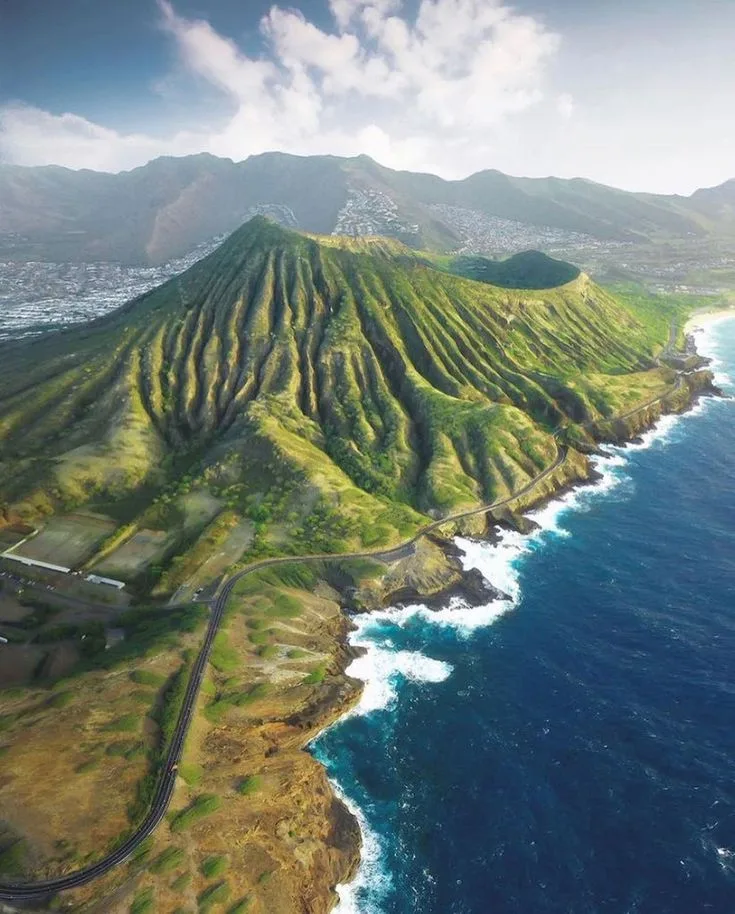
Image source: Web (Bing) / pinterest.com (Web image (fair-use with source credit))
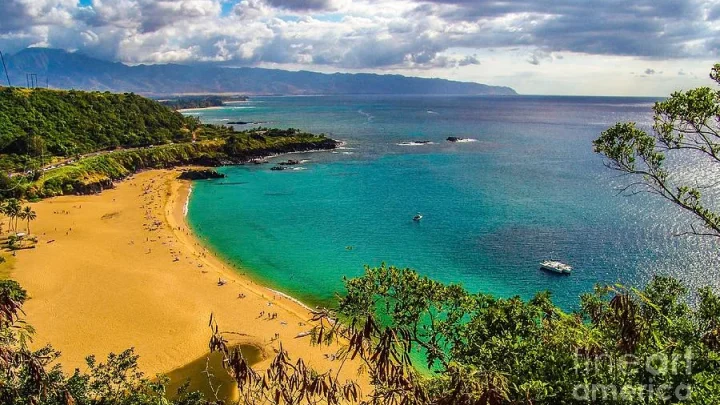
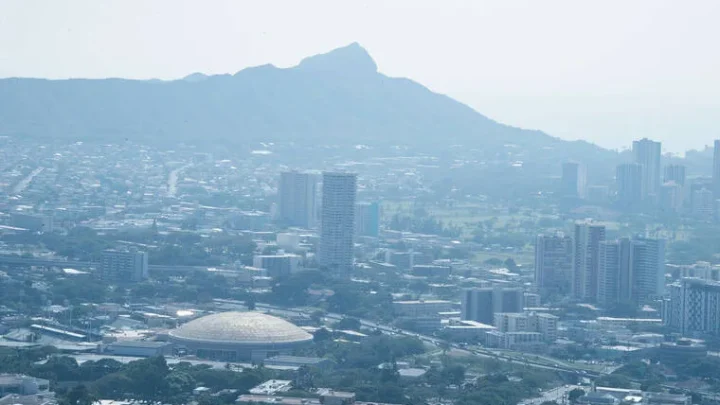
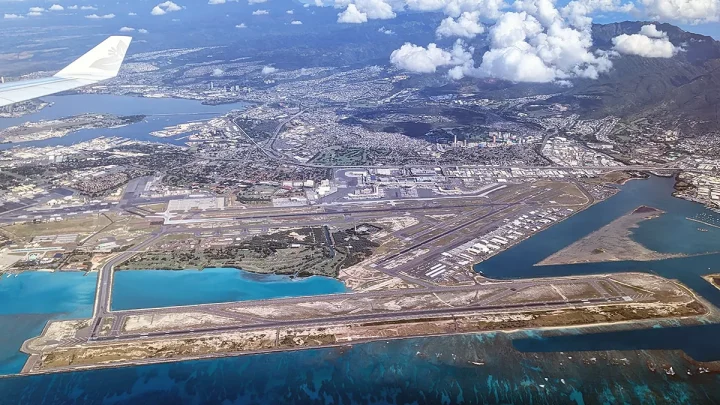
If you look at the jagged green peaks and dramatic craters across Honolulu, you might wonder how many volcanoes on oahu actually exist. The landscape looks like a crowded field of extinct eruptions. You can see steep craters rising right out of residential neighborhoods and sandy beaches.
Geologically, the answer is surprisingly precise. Oahu was built by two primary shield volcanoes, along with a newly recognized submarine precursor shield. Everything else you see across the island, including famous spots like Diamond Head and Punchbowl, represents secondary vent activity.
As of 2026, research from the University of Hawaiʻi at Mānoa confirms that these landmarks belong to a single rejuvenation phase rather than separate, standalone volcanoes.
Quick Answer
Oahu was formed by two main shield volcanoes: Waiʻanae and Koʻolau. A third older volcano, Kaʻena, sits submerged off the northwest coast. Landmark craters like Diamond Head and Punchbowl are not independent volcanoes.
They are secondary volcanic vents created during a late rejuvenation phase.
The Short Answer: Why the Count Isn't Simple
The exact count depends on how you define a volcano. If you mean the massive, independent mountains that built the island from the sea floor up, Oahu has two main volcanoes above water.
These two primary structures are the Waiʻanae Volcano in the west and the Koʻolau Volcano in the east. They formed millions of years ago over the Hawaiian mantle plume. Over time, their lava flows overlapped to create the single landmass we live on and visit today.
Confusion happens because Oahu is covered in over 30 distinct volcanic craters, tuff cones, and cinder cones. Casual visitors often assume each crater is its own volcano. In geological terms, those smaller formations are monogenetic vents.
That means they erupted only once or for a very brief period from the cooling root system of the Koʻolau shield.
Mapping Oahu's Foundation: The Two Primary Shield Volcanoes
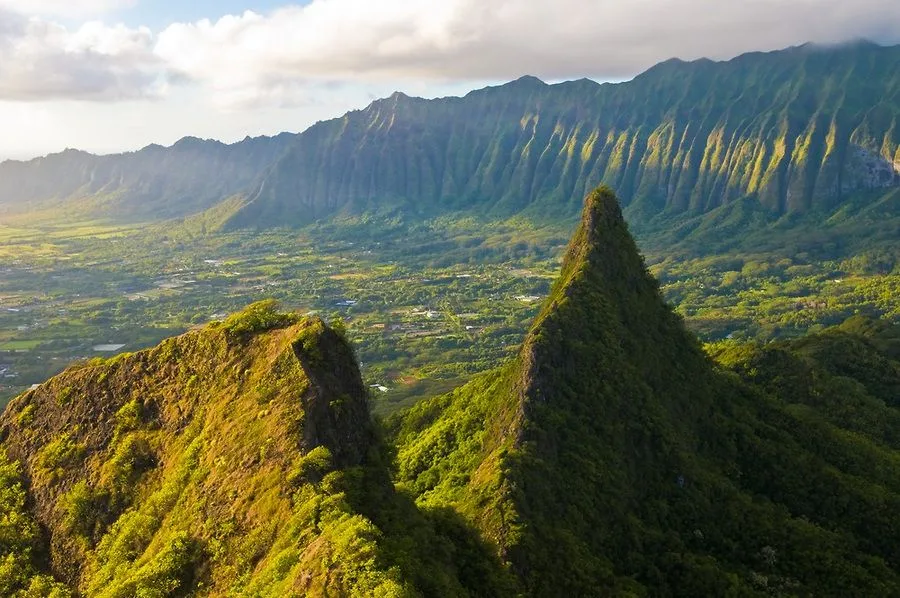
Image source: Web (Bing) / pinterest.com (Web image (fair-use with source credit))
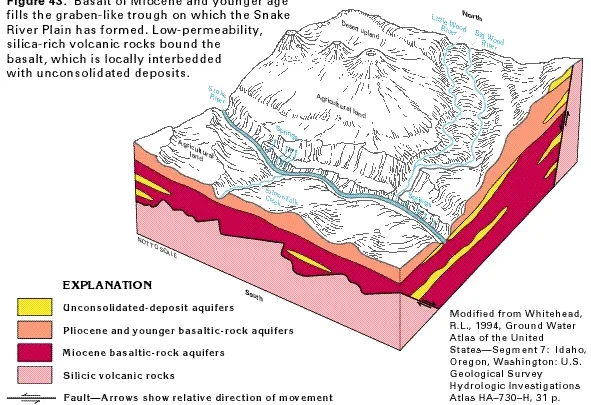
To understand Oahu, you have to picture two massive, overlapping basalt shields. Millions of years of fluid basaltic lava built these mountains layer by layer from the deep ocean floor.
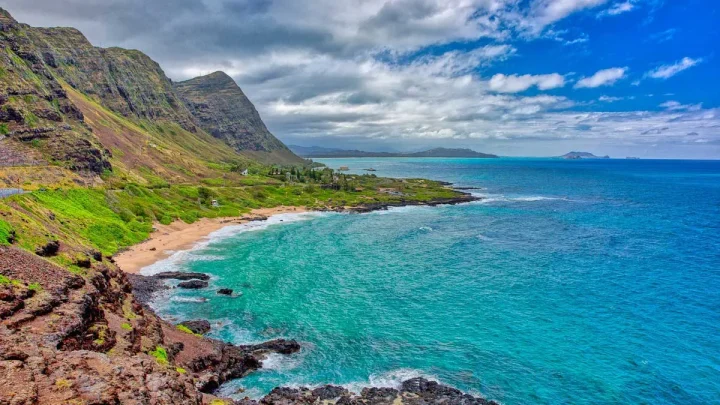
Over time, heavy rainfall, stream erosion, and catastrophic flank collapses tore away large sections of both shields. What remains today are two long, parallel mountain ranges connected by the high central plateau of Wahiawā.
Waiʻanae Volcano: The Western Spine
The Waiʻanae Volcano is the older of the two land-based shields. It began growing from the ocean floor roughly four million years ago. Its main shield-building eruptions ended around 2.9 million years ago.
Because Waiʻanae is older, erosion has had more time to carve its slopes. It features deep, dramatic amphitheater valleys like Mākaha and Lualualei. Its highest peak, Mount Kaʻala, rises 4,025 feet above sea level.
That makes it the highest natural point on Oahu.
Koʻolau Volcano: The Jagged Eastern Ridge
The Koʻolau Volcano forms the eastern, windward side of Oahu. It is younger than Waiʻanae, with its primary shield-building activity dating between 2.9 and 1.8 million years ago.
Koʻolau once had a broad, gently sloping profile like Mauna Loa on Hawaii Island. That changed when the massive Nuʻuanu Landslide collapsed the entire eastern half of the mountain into the Pacific Ocean. The collapse left behind the sheer, fluted cliffs known as the Koʻolau Pali.
Kaʻena: The Hidden Third Precursor Shield
In recent decades, marine geologists identified a third primary structure called the Kaʻena Volcano. This submarine precursor shield sits underwater off Oahu's northwest coast.
Kaʻena formed approximately five million years ago. It created the foundation upon which Waiʻanae later developed. While it never grew into a large subaerial landmass of its own, it represents the true starting point of Oahu's volcanic growth.
The Rejuvenation Craters: Why Oahu Has Dozens of Volcanic Vents
After the Koʻolau Volcano finished its main shield-building stage, it went dormant for nearly two million years. Heavy tropical rains carved valleys into the basalt slopes.
Then, long after the primary magma chamber cooled, a fresh pulse of melting occurred deep in the mantle. This generated what geologists call the Honolulu Volcanism Series.
How Rejuvenation Stage Vents Form
Rejuvenation-stage eruptions do not build massive mountains. Instead, rising magma punches through existing rock, often hitting shallow groundwater or sea water near the coast.
When hot magma meets water, violent steam explosions shatter the lava into fine ash and glass fragments. This material falls back around the vent, forming steep, bowl-shaped tuff rings and cinder cones.
The Honolulu Volcanic Series at a Glance
The Honolulu Volcanic Series produced more than 30 separate vents across southeastern Oahu between 800,000 and 30,000 years ago.
- Tuff rings: Wide, low-rimmed craters formed by explosive hydrovolcanic blasts, such as Diamond Head and Salt Lake Crater.
- Cinder cones: Steeper mounds built by gaseous fire-fountaining, such as Mount Tantalus and Puʻu Ualakaʻa.
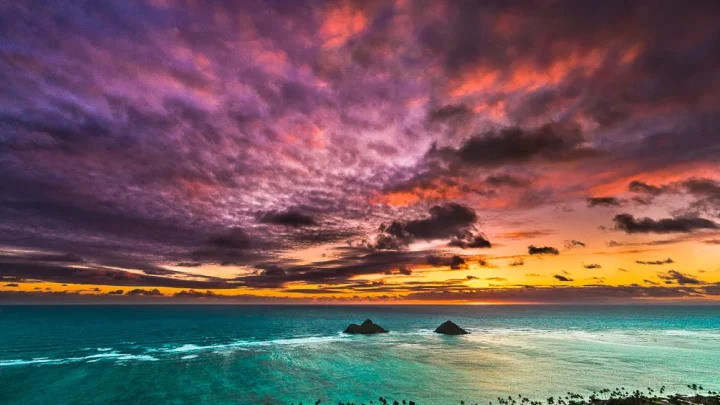
- Spatter vents and offshore islets: Features like Mānana Island (Rabbit Island) and the vents along the Koko Fissure.
Primary Shields vs. Rejuvenation Craters: A Side-by-Side Comparison
Telling the difference between an original shield volcano and a secondary vent helps make sense of Oahu's landscape. The table below breaks down the structural differences based on data from the USGS Hawaiian Volcano Observatory.
| Feature | Primary Shield Volcanoes (Waiʻanae & Koʻolau) | Rejuvenation Vents (Honolulu Volcanic Series) |
|---|---|---|
| Geological Role | Island builders | Secondary surface modifications |
| Active Lifespan | 1 to 2 million years of continuous flows | Days to months per single vent eruption |
| Eruption Style | Effusive, fluid lava outpourings | Explosive, steam-driven ash and cinder fountains |
| Primary Rock Type | Tholeiitic basalt | Alkalic basalt, nephelinite, and palagonite tuff |
| Resulting Landform | Broad, mountain-sized shield domes | Compact craters, tuff rings, and cinder cones |
| Age Range | 1.8 to 4.0 million years old | 30,000 to 800,000 years old |
| Examples | Waiʻanae Range, Koʻolau Range, Mount Kaʻala | Diamond Head, Punchbowl, Hanauma Bay, Koko Crater |
Visual Guide: Spotting Oahu’s Most Famous Volcanic Landmarks
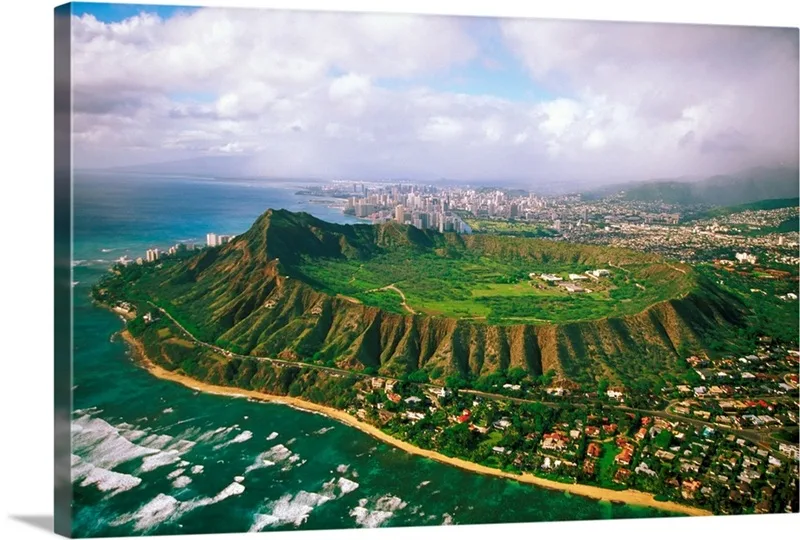
Image source: Bing (Web (fair-use with source credit))
When you look across the Honolulu skyline, you can spot several distinct volcanic formations. Each landmark tells a clear visual story of explosive steam interactions and trade wind patterns.
Diamond Head (Lēʻahi)
Diamond Head is an asymmetric tuff cone formed roughly 400,000 to 500,000 years ago. You will notice that its southern rim is significantly higher than its northern edge.
Strong northeast trade winds blew explosive ash clouds toward the southwest during the eruption. That drift stacked extra material on the ocean-facing rim.
Hanauma Bay
Hanauma Bay consists of two overlapping tuff craters breached by the Pacific Ocean. Violent phreatomagmatic explosions blasted through the existing coral reef and basalt rock.
Over tens of thousands of years, persistent ocean wave action eroded the thin outer crater wall. Sea water flooded the interior bowl, creating the sheltered marine sanctuary you see today.
Koko Crater and Koko Head
Koko Crater (Kohelepelepe) is the tallest and best-preserved tuff cone on Oahu, reaching 1,208 feet above sea level. It sits along the Koko Fissure line.
Just southwest across the water sits Koko Head. It is a broader, multi-vent tuff complex that looks more eroded because it faced heavier wave erosion from open-ocean swells.
Punchbowl Crater (Pūowaina)
Punchbowl Crater is a classic, symmetrical tuff cone sitting directly behind downtown Honolulu. It erupted around the same time as Diamond Head.
The crater now holds the National Memorial Cemetery of the Pacific. Its flat interior floor formed as loose ash settled evenly inside the circular rim following the steam blasts.
Tantalus and Round Top (Pūʻu ʻŌhiʻa)
Mount Tantalus and Round Top represent a very different, cinder-rich style of eruption. Unlike Diamond Head, these inland vents erupted far from the ocean shoreline.
Lacking shallow seawater contact, the eruptions produced fire fountains rather than explosive steam ash. They left behind dark, loose volcanic cinder deposits and black ash layers known as punchbowl gravel.
Could Oahu Erupt Again? What Geologists Say
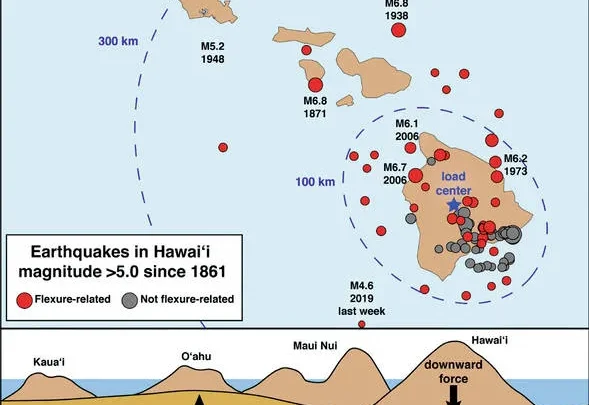
Oahu will not erupt again because the island has completely drifted away from the Hawaiian hotspot. The Pacific tectonic plate moves northwest at roughly three to four inches per year.
This movement has carried Oahu more than 200 miles away from the deep mantle plume fueling active eruptions on Hawaii Island. The magma plumbing system beneath Oahu is entirely severed and cold.
The USGS Hawaiian Volcano Observatory classifies Oahu in Volcano Hazard Zone 9. That is the lowest possible hazard rating in the state of Hawaii. The island presents zero active volcanic risk.
Frequently Asked Questions About Oahu’s Volcanoes
Is Diamond Head an active volcano?
Diamond Head is completely extinct. It erupted roughly 400,000 to 500,000 years ago as a single-event monogenetic vent. Its magma source has been permanently cut off, so it will never erupt again.
What is the highest volcanic peak on Oahu?
Mount Kaʻala is the highest point on Oahu at 4,025 feet. It is located on the older Waiʻanae Range on the western side of the island.
How many active volcanoes are in Hawaii today?
There are currently six active volcanoes in the state of Hawaii. Four are on Hawaii Island (Kīlauea, Mauna Loa, Hualālai, and Kamaʻehuakanaloa), one is on Maui (Haleakalā), and Mauna Kea is considered dormant. None are on Oahu.
Did Diamond Head and Punchbowl erupt at the same time?
They did not erupt at the exact same moment, but they belong to the same geological era. Both formed during the Honolulu Volcanic Series roughly 400,000 to 500,000 years ago along independent fissure lines.
What caused the steep cliffs on the Windward side of Oahu?
The dramatic cliffs of the Koʻolau Pali were created by the prehistoric Nuʻuanu Landslide. The entire eastern half of the Koʻolau shield broke away and slid into the deep ocean floor over two million years ago. Heavy rain and wind erosion shaped the sheer vertical fluting seen today.

Similar Posts