What Does Oahu Really Look Like? A Visual Guide
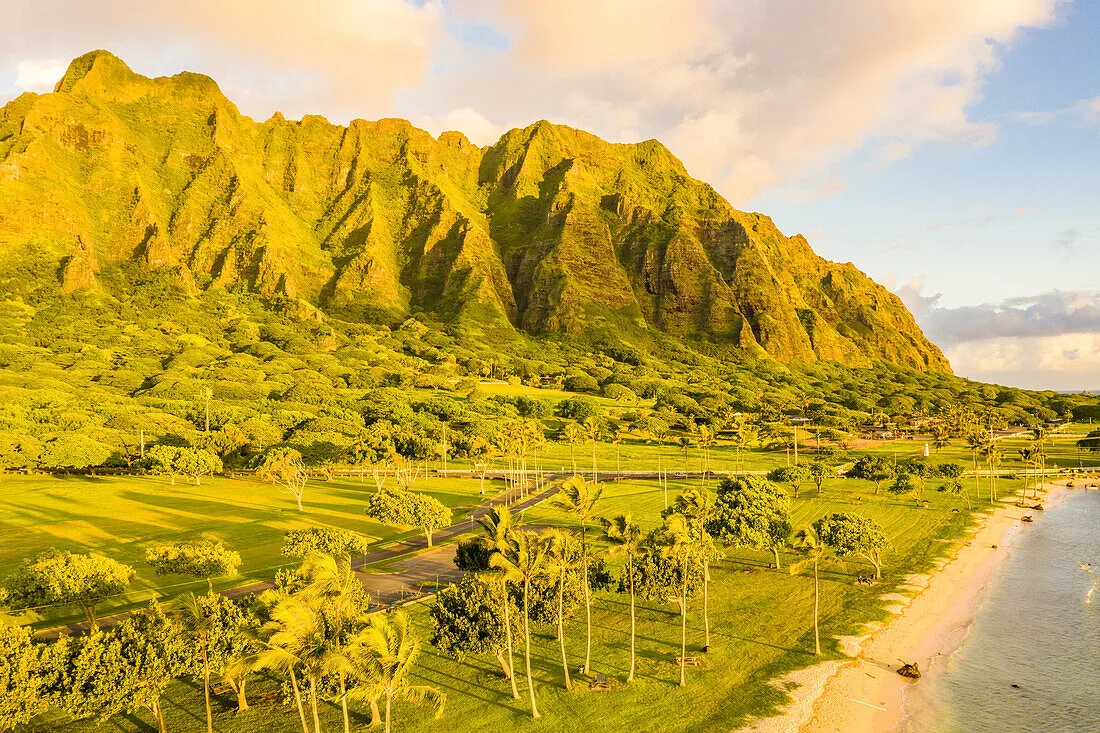
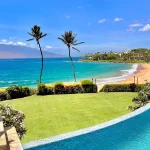
If you are wondering what does Oahu look like in real life, picture extreme contrasts packed into a single island. You get razor-sharp green volcanic cliffs dropping into turquoise bays, right alongside a bustling metropolis with high-rise beachfront hotels.
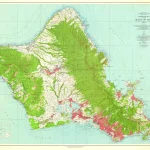
The island covers 597 square miles and features two distinct mountain ranges that create radically different microclimates. Let's look at how the terrain shifts across every region so you can visualize the entire island clearly.
Image source: Web (Bing) / lookphotos.com (Web image (fair-use with source credit))
Quick Answer
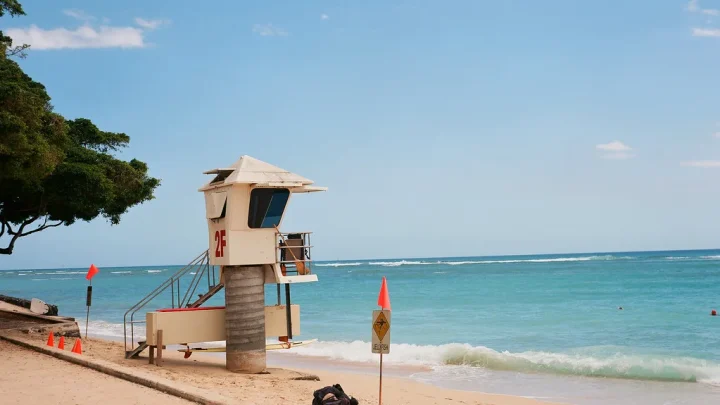
Oahu features jagged green volcanic mountains bordered by white sand beaches and turquoise lagoons. The south shore holds a dense high-rise city skyline. The eastern coast displays massive fluted cliffs.
The north shore consists of rural surf towns and wide bays. The western side is dry, rugged, and sun-bleached.
The Big Picture: Understanding Oahu's Two Volcanic Spines
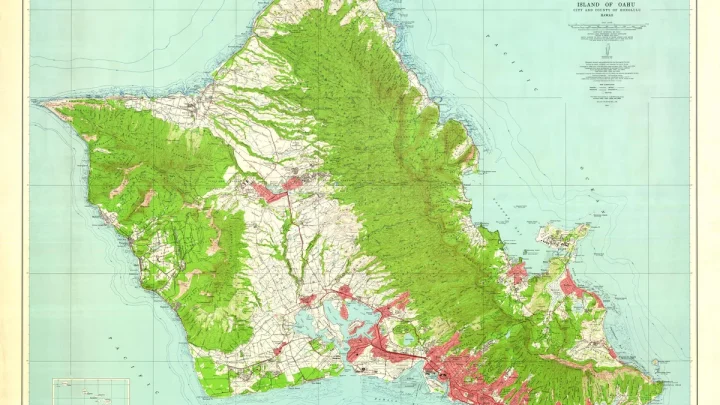
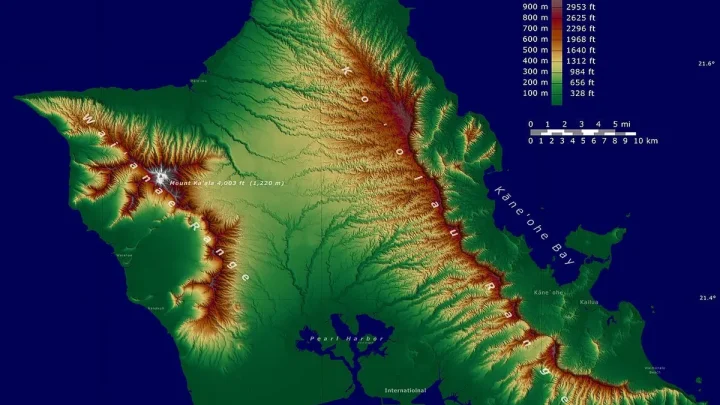
Oahu was formed by two separate shield volcanoes, creating two parallel mountain ranges running northwest to southeast. Between them lies an elevated plateau with bright red dirt. As of 2026, satellite imaging from the USGS Hawaiian Volcano Observatory shows how millions of years of wind and rain carved these ancient volcanoes into steep, fluted ridges.
| Geographic Feature | Location | Visual Character |
|---|---|---|
| Koʻolau Range | East / Windward | Vertical, razor-sharp green cliffs (pali) |
| Waiʻanae Range | West / Leeward | Jagged, arid, golden-brown ridges |
| Schofield Plateau | Central | Terracotta-red agricultural basin |
| South Shore Coast | Urban Core | Dense city towers fronting shallow coral reefs |
The Fluted Cliffs of the Koʻolau Range
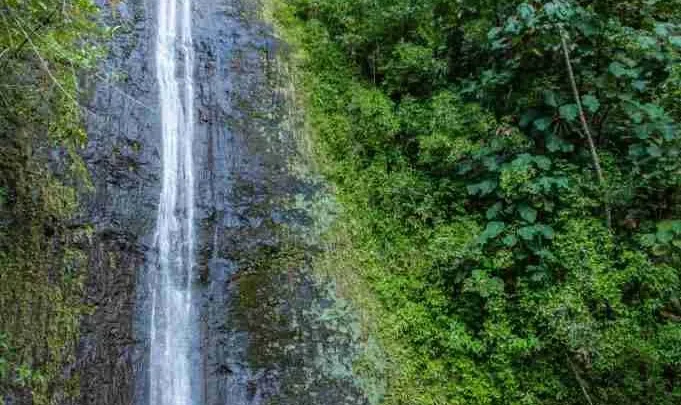
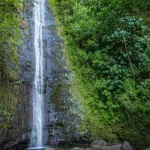
The eastern spine of the island looks like a massive emerald curtain. Rainwater has carved deep vertical channels into the basalt rock over millennia, creating an accordion-like wall known locally as the pali. Clouds constantly cling to these 3,000-foot peaks, feeding lush rainforests and roadside waterfalls below.
The Arid Peaks of the Waiʻanae Range
The western mountain range is older, taller, and much drier. Mount Kaʻala reaches 4,025 feet at the highest point on Oahu. Because the trade winds drop their moisture on the eastern mountains, the Waiʻanae peaks feature deep brown rock faces, golden scrub brush, and steep, dry valleys.
The South Shore: Where High-Rise Skyline Meets Turquoise Water
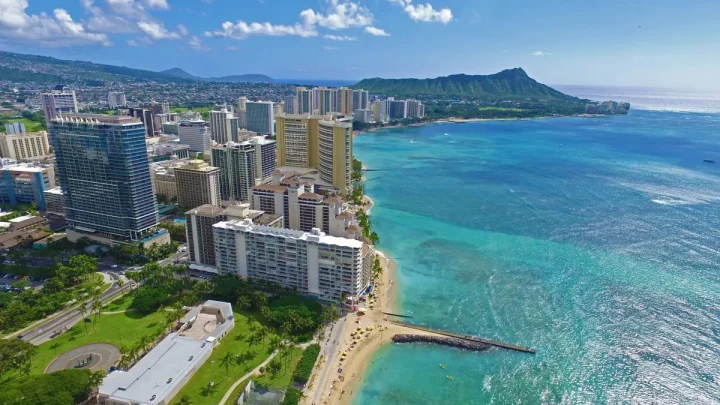
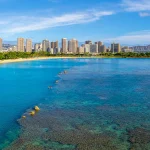
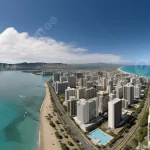
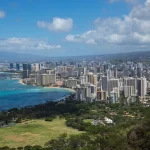
The southern coast delivers a dramatic blend of high-density urban development and vibrant coastal scenery. Glass skyscrapers sit directly against white sand beaches and reef-protected waters.
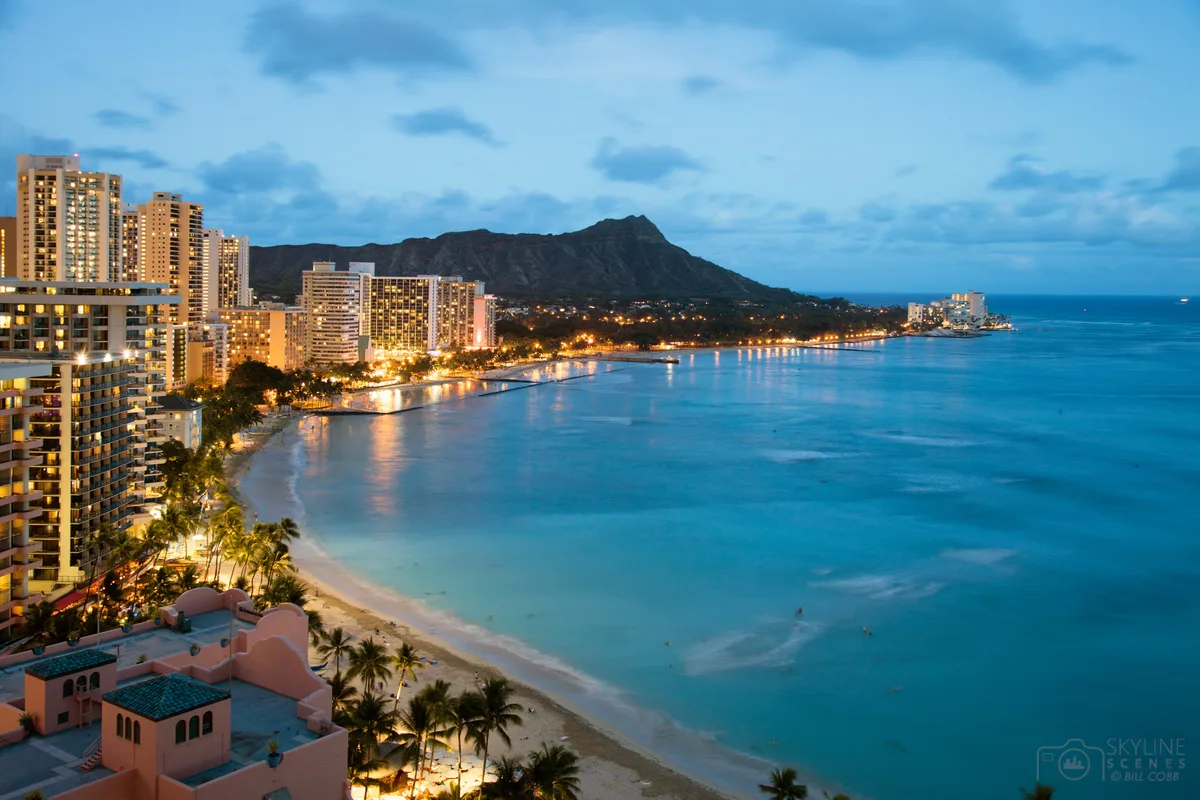
Image source: Web (Bing) / skylinescenes.com (Web image (fair-use with source credit))
The Concrete Beachfront of Honolulu and Waikīkī
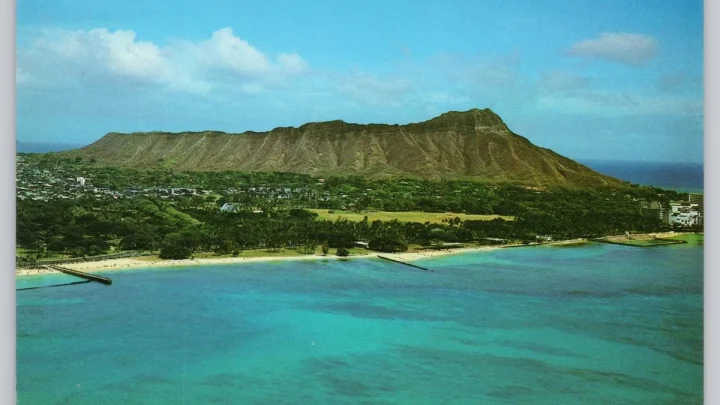
Honolulu looks like a modern tropical metropolis. Waikīkī features luxury hotel towers lining a crescent of pale sand. The shallow offshore waters glow in shades of light turquoise and deep sapphire, dotted with hundreds of surfers and outrigger canoes against a bustling city backdrop.
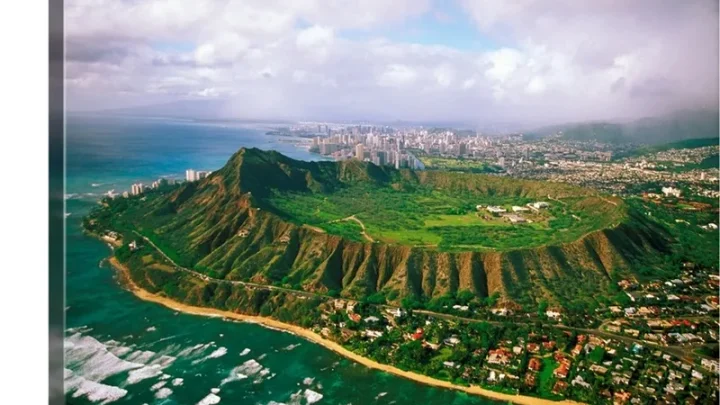
Volcanic Tuff Cones: Diamond Head and Punchbowl
Extinct volcanic craters anchor the urban landscape. Diamond Head (Lēʻahi) is a 760-foot saucer-shaped tuff cone rising right at the edge of Waikīkī. Punchbowl Crater sits inland, hosting the National Memorial Cemetery of the Pacific inside its sunken volcanic basin.
The Windward Coast: Dramatic Green Pali and Shallow Lagoons
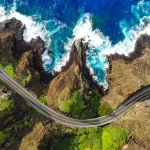
The eastern side of Oahu feels prehistoric and intensely green. Here, the sheer cliffs of the Koʻolau Mountains loom right over coastal residential neighborhoods and turquoise ocean waters.
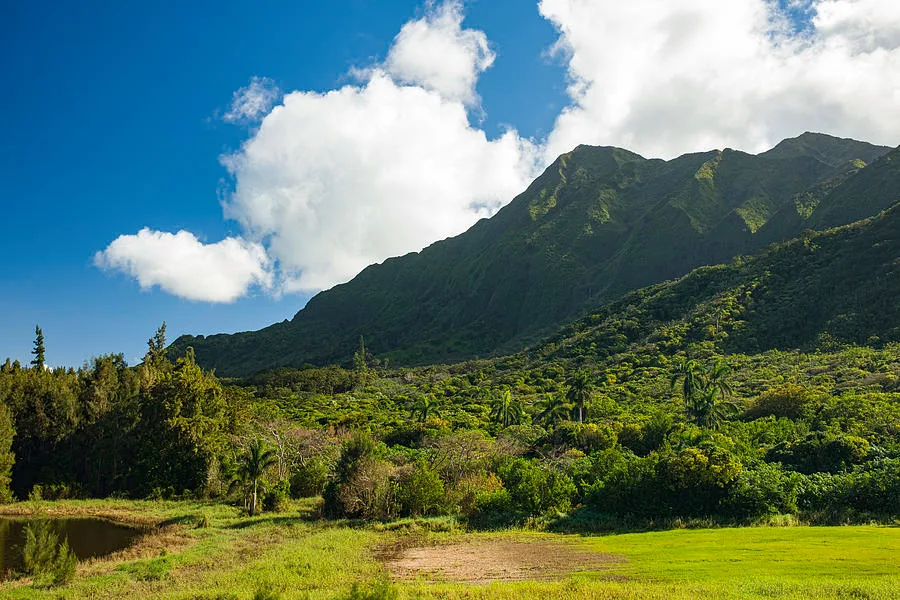
Image source: Web (Bing) / terragalleria.com (Web image (fair-use with source credit))
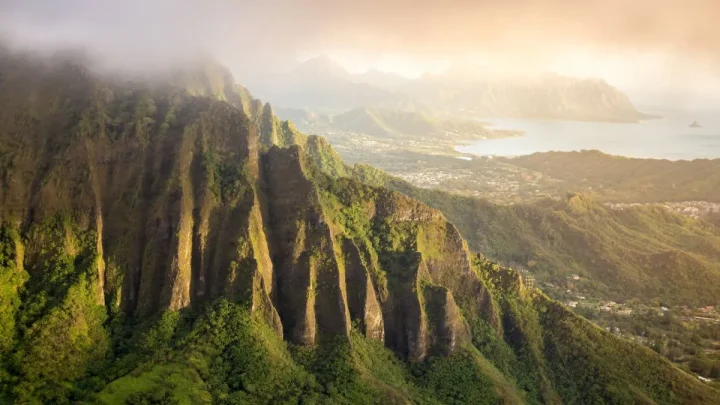
The Razor-Sharp Jurassic Ridges
Kualoa Ranch and the surrounding valleys showcase the island's most iconic dramatic scenery. You will see towering, deeply grooved basalt walls covered in thick tropical vegetation. Rainstorms trigger dozens of temporary ribbon waterfalls that cascade down the green vertical rock faces.
Offshore Islands and Powder-Soft White Sands
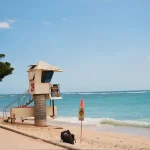
Beaches like Kailua and Lanikai feature fine, powdery white sand formed from crushed coral. Looking out into the bay, you see bright aqua water broken up by offshore bird sanctuaries like the Mokulua Islands. Shallow barrier reefs protect the shoreline, keeping the water calm and bright blue.
The North Shore: Rust-Red Clay, Historic Towns, and Giant Swells
The North Shore feels like an entirely different world from the southern urban core. It is defined by open coastline, narrow two-lane roads, and historic plantation architecture.
Rural Charm and Low-Slung Plantation Architecture
Towns like Haleʻiwa feature rustic wooden storefronts, ironwood trees, and open-air food trucks. You will not find high-rise resorts here. Instead, the landscape consists of sprawling coastal parks, roadside fruit stands, and wide stretches of coarse, golden-sand beaches.
How the Seasons Completely Transform the Coastline
Winter and summer look completely different on the North Shore:
- Winter (November to March): Powerful Pacific storms drive massive waves reaching 30 feet or higher at spots like Waimea Bay and Banzai Pipeline. The ocean churns with heavy sea spray, creating a misty coastal haze.
- Summer (May to September): The ocean becomes calm and glassy, resembling a flat swimming pool with crystal-clear visibility.
The Leeward Coast and Central Plateau: Sun-Bleached Plains and Red Dirt
The western coast and central interior showcase the driest and most agricultural sides of the island.
Arid Western Valleys and Sea Caves
The Leeward Coast is framed by golden, sun-baked mountain slopes and cobalt-blue water. Coastal pockets like Mākaha and Kaʻena Point feature dramatic sea caves, rugged basalt tide pools, and wide, empty beaches tucked into dry valleys.
Central Oahu's Inland Agricultural Basin
Driving through the central Schofield Plateau reveals endless acres of rich, terracotta-red soil. Pineapples and diversified crops line the rolling fields between the two mountain chains, framed by views of both coastlines in the far distance.
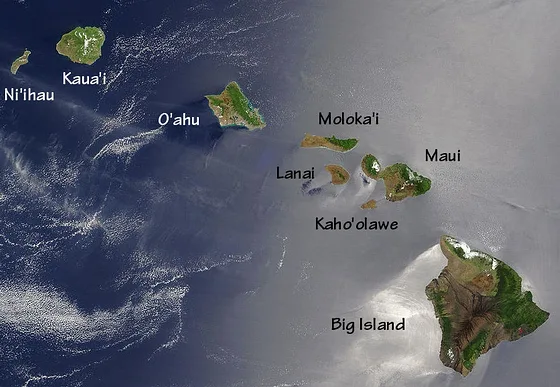
Oahu vs. Neighbor Islands: A Visual Comparison
Understanding Oahu means seeing how it stacks up against the other major Hawaiian islands. While every island shares a volcanic origin, their age, erosion levels, and population densities create drastically different environments.
+-------------------------------------------------------------+
|                      HAWAIIAN ISLANDS                       |
|                                                             |
|   Kauai: Deeply carved canyons & dense emerald wilderness   |
|     |                                                       |
|   Oahu: Sharp green pali, arid leeward peaks, urban core    |
|     |                                                       |
|   Maui: Broad volcanic slopes, valley isthmuses, beaches    |
|     |                                                       |
|   Big Island: Vast black basalt fields, active volcanoes    |
+-------------------------------------------------------------+
Oahu vs. Maui, Kauai, and the Big Island
Our research shows that first-time visitors often expect every island to look identical. In reality, each has a distinct visual footprint:
- Kauai: Geologically older, with deeper red-rock canyons (like Waimea Canyon) and dramatic, razor-thin sea cliffs. It lacks the tall high-rise skyline found on Oahu.
- Maui: Dominated by the massive, rounded shield of Haleakalā and rolling upcountry pastures. It features fewer vertical pali cliffs than Oahu, offering wider coastal plains instead.
- Island of Hawaii (Big Island): Geologically the youngest island. It features sprawling black basalt lava fields, snow-capped volcanic summits, and active geothermal vents rather than heavily eroded green ridges.
- Oahu: Offers the sharpest contrast between a modern metropolitan skyline and rugged, accessible volcanic mountain walls.
| Island | Key Visual Feature | Mountain Character | Urban Density |
|---|---|---|---|
| Oahu | Fluted cliffs beside high-rises | Steep, razor-edged green ridges | High (Honolulu metro) |
| Kauai | Deep red canyons, wild rivers | Heavily eroded, jungle-draped | Very low (rural) |
| Maui | Broad valleys, volcanic domes | Sweeping, gradual slopes | Moderate (resort towns) |
| Big Island | Black basalt lava fields | Massive active volcanic shields | Low (spread out) |
Common Visual Misconceptions About Oahu
Travel advertisements often flatten Oahu into a single endless stretch of palm trees and calm white sand. The reality is far more diverse and dynamic.
The Reality Behind the Postcard Marketing
Many people picture Oahu as an untouched, primitive jungle. While places like the Windward Coast deliver that look, you will also see multi-lane freeways, busy shipping ports, and residential neighborhoods sprawling across the southern hills. You get wild nature and modern infrastructure right next to each other.
Another misconception involves beach sand. Not every beach has fine white powder. North Shore beaches feature coarse, deep-orange sand made of crushed shells.
Other parts of the island feature rugged black basalt shelves and rocky tide pools where swimming is impossible.
Microclimates and Shifting Weather Patterns
Rainfall varies wildly across just a few miles due to the mountains blocking incoming weather. The National Oceanic and Atmospheric Administration (NOAA) documents how trade winds push moist ocean air up against the Koʻolau Range.
This causes frequent localized rain squalls on the east side, while the west coast stays completely sunny and arid under a rain shadow. You can easily drive from a misty tropical downpour into bright sunshine within 15 minutes.
Frequently Asked Questions About Oahu's Landscape
Is Oahu mostly city or jungle?
Oahu is a balanced mix of both environments. The south shore holds the dense city of Honolulu, while the windward and interior regions feature lush rainforests and dramatic mountains. Over a third of the island remains preserved agricultural land and open conservation forest reserves.
What color is the sand on Oahu beaches?
Most Oahu beaches feature pale golden or white coral sand. The North Shore has coarser, darker orange sand formed by crushed shells and marine life. You will also find dark basalt rock shelves and occasional pockets of greenish volcanic olivine grains along rocky points.
Why do the mountains on Oahu look like green curtains?
Millions of years of heavy tropical rainfall carved vertical channels into the soft basalt of the extinct Koʻolau volcano. These steep fluted grooves, called pali, collect thick layers of ferns, moss, and tropical trees that create an accordion-like green curtain effect.
Does Oahu have active volcanoes or black sand beaches?
Oahu has no active volcanoes or fresh black sand beaches. The volcanoes that created Oahu went extinct over a million years ago, allowing extensive erosion to smooth and carve the island. Active lava flows and black sand beaches are found on the younger Big Island.

Similar Posts