How to Get to Oahu: Best Flights, Routes & Tips
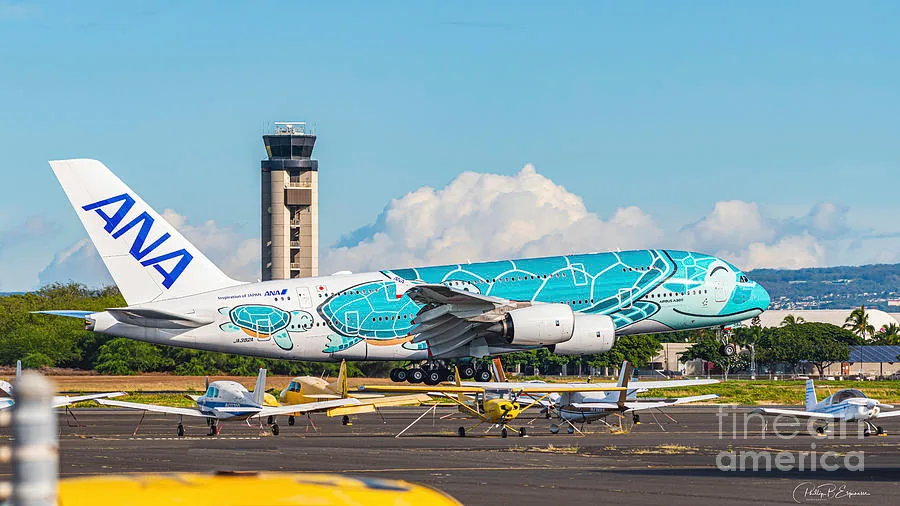
Planning your trip requires knowing how to get to Oahu efficiently based on your departure point. Most travelers arrive by air directly into Honolulu, though transpacific cruises offer a leisurely sea-bound alternative. Selecting the right route saves both travel hours and hundreds of dollars.
Daniel K. Inouye International Airport (HNL) serves as the primary gateway, handling over 20 million passengers annually. Flight paths, airline choices, and connection windows vary significantly depending on where you start.
Here is how to plan the smoothest route to the island.
Image source: Web (Bing) / fineartamerica.com (Web image (fair-use with source credit))
Quick Answer
🌺 Local Island Guide Quick Answer
Knowing how to get to Oahu comes down to choosing your flight route. Most travelers fly directly into Daniel K. Inouye International Airport (HNL) in Honolulu.
West Coast nonstops take five to six hours. East Coast nonstops take roughly ten to eleven hours. Inter-island flights from Maui or Kauai take under forty minutes.
Passenger ferries between islands do not exist.
The Core Routes to Oahu: Air Travel vs. Transpacific Cruises
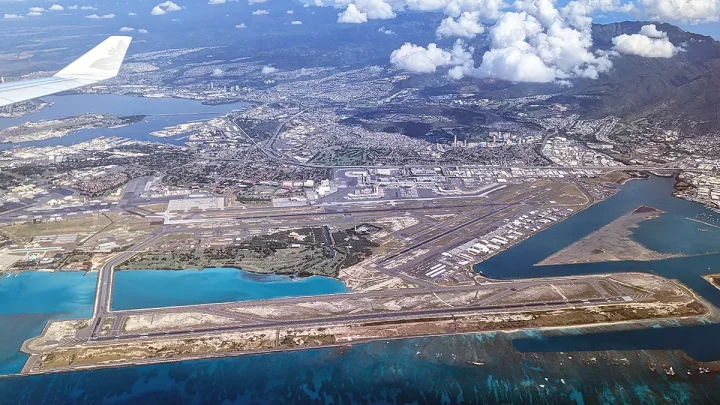
Over 98 percent of visitors reach Oahu by airplane. Daniel K. Inouye International Airport sits right on the southern shore of the island, just minutes from downtown Honolulu and Waikiki.
Commercial air travel offers daily nonstops, competitive fares, and quick transit times.
Transpacific cruises represent the only other viable route. Major cruise lines depart from West Coast ports like Los Angeles, San Francisco, and Vancouver. These sailings typically take four to five consecutive days at sea just to reach Hawaiian waters.
| Travel Method | Travel Time to Oahu | Common Departure Hubs | Best Suited For |
|---|---|---|---|
| Commercial Flight | 5 to 11 hours | LAX, SFO, SEA, ORD, JFK, DFW | Standard vacations, quick getaways, business travel |
| Transpacific Cruise | 4 to 5 days (one way) | Los Angeles, San Francisco, Vancouver | Retirees, extended itineraries, cruise enthusiasts |
| Inter-Island Flight | 30 to 45 minutes | Kahului (OGG), Lihue (LIH), Kona (KOA) | Island-hoppers, multi-island vacation itineraries |
Choose flying if your vacation is shorter than two weeks. Opt for a cruise only if you actively enjoy long ocean crossings and have several weeks of travel time.
Branch 1: Getting to Oahu from the US West Coast
West Coast hubs offer the fastest and most affordable flights to Oahu. Flight times generally run between five and six hours. Because competition is fierce across these routes, airfares are frequently discounted throughout the year.
Major departure gateways include Los Angeles (LAX), San Francisco (SFO), Seattle (SEA), San Diego (SAN), Las Vegas (LAS), and Phoenix (PHX). Airlines competing on these routes include Hawaiian Airlines, Alaska Airlines, United Airlines, Delta Air Lines, and Southwest Airlines. As of 2026, Southwest continues to offer budget-friendly options with two free checked bags.
- Choose morning departures if you want to land in Honolulu by early afternoon and catch the sunset.
- Choose wide-body aircraft routes (like Hawaiian Airlines A330s from LAX) for more cabin space compared to single-aisle jets.
- Book return red-eyes carefully, as overnight flights back to the West Coast leave late and arrive at dawn.
Branch 2: Getting to Oahu from the US East Coast and Midwest
Travelers departing from the East Coast or Midwest face a major strategic decision. You can book an ultra-long-haul nonstop flight or break the journey with a West Coast layover.
Nonstop flights depart from major hubs like New York (JFK), Chicago (ORD), Atlanta (ATL), and Dallas/Fort Worth (DFW). These direct flights take between 8.5 and 11.5 hours of continuous air time. They eliminate connection risks but can feel grueling in economy seating.
- Take the nonstop route if you want to board once, sleep, and arrive on Oahu without gate-change stress.
- Book a West Coast layover if you travel with young children or prefer stretching your legs halfway through.
- Plan for jet lag, since Oahu operates on Hawaii-Aleutian Standard Time (HST), which is five to six hours behind the US East Coast.
Connecting in California or Seattle adds two to four hours to your total travel day. However, it lets you split an eleven-hour haul into two manageable chunks.
Branch 3: Island-Hopping to Oahu from Neighbor Islands
If you are already vacationing on Maui, Kauai, or the Big Island, getting to Oahu is fast and simple. Multiple carriers run continuous shuttle flights throughout the day between the islands.
Hawaiian Airlines and Southwest Airlines operate large jet services between Honolulu (HNL) and Kahului (OGG), Lihue (LIH), and Kona (KOA). These flights take roughly 30 to 45 minutes from takeoff to touchdown. Smaller commuter airlines like Mokulele Airlines serve regional airports like Molokai and Lanai.
- No passenger ferries operate between Oahu and the neighbor islands due to rough channel waters.
- Arrive 90 minutes early at neighbor island airports for inter-island flights to clear standard TSA security.
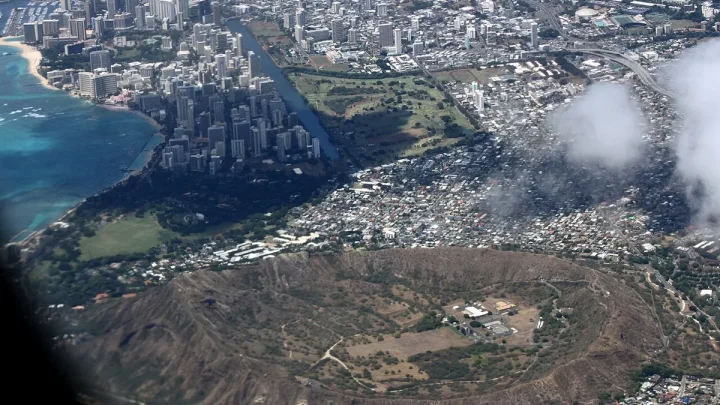
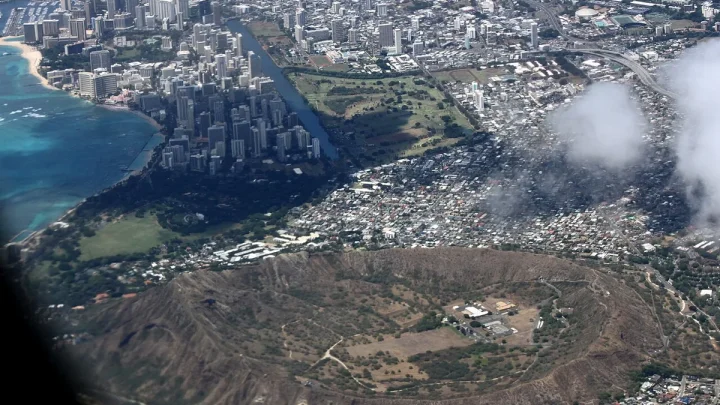
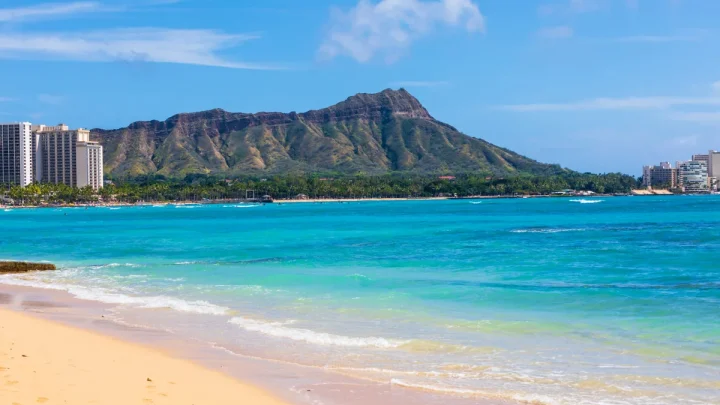
- Select window seats on the left side when flying into HNL for aerial views of Diamond Head and Waikiki.
Inter-island tickets usually cost between $45 and $100 each way when booked a few weeks in advance.
Branch 4: Arriving in Oahu on an International Flight
Honolulu serves as the primary international port of entry for the state of Hawaii. Long-haul international flights arrive daily from across the Pacific Rim, East Asia, and Oceania.
Primary international routes connect Tokyo (NRT and HND), Vancouver (YVR), Sydney (SYD), Auckland (AKL), and Seoul (ICN) directly into HNL. Carriers include Japan Airlines, ANA, Qantas, Air Canada, and Korean Air. Official flight schedules and terminal maps are maintained directly by the Hawaii Department of Transportation Airports Division.
All international arrivals deplane at Terminal 2. You will proceed through US Customs and Border Protection (CBP) processing, collect all checked baggage for inspection, and then clear agricultural screening before exiting into the public arrival lobby.
Navigating Daniel K. Inouye International Airport (HNL) and Ground Transit
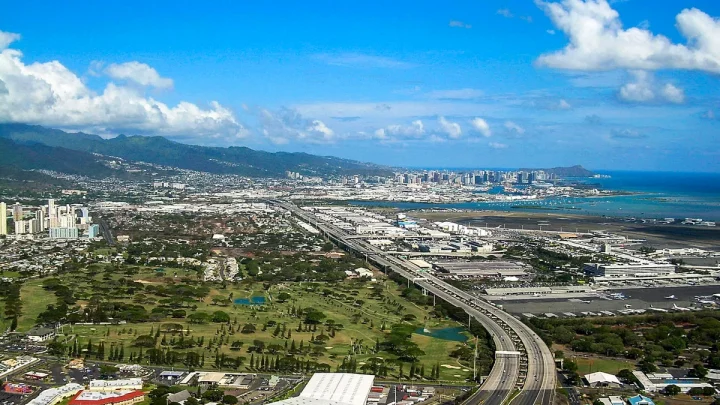
Daniel K. Inouye International Airport features an open-air terminal design that feels distinctly Hawaiian the moment you step off the plane. Terminal 1 handles Hawaiian Airlines domestic and inter-island flights, while Terminal 2 handles all other major domestic and international carriers.
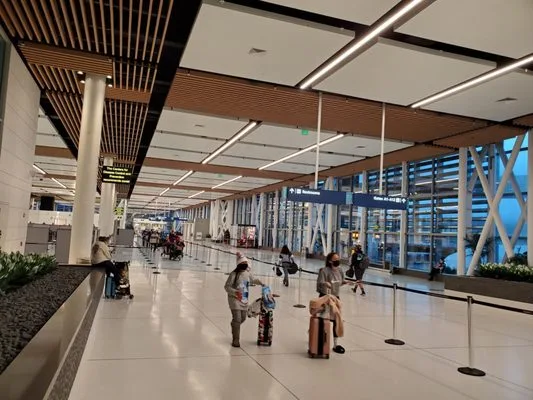
Image source: Web (Bing) / yelp.com (Web image (fair-use with source credit))
Walking distances between gates can be substantial. The free Wiki Wiki Shuttle bus runs on the upper level to transfer passengers between remote concourses and the main terminal buildings. Once you collect your bags from the ground-level baggage claim, several ground transit choices get you to your resort:
- Rental Cars: The Consolidated Rental Car Facility (CONRAC) sits directly across from Terminal 2. Most major rental agencies operate counters and vehicle pickup bays inside this single multi-level complex.
- Rideshare and Taxis: Uber and Lyft operate dedicated pickup zones on the second-floor departure level median. Traditional airport taxis line up outside baggage claim on the ground floor.
- Airport Shuttles: Shared-ride van services like SpeediShuttle and Roberts Hawaii offer pre-booked drop-offs directly to Waikiki and Ko Olina hotels.
- Public Transit: TheBus routes 20 and 303 stop directly at the airport upper roadway. The Honolulu Skyline rail system connects the airport to western Oahu neighborhoods.
Critical Travel Rules: Hawaii Agricultural Inspections and Biosecurity
Protecting the local ecosystem is a legal requirement for anyone traveling to Oahu. The island has delicate native flora and fauna that invasive pests and diseases can easily devastate.
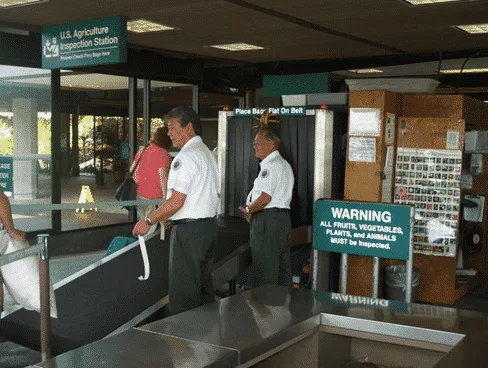
Image source: Web (Bing) / govisithawaii.com (Web image (fair-use with source credit))
Before landing, flight attendants hand out the mandatory State of Hawaii Plants and Animals Declaration Form. Every adult passenger or family head must complete this form declaring any fresh produce, plants, seeds, soil, birds, or live animals in their possession. Detailed import guidelines are published by the Hawaii Department of Agriculture.
- Uncertified fresh fruits and vegetables from the mainland are strictly prohibited to prevent fruit fly infestations.
- Pets face strict rabies quarantine rules. Bringing a dog or cat requires months of advance blood testing to qualify for Direct Airport Release at HNL.
- Before leaving Oahu, your checked and carry-on bags must pass through a USDA agricultural x-ray scanner before TSA security checkpoints to prevent moving fruit off the island.
Common Route Mistakes and Expensive Travel Misconceptions
Travelers planning their first trip often make logistical errors that drive up costs and waste precious vacation time. Avoiding these pitfalls keeps your arrival smooth and predictable.
The most frequent mistake is assuming you can take a passenger ferry from Oahu to Maui, Kauai, or the Big Island. No passenger ferries operate across the open ocean channels between these islands. Flying is the only commercial option for inter-island transit.
Another common mistake involves rental cars. Parking in Waikiki hotels routinely costs $45 to $60 per night. If you plan to spend most of your days on Waikiki Beach, taking rideshare or shuttles from the airport and renting a car for just one or two days saves substantial money.
Booking return flights that leave during evening rush hour creates another unexpected headache. Traffic on the H-1 Freeway heading toward HNL from Waikiki crawls between 3:30 PM and 6:30 PM. Leave your resort at least three to four hours before scheduled departure during these peak traffic hours.
Frequently Asked Questions About Traveling to Oahu
What is the main airport you fly into on Oahu?
You will fly into Daniel K. Inouye International Airport (airport code HNL). It is located in Honolulu, roughly eight miles west of Waikiki Beach and five miles west of downtown Honolulu.
Can you take a ferry from California or another Hawaiian island to Oahu?
No public passenger ferries run from the mainland or between Oahu and neighboring islands. You must book a commercial flight or take a multi-day transpacific cruise ship to reach Oahu.
What is the cheapest month to travel to Oahu?
The lowest airfares generally appear during the shoulder seasons of April to May and September to November. Peak holiday periods in mid-summer and late December bring the highest ticket prices.
How far in advance should I book flights to Oahu?
For the best rates, book domestic mainland flights between two and four months in advance. For holiday travel around Christmas, book at least six to eight months ahead.
Do I need a passport to fly to Oahu from the US mainland?
US citizens do not need a passport to travel to Oahu from another US state. You only need a valid, Real ID-compliant government photo identification card or driver's license.
🥾 Field-Tested Gear: Hawaii Trail & Sightseeing Protection
From rugged Kualoa filming valleys to sharp volcanic ridgelines, tackle Oahu’s premier attractions safely with trail-proven footwear and sun protection:
- High-Traction Breathable Water Hiking Shoes:Check Quick-Dry Water Hiking Shoes on Amazon →
- UPF 50+ UV Sun Protection Long-Sleeve Rash Guard:Check UPF 50+ Sun Protection Shirts on Amazon →
*FTC Disclosure: As an Amazon Associate, Hawaii Travel Bureau earns from qualifying purchases. Learn more about our field-tested travel research methodology.*
🌺 Related Hawaii Sights, Culture & Filming Guides:

Similar Posts