Is Maui Bigger Than Oahu? Size & Population Compared
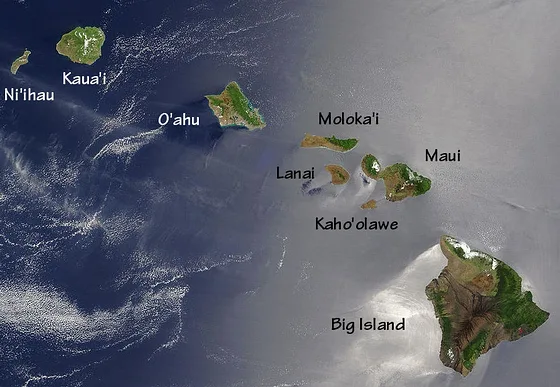
When planning a trip to Hawaii, you might find yourself wondering: is maui bigger than oahu? The short answer is yes, Maui is physically larger than Oahu by a noticeable margin. Maui ranks as the second-largest island in the Hawaiian chain, while Oahu takes third place.
Official geographic survey records place Maui at approximately 727 square miles, compared to Oahu at roughly 597 square miles. That gives Maui about 22 percent more physical landmass. Here is how their physical dimensions, daily drive times, and landscapes compare.
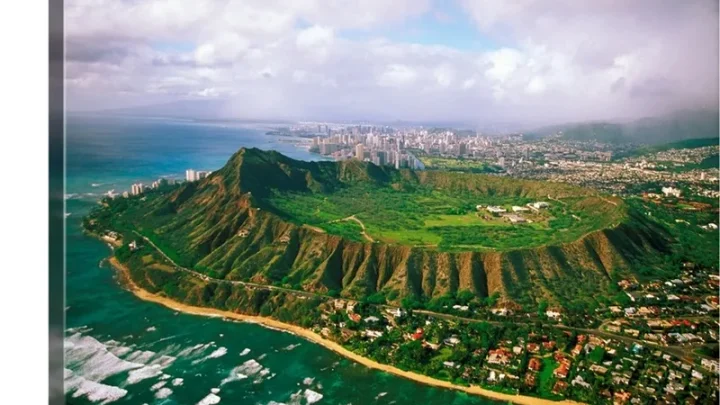
Image source: Web (Bing) / livinginhawaii.com (Web image (fair-use with source credit))
Quick Answer: Is Maui Bigger Than Oahu?
Yes, Maui is physically bigger than Oahu. Maui covers roughly 727 square miles of land. Oahu covers about 597 square miles.
This makes Maui roughly 22 percent larger in total landmass. However, Oahu holds nearly six times more residents.
Breaking Down the Physical Numbers: Square Mileage, Coastline, and Elevation
Looking at raw geographic metrics reveals significant differences between both islands. Maui spans 727.2 square miles (1,883.5 square kilometers). Oahu measures 596.7 square miles (1,545.4 square kilometers), according to land area datasets from the [U.S.
Census Bureau](https://www.census.gov).
That leaves a physical difference of roughly 130.5 square miles between them.
Maui also features a longer coastline and substantially higher terrain. Haleakalā, the dormant shield volcano on East Maui, rises to 10,023 feet above sea level. Oahu’s highest point is Mount Kaʻala in the Waiʻanae Range, which reaches 4,025 feet.
| Geographic Metric | Maui | Oahu | Difference |
|---|---|---|---|
| Land Area | 727.2 sq mi (1,883.5 km²) | 596.7 sq mi (1,545.4 km²) | Maui is +130.5 sq mi (+21.9%) |
| Coastline Length | ~120 miles | ~112 miles | Maui is +8 miles |
| Highest Peak | 10,023 ft (Haleakalā) | 4,025 ft (Mount Kaʻala) | Maui is +5,998 ft |
| Population (as of 2026) | ~165,000 residents | ~1,000,000 residents | Oahu is +835,000 residents |
Maui's vertical rise gives it distinct thermal layers. You can travel from sea-level beaches to freezing summit temperatures in under two hours. Oahu has rugged ridgelines, but its lower peaks create a much more compact vertical footprint.
The Illusion of Scale: Why Oahu Feels So Much Bigger
Many travelers assume Oahu is the larger island before looking at a map. This common misconception happens because of urban density and population distribution.
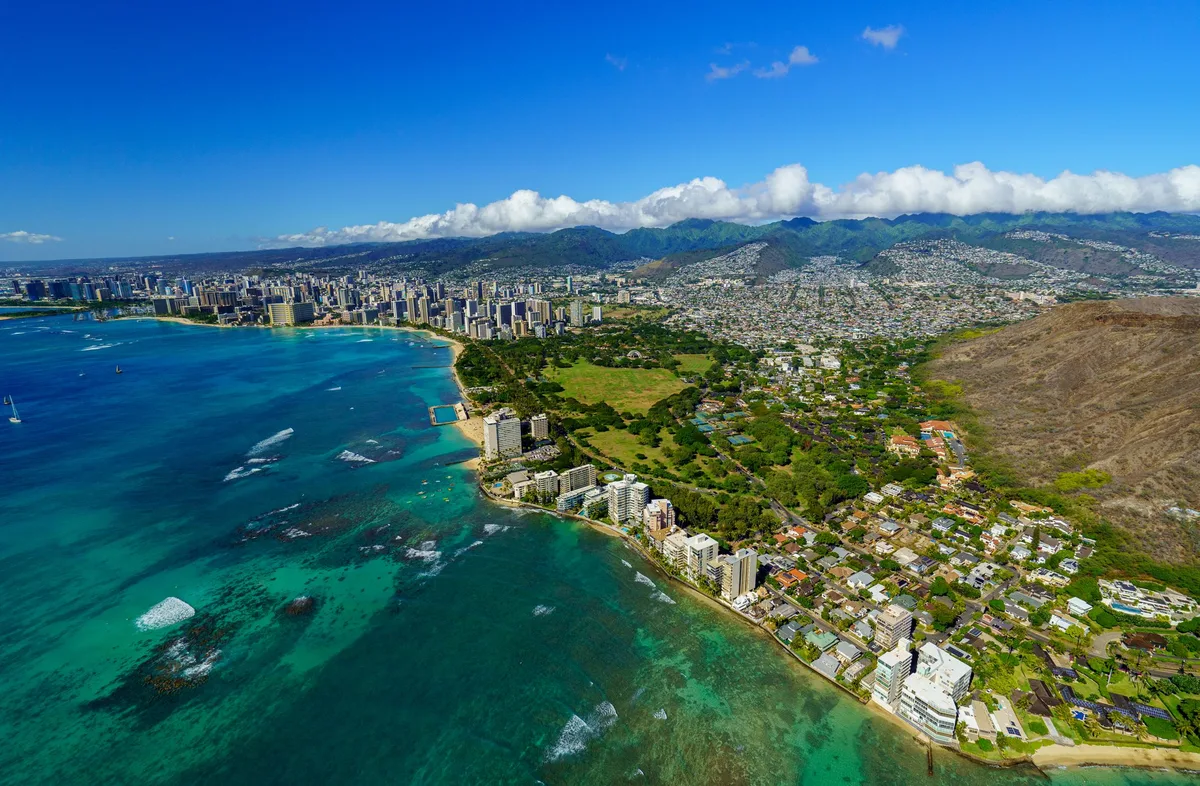
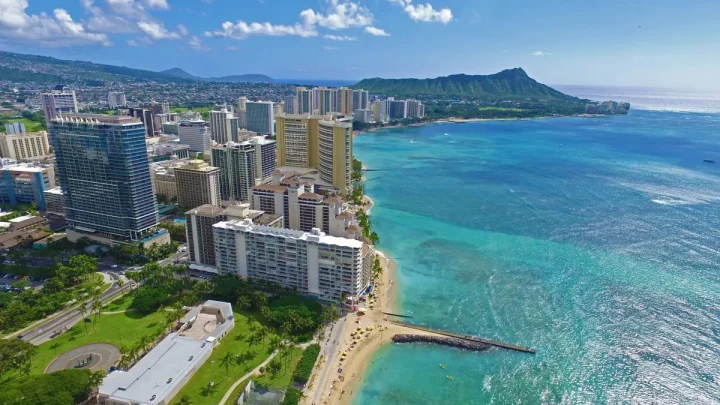
Image source: Bing (Web (fair-use with source credit))
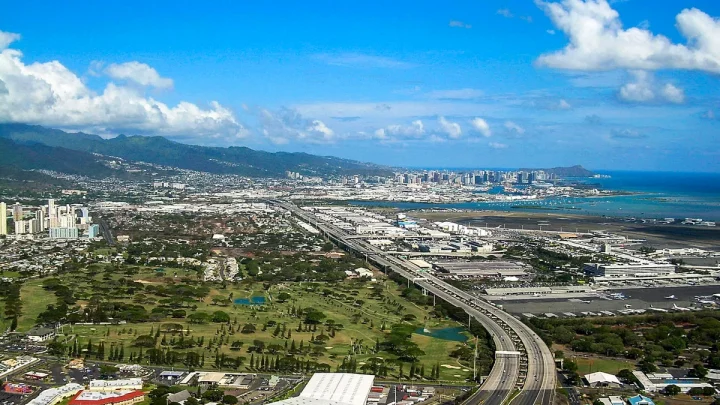
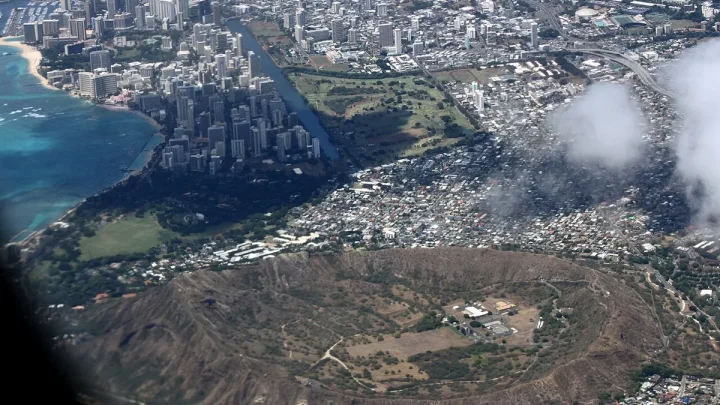
Oahu is home to nearly one million full-time residents, representing about 70 percent of Hawaii's total population. It features Honolulu, a dense metropolitan center with high-rise towers, multi-lane freeways, and bustling commercial districts. Waikiki alone concentrates hundreds of hotels, restaurants, and retail centers into a compact beachfront strip.
Maui feels vastly different because its population is spread across small towns and rural communities. Kahului serves as the primary commercial hub, but it lacks high-rise developments.
Much of Maui consists of open agricultural fields, ranchland, and protected conservation zones. The sheer volume of human activity, traffic, and infrastructure on Oahu makes the island feel much larger and busier than it actually is.
Getting Around: How Land Area Dictates Island Drive Times
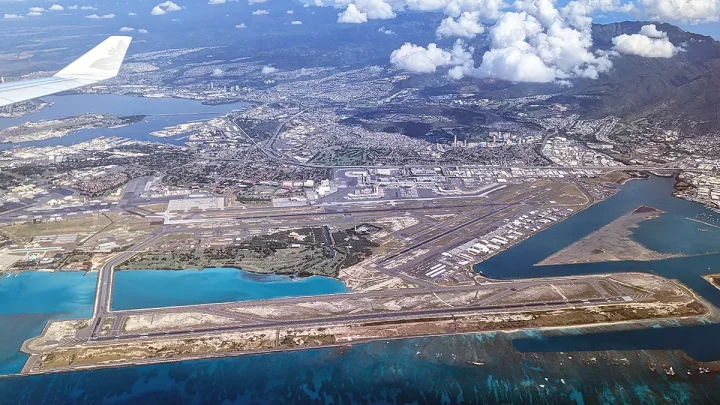
Physical size directly changes how you explore each island by car. Oahu has a modern interstate highway network, including the H-1, H-2, and H-3 freeways. These multi-lane corridors let drivers cross between distant shores relatively quickly outside of rush hour.
You can drive from Honolulu on the south shore to Haleiwa on the North Shore in about 45 minutes. Circling the main perimeter of Oahu typically takes between three to four hours of driving time.
Maui requires much more patience behind the wheel. The island has very few straight roads and zero multi-lane interstates. Driving routes must wrap around two massive volcanic masses:
- The Road to Hana (Route 360): Covers roughly 52 miles, but takes 2.5 to 3 hours one way due to 600 curves and 59 one-lane bridges.
- West Maui Loop (Route 30 / 340): Wraps around coastal cliffs with single-lane pinch points.
- Upcountry to the Summit: Ascends from sea level to 10,023 feet over 38 miles of switchbacks.
Because Maui lacks roads cutting through its mountain centers, trips between regions take longer. A journey between Lahaina and Hana can easily take three hours, despite being on the same island.
Topography and Usable Land: Volcanic Shields vs. Mountain Ranges
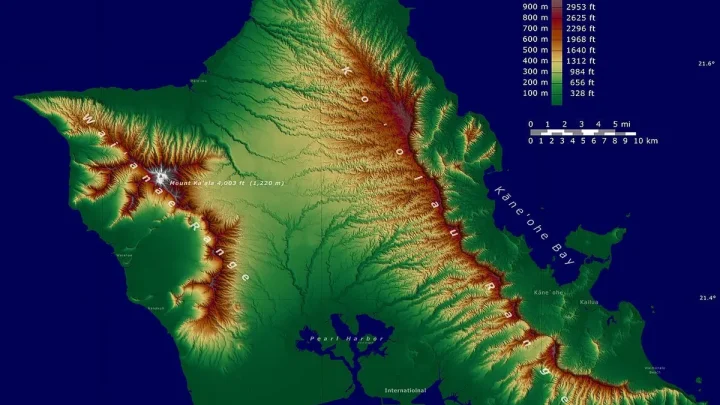
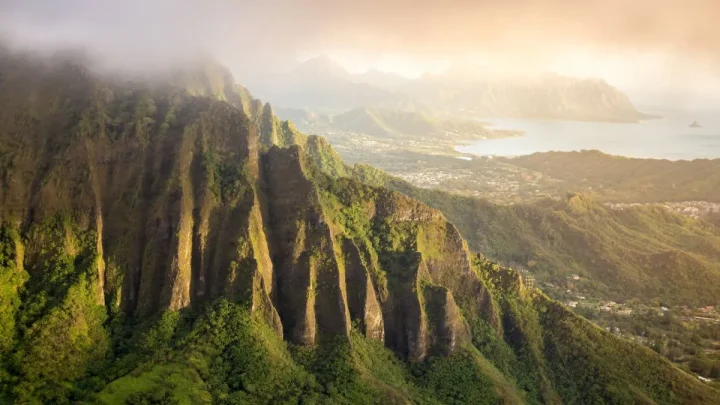
The difference in island size comes down to geological age. According to volcanic evolution studies from the USGS, Oahu is significantly older than Maui. Oahu formed from two primary volcanoes, Waiʻanae and Koʻolau, which have experienced millions of years of heavy erosion.
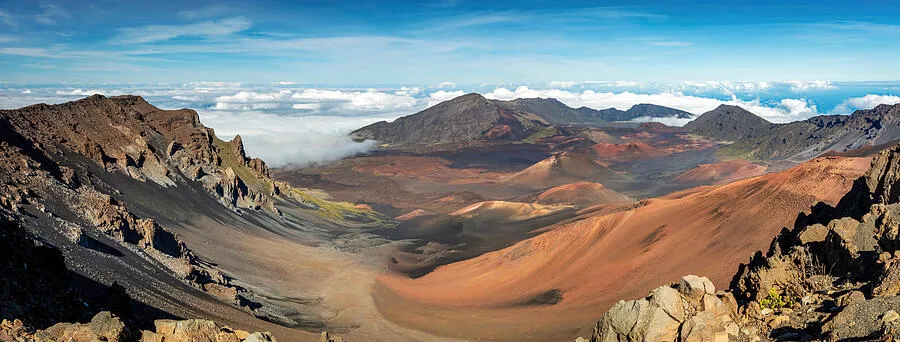
Image source: Bing (Web (fair-use with source credit))
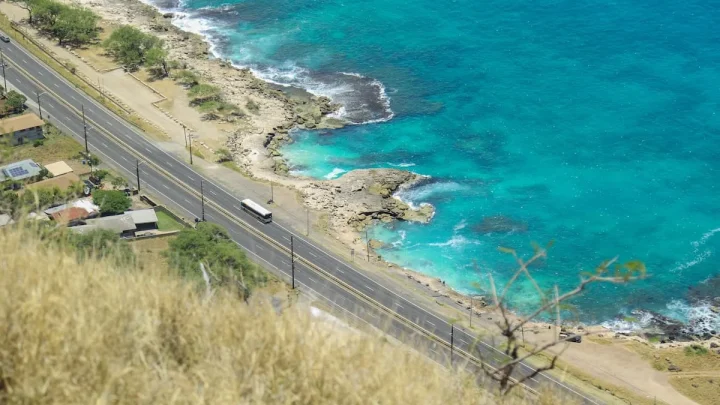
This erosion carved Oahu into sharp, jagged ridges separated by broad, gently sloping valley floors. These flat plains provide abundant buildable land for residential neighborhoods, military bases, and transport networks.
Maui is younger and consists of two separate volcanic masses joined by a low-lying central isthmus:
- East Maui: Formed by Haleakalā, an enormous active shield volcano that accounts for roughly 75 percent of the island's land area.
- West Maui: Formed by Mauna Kahalawai, an older, deeply dissected volcanic system.
- The Isthmus: A flat central valley that connects the two peaks, giving Maui its nickname, "The Valley Isle."
While Maui has more square miles on paper, vast sections of Haleakalā are uninhabitable lava fields and steep alpine slopes. A large portion of Maui's extra acreage is wild, undeveloped mountain terrain.
Travel Planning Breakdown: Choosing the Right Island for Your Trip
Choosing between Maui and Oahu depends on what kind of pace you want for your vacation. The difference in physical size and infrastructure shapes the everyday visitor experience.
Oahu suits travelers who want variety and convenience packed into shorter driving distances. You get world-class dining, historical landmarks like Pearl Harbor, vibrant nightlife in Waikiki, and legendary surf breaks on the North Shore. The highway system makes it easy to explore multiple regions in a single afternoon.
Maui works better for travelers seeking expansive outdoor scenery, dramatic elevation shifts, and a relaxed rural rhythm. Because the island is larger and less developed, activities are spread out across distinct regions.
Use this quick guide to determine which island matches your travel style:
- Choose Oahu if: You want a mix of city amenities, historical sites, active nightlife, and fast highway travel between beaches.
- Choose Maui if: You prefer scenic road trips, sprawling luxury resort enclaves, dramatic mountain summits, and quiet coastal towns.
- Choose both if: You have at least eight to ten days and want to split your time between Oahu's bustling cultural hub and Maui's open landscapes.
Planning your daily schedule around geographic reality prevents vacation burnout. On Oahu, traffic congestion is your main obstacle during weekday commute hours. On Maui, long distances between rural attractions and winding two-lane roads will consume most of your transit time.
Frequently Asked Questions About Maui and Oahu Geography
How much bigger is Maui than Oahu?
Maui is roughly 130.5 square miles larger than Oahu. In percentage terms, Maui has about 21.9 percent more total land area. Maui measures roughly 727 square miles, while Oahu spans nearly 597 square miles.
Which Hawaiian island is the largest overall?
Hawaii Island, commonly called the Big Island, is the largest island in the archipelago. It spans 4,028 square miles. That makes it larger than all other main Hawaiian islands combined.
Maui ranks second, followed by Oahu in third place.
Can you drive all the way around Maui like you can on Oahu?
You cannot easily drive a full continuous loop around Maui. While you can circle Oahu via paved highways, Maui's remote backside near Kaupo features unpaved, narrow cliff roads. Most rental car agreements prohibit driving on these unpaved sections of Highway 31.
Why does Oahu have more people if Maui is bigger?
Oahu developed as the political, economic, and military center of the Kingdom of Hawaii and later the state. Honolulu Harbor provided ideal maritime access, while broad, flat valleys allowed extensive residential development. Maui preserved far more land for agriculture, ranching, and conservation.
How long does it take to fly between Maui and Oahu?
Direct inter-island flights between Daniel K. Inouye International Airport (HNL) on Oahu and Kahului Airport (OGG) on Maui take about 35 to 40 minutes in the air. Commercial carriers operate dozens of daily shuttle flights between the two islands.

Similar Posts