Does Oahu Have a Volcano? The Surprising Truth
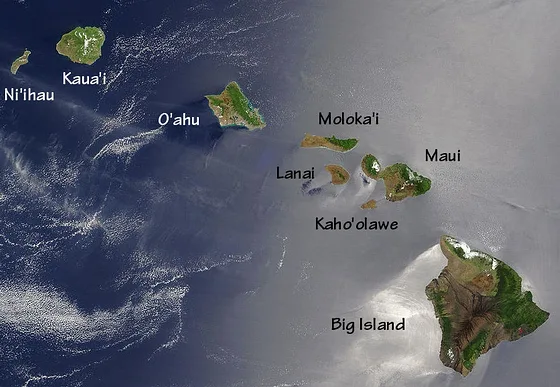
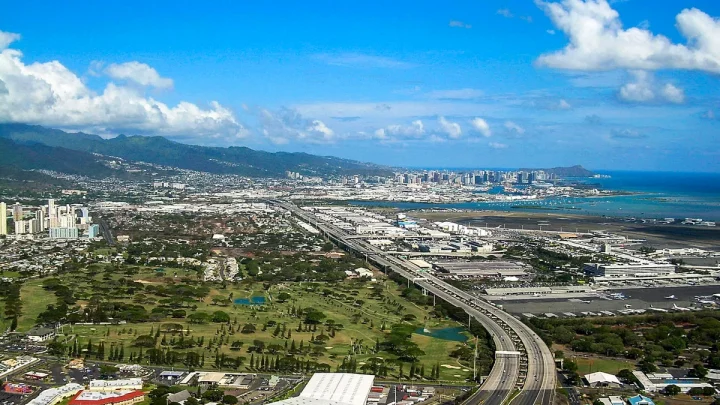
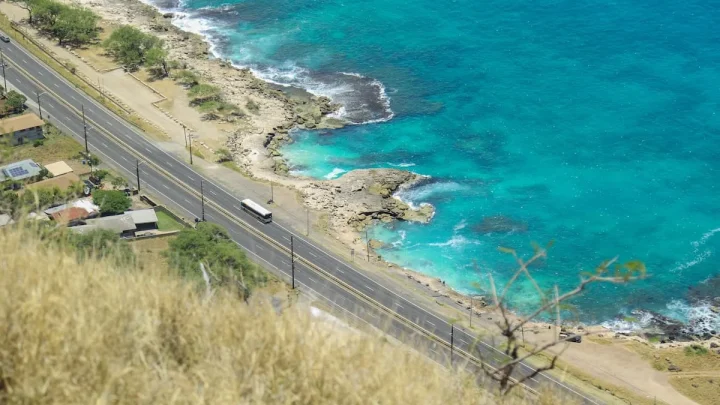
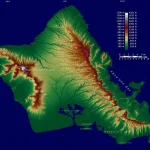
If you are planning a trip to Hawaii, you might wonder: does oahu have a volcano? Yes, Oahu is entirely volcanic in origin, but it does not have any active volcanoes today. The island was formed by two massive shield volcanoes that went extinct millions of years ago.
Geological data confirms that Oahu sits roughly 200 miles northwest of the active Hawaiian hotspot. The tectonic motion of the Pacific Plate carries the island away from its magma source at about seven to nine centimeters per year. Today, the remnants of those prehistoric eruptions form Oahu's famous peaks, ridges, and hiking craters.
Image source: Bing (Web (fair-use with source credit))
Quick Answer
Does Oahu have a volcano? Yes, Oahu has multiple extinct volcanoes.
Two massive shield volcanoes originally built the island millions of years ago. A secondary stage later created famous landmarks like Diamond Head.
None of Oahu's volcanic vents are active today. You will not see active lava flows on Oahu.
All volcanic activity on the island ended tens of thousands of years ago.
How Two Massive Shield Volcanoes Built the Island (Waiʻanae and Koʻolau)
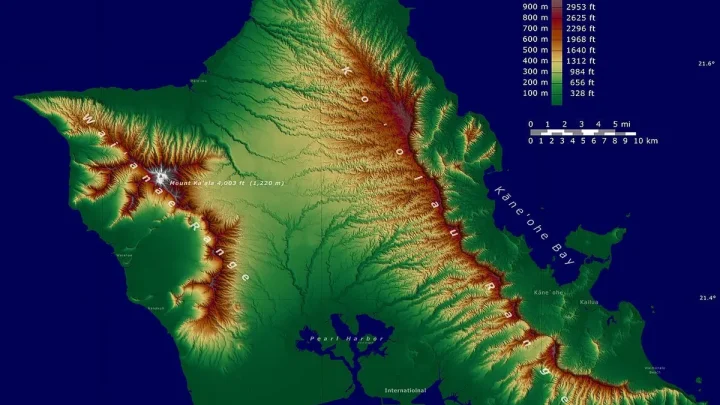
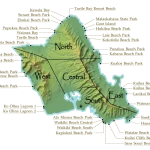
Oahu did not form from a single eruption. It began millions of years ago on the ocean floor when two separate shield volcanoes emerged from the sea. Over time, their broad, overlapping lava flows merged into a single landmass.
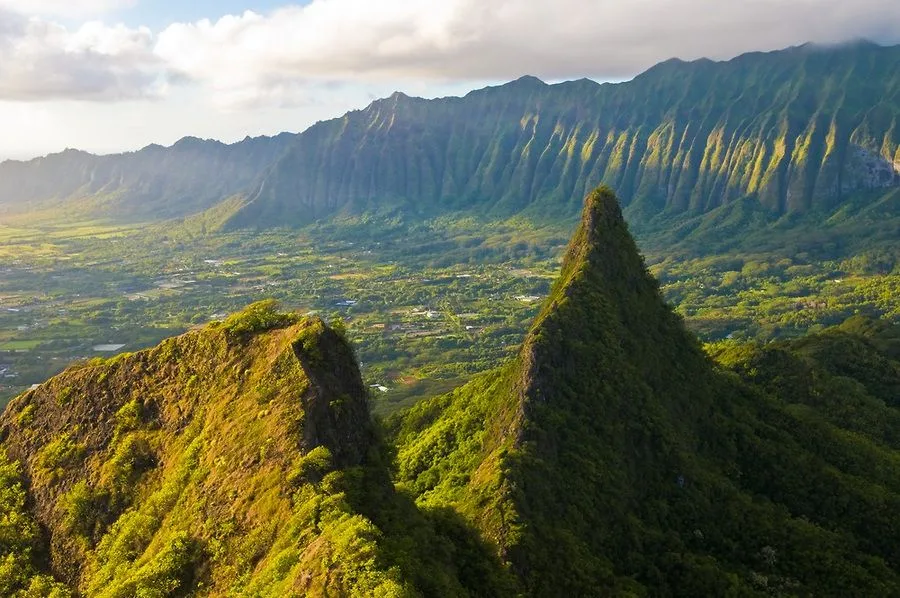
Image source: Web (Bing) / body.lcpm12.org (Web image (fair-use with source credit))
The western side of the island formed first from the Waiʻanae Volcano. It started erupting about four million years ago. As it stopped erupting, the Koʻolau Volcano rose to the east roughly 2.9 million years ago.
Its basaltic lava flows buried the eastern slopes of the older Waiʻanae shield, creating the central plateau between them.
Research from the USGS Hawaiian Volcano Observatory shows both of these primary shield volcanoes are completely extinct. Over millions of years, tropical rainfall, stream erosion, and massive prehistoric landslides carved away their original shield profiles.
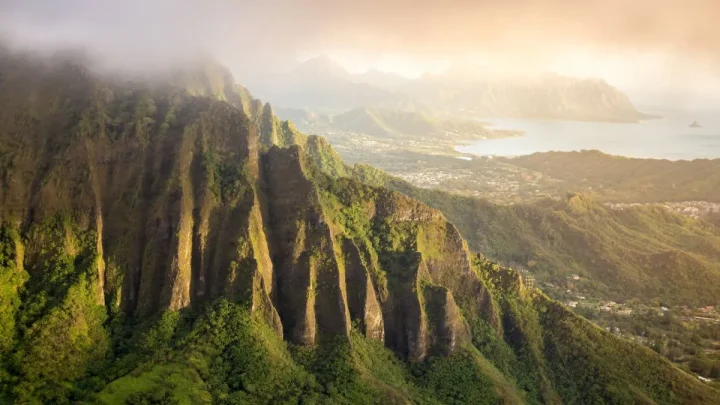
Today, the Koʻolau Range is famous for its steep fluted cliffs, known locally as the pali. These dramatic vertical ridges are not individual volcanic cones. They are the deeply eroded interior backbone of the ancient Koʻolau volcano.
| Geological Feature | Waiʻanae Volcano (West) | Koʻolau Volcano (East) |
|---|---|---|
| Active Shield Era | ~4.0 to 2.8 million years ago | ~2.9 to 1.8 million years ago |
| Highest Elevation | Mount Kaʻala (4,025 ft) | Puʻu Konahuanui (3,150 ft) |
| Current Landscape | Arid, rugged ridges and dry valleys | Lush, green fluted cliffs (pali) |
| Activity Status | Completely extinct | Completely extinct |
The Honolulu Volcanic Series: Spotting Oahu’s Famous Rejuvenation Cones
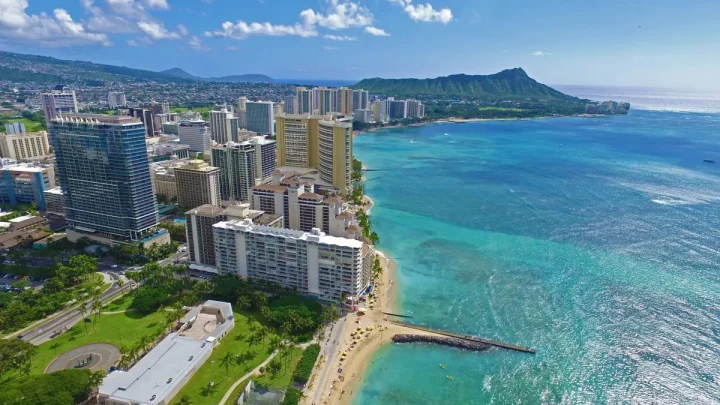
After the Koʻolau volcano died down, Oahu experienced an extended quiet period lasting roughly two million years. Heavy rains carved deep valleys across the dormant terrain. Then, a rare geological event called rejuvenation volcanism began.
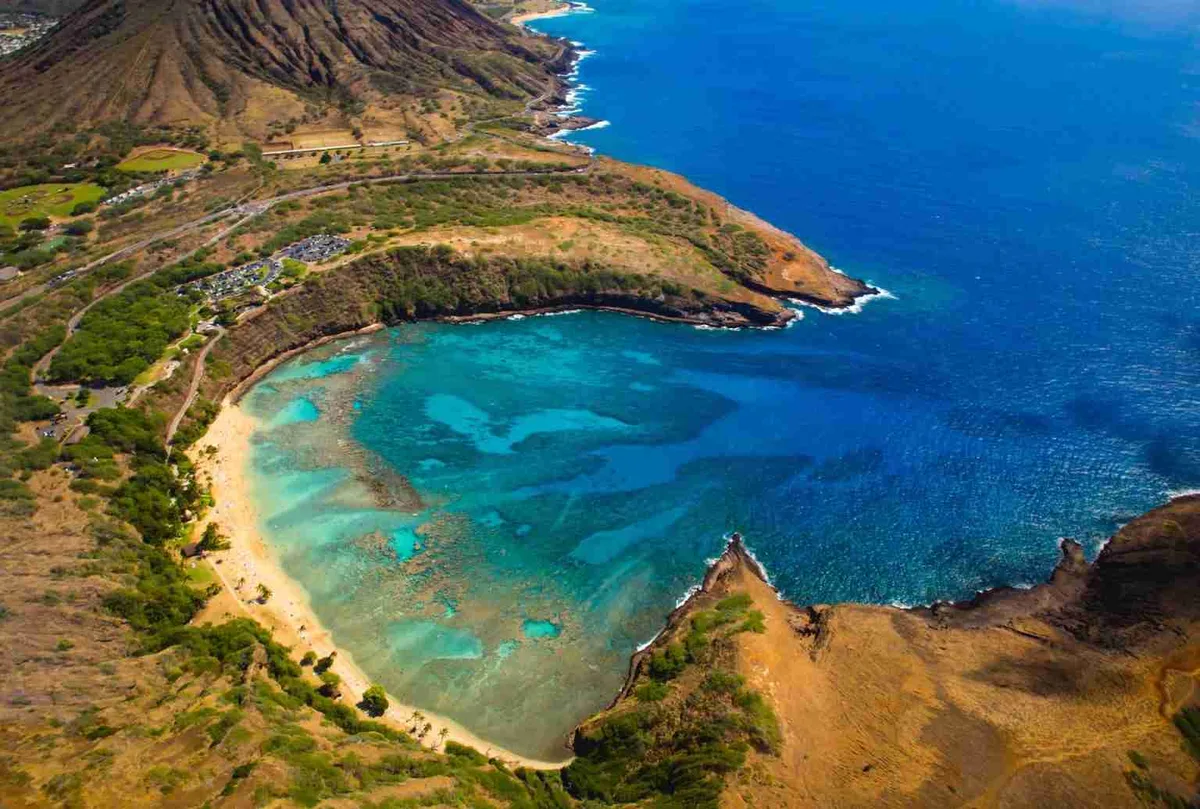
Image source: Bing (Web (fair-use with source credit))
This secondary phase is known as the Honolulu Volcanic Series. Magma forced its way through fractures in the old Koʻolau crust. When rising magma hit groundwater or shallow ocean water, explosive steam reactions tore the basalt rock into fine ash.
These explosive hydrovolcanic eruptions built prominent tuff cones and cinder cones across southeast Oahu:
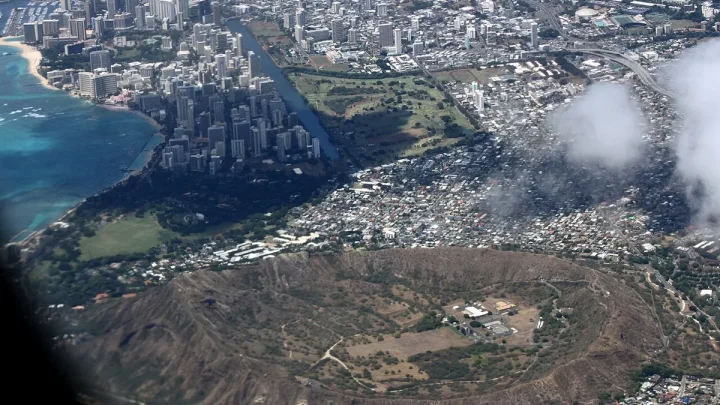
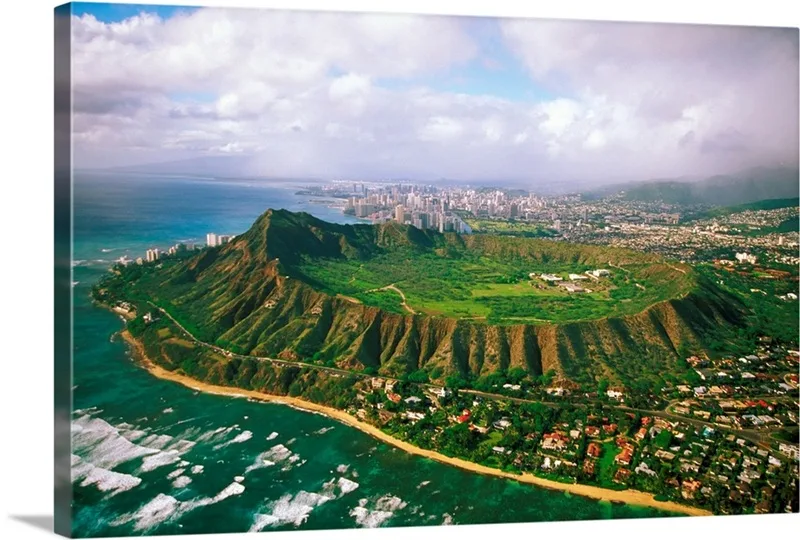
- Diamond Head (Lēʻahi): A classic broad tuff cone formed around 400,000 to 500,000 years ago during a single, explosive eruptive event.
- Hanauma Bay: A pair of circular volcanic vents that flooded when ocean waves breached their seaward crater walls.
- Punchbowl Crater (Pūowaina): A symmetric tuff cone in central Honolulu that now houses the National Memorial Cemetery of the Pacific.
- Koko Crater and Koko Head: High-standing tuff cones along the Kaiwi Channel formed during the final pulses of rejuvenation activity.
The youngest eruptions in this series, like the Sugarloaf and Tantalus cinder cones, took place roughly 30,000 to 70,000 years ago. Geologists consider the Honolulu Volcanic Series completely spent.
Oahu vs. The Big Island: Why You Won’t See Flowing Lava in Honolulu
Travelers often confuse Oahu with Hawaii Island (the Big Island). If your goal is to see glowing molten lava or steaming active vents, you will not find them on Oahu.
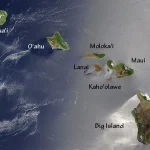
The Hawaiian island chain acts like an assembly line over a stationary magma plume in the Earth's mantle. The Pacific Plate continually drifts northwest across this hotspot.
[Northwest Drift: Older & Extinct]               [Southeast: Active Hotspot]
Kauai (5+ Ma) ---> Oahu (3+ Ma) ---> Maui (1+ Ma) ---> Big Island (Active)
As of 2026, the active volcanic hotspot sits directly beneath Hawaii Island and the submarine volcano Kamaʻehuakanaloa. The Big Island features two of the most active volcanoes on Earth, Kīlauea and Mauna Loa.
Oahu moved away from that magma supply millions of years ago. Without a direct connection to the mantle plume, Oahu cannot generate new magma chambers. Its underground magma channels have been cold and solid for millennia.
Visual Field Guide: How to Experience Oahu’s Volcanic Landmarks Up Close
You do not need active lava flows to appreciate Oahu's volcanic power. You can hike inside craters, walk along ridgelines, and swim within flooded calderas across the island.
1. Diamond Head State Monument (Lēʻahi)
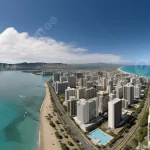
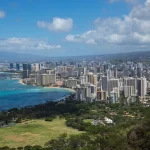
Hiking to the summit of Diamond Head takes you right up the interior wall of a volcanic tuff cone. Look at the rock layers along the switchback trail. You will see thin, layered bands of hardened volcanic ash and tuff created by explosive steam blasts.
- Visual cue: Notice the saucer-shaped crater floor below as you climb toward the coastal rim bunkers.
- Visitor tip: Non-Hawaii residents must make advance parking and entry reservations before visiting.
2. Hanauma Bay Nature Preserve
Hanauma Bay offers a cross-section of a drowned volcanic vent. From the overlook, you can easily trace the curved crater walls that wrap around the turquoise bay.
- Visual cue: Look at the sea-facing opening where ocean surf breached the crater rim thousands of years ago.
- Visitor tip: The bay limits daily visitors to protect the living reef that grew atop the submerged basalt floor.
3. Nuʻuanu Pali Lookout
The Nuʻuanu Pali Lookout delivers sweeping views of the windward coast and the thousand-foot vertical fluted cliffs of the Koʻolau Range.
- Visual cue: Observe how the cliff wall stretches continuously for miles. This cliff is the headwall left behind after prehistoric flank collapses slid into the Pacific Ocean.
- Visitor tip: Wind speeds at the lookout frequently exceed 30 miles per hour as trade winds funnel up the valley walls.
Common Misconceptions About Oahu's Volcanic Hazards and Eruptions
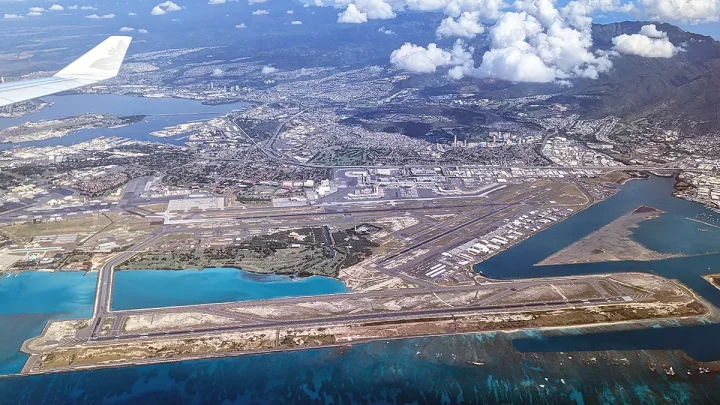
A widespread myth among travelers is that Oahu could experience a sudden volcanic eruption. This concern often leads visitors to worry about lava flows reaching Honolulu resorts or disrupting flights at Daniel K. Inouye International Airport.
In reality, volcanic hazards on Oahu are nonexistent. Geological research from the University of Hawaiʻi at Mānoa confirms that the magma plumbing systems beneath the island have solidified entirely. The mantle source that fed Oahu is now hundreds of miles away.
Another common misconception is confusing volcanic vents with standard mountain peaks. Many visitors assume the jagged ridges of the Koʻolau and Waiʻanae ranges are individual volcanic peaks. They are actually erosional remnants carved by wind, rain, and massive prehistoric landslides over millions of years.
The true geological hazards on Oahu come from weather, not magma. Heavy tropical rainfall can cause flash flooding in narrow volcanic valleys. Steep ridge trails also feature crumbly, weathered basalt that poses slipping hazards for unprepared hikers.
Frequently Asked Questions About Volcanoes on Oahu
Can Diamond Head erupt again?
No, Diamond Head cannot erupt again. It was created during a brief rejuvenation phase that ended hundreds of thousands of years ago. Geologists classify Diamond Head as completely extinct because its underlying magma source has drifted far away.
Is Oahu considered a volcanic island?
Yes, Oahu is an entirely volcanic island. Every natural rock formation, ridge, and valley on the island was built by ancient basalt lava flows or explosive ash eruptions. Over millions of years, dense vegetation and soil covered the original volcanic rock.
Where is the closest active volcano to Oahu?
The closest active volcano to Oahu is Kīlauea on Hawaii Island (the Big Island). It sits roughly 215 miles southeast of Honolulu. You must take a short 45-minute inter-island flight to see active volcanic vents and fresh lava fields.
Are there any dormant volcanoes on Oahu?
No, Oahu has no dormant volcanoes. In geology, "dormant" means a volcano could erupt again in the future, like Haleakalā on Maui. All volcanic vents on Oahu are classified as extinct with zero possibility of future eruptions.

Similar Posts