3 Must-See Tourist Attractions in Hawaii You Can’t Miss

What are three tourist attractions in Hawaii? If you've got limited time you want variety without wasting inter-island flights. You also want places that actually deliver, not just look good on Instagram.
Our research narrowed it to one historic site, one volcanic park, and one wild coast that together show you what makes Hawaii distinct.
For example, Pearl Harbor's USS Arizona Memorial runs a free 45 minute boat program that still requires a timed reservation. Hawai'i Volcanoes National Park covers more than 335,000 acres and includes two of the world's most active volcanoes. Understanding what each place offers before you book flights saves time, money, and disappointment.
Let's look at each one and how they compare.
3 Must-See Tourist Attractions in Hawaii You Can't Miss
What are three tourist attractions in Hawaii?
Three tourist attractions in Hawaii are Pearl Harbor, Volcanoes Park, and Na Pali. Pearl Harbor honors WWII history on Oahu. Hawai'i Volcanoes showcases active Kilauea on Hawaii Island.
Na Pali Coast offers dramatic cliffs on Kauai. Each sits on a different island.
1. Pearl Harbor National Memorial, Oahu: History and the USS Arizona Memorial
If you want history with real weight, start here. Pearl Harbor National Memorial is the official site that preserves the December 7, 1941 attack and its aftermath. The centerpiece is the USS Arizona Memorial, a white structure built over the sunken battleship where more than 1,100 sailors remain entombed.
In our research, this is the most accessible of the three. It's minutes from Honolulu and Waikiki, fully paved, and centered on museums and ranger talks. You don't hike.
You watch a short film, board a Navy shuttle boat, and have quiet time at the memorial itself. Per National Park Service guidance, the boat program is free but timed entry is required and reservations are released on recreation.gov.
Here's what to expect:
- Core experience: Visitor center exhibits, documentary film, and the 45 minute USS Arizona Memorial program by boat
- Also on site: Battleship Missouri Memorial, Pearl Harbor Aviation Museum, and USS Bowfin Submarine Museum, these are separate tickets
- Time needed: 2 to 4 hours for the memorial alone, a full day if you add the other museums
- Best for: First time visitors, families with school age kids, history buffs, and anyone based on Oahu without a car
A few practical notes help. Bags are not allowed inside and storage is small, so travel light. Morning slots are cooler and calmer on the harbor.
And as of 2026, reservations often fill weeks ahead for peak dates, so book early and check NPS alerts for boat cancellations due to wind.
2. Hawai'i Volcanoes National Park, Big Island: Kilauea, Lava Fields, and Halema‘uma‘u Crater
This is Hawaii as a living geology lesson. Hawai'i Volcanoes National Park on Hawaii Island protects Kilauea and Mauna Loa, two of the most active volcanoes on earth. A national park in this context means federally managed land with visitor centers, marked trails, and protected natural features.
Our research shows the draw is scale and surprise. You can drive Chain of Craters Road from lush rainforest down to stark lava fields that end at the sea. You can walk through Thurston Lava Tube, peer into Halema‘uma‘u Crater, and see steam vents hissing along the caldera rim.
What you will not get is guaranteed red lava. Eruptions are episodic and the USGS Hawaiian Volcano Observatory status changes weekly, so check current conditions before you go.
What makes it different from the other two:
- Landscape range: Rainforest, desert like Ka‘u, craters, and hardened lava flows all in one park
- Effort options: Easy overlooks and visitor center films up to moderate hikes like Kilauea Iki Trail, 4 miles with about 400 feet of elevation change
- Entry and timing: $30 per vehicle for a 7 day pass as of 2026. Early morning gives clearer crater views before clouds build. Night viewing, when an eruption is active, is managed at designated overlooks
- Stay aware: Volcanic gas, vog, and sudden closures are real. Stay on marked trails and respect kapu, or sacred, areas
Plan a half day if you are driving from Kona, a full day if you are based in Hilo or Volcano Village. You'll do a lot of driving inside the park, so start with the visitor center orientation to map your stops.
3. Na Pali Coast State Wilderness Park, Kauai: Sea Cliffs, Kalalau Trail, and Boat Access
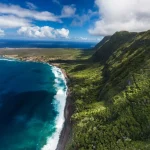
This is the wild card, literally. Na Pali Coast State Wilderness Park stretches 16 miles along Kauai's northwest shore with sea cliffs up to 4,000 feet, hidden valleys, and no roads. You cannot drive to it.
You hike, boat, or fly over it.
Aggregate reviews report this as the most scenic but also the most restricted. Access is tightly managed by Hawaii's Department of Land and Natural Resources to limit impact. That means permits, shuttles, and weather dependent tours.
Your three main ways in:
- Hike the Kalalau Trail: 11 miles one way to Kalalau Beach, strenuous with over 6,000 feet of cumulative elevation gain. Day use requires a permit and parking reservation at Ha‘ena State Park. Overnight camping needs a separate Kalalau permit.
- Take a boat tour: Catamarans and raft tours run from Hanalei or Port Allen, about 4 to 6 hours. Summer brings calmer seas, winter brings humpback whales but rougher water.
- Book a helicopter tour: 45 to 60 minutes, best for photos when trails or seas are closed
Costs add up fast here. Ha‘ena entry is $5 per person plus a $40 round trip shuttle if you do not have parking. Boat tours often run $180 to $300 per person.
Helicopter tours are higher. If you want low exertion, a boat tour is your best balance of views and effort. If you want to hike, train for mud, heat, and narrow ridges, and do not expect cell service.
How the Three Compare: Cost, Time Needed, Access, and Experience
These three do not compete on the same terms. One is a historic memorial, one is a vast volcanic park, and one is a protected wilderness coast. The right choice depends on your island base, fitness, and how much planning you want to do.
Use this quick comparison to see the tradeoffs at a glance. All prices and times reflect typical conditions as of 2026 and can shift with season and demand.
| Attraction | Island Base | Entry Cost | Time Needed | Access Method | Effort Level |
|---|---|---|---|---|---|
| Pearl Harbor National Memorial | Oahu | Free, $1 reservation fee, other museums extra | 2 to 4 hours | Shuttle boat, visitor center | Easy, fully accessible |
| Hawai'i Volcanoes National Park | Hawaii Island | $30 per vehicle, 7 day pass | Half to full day | Self drive, overlooks, trails | Easy to moderate |
| Na Pali Coast State Wilderness Park | Kauai | $5 to $40 for Ha‘ena access, tours $180 plus | Half day to multi day | Hike, boat, or helicopter | Moderate to strenuous |
A few judgment calls from our research:
- If you are on one island only: Pick the attraction on that island. Inter island flights add cost and a full travel day, so don't force all three into a short trip.
- If you want the easiest win: Pearl Harbor needs the least gear and fitness. You can do it without a rental car from Waikiki.
- If you want the most unique geology: Hawai'i Volcanoes is the only place in the US where you can safely view an active volcano system with NPS infrastructure.
- If you want the most dramatic photos: Na Pali wins, but it is also the most weather dependent and permit heavy.
Think of them as history, earth, and ocean. Each satisfies a different curiosity. Together they explain why travelers island hop, and why locals will tell you to respect closures, stay on trail, and leave lava rocks where they are.
Which One Should You Prioritize? Best Pick by Traveler Type and Island Base
You don't need to see all three to have a great trip. You need to match the attraction to your style and where you're sleeping.
Here's how we would prioritize:
- Families with kids or limited mobility: Choose Pearl Harbor National Memorial. It's shaded, stroller friendly, and educational without a steep hike. Pair it with Waikiki Beach for an easy Oahu day.
- Nature lovers and photographers who want time outdoors: Choose Hawai'i Volcanoes National Park. You'll get variety from rainforest to lava fields in one park and plenty of overlooks that don't require a long hike.
- Adventurers and honeymooners chasing views: Choose Na Pali Coast State Wilderness Park. A summer catamaran tour gives you sea caves and waterfalls with less strain than the full Kalalau Trail.
- First timers with 7 to 9 days and two islands: Split Oahu and either Hawaii Island or Kauai. Do Pearl Harbor on Oahu and add one of the other two on your second island. That's the most realistic way to cover two without rushing.
- Cruise or Honolulu only visitors: Stick to Pearl Harbor plus Diamond Head State Monument. Both are on Oahu, need no inter island flight, and balance history with a short hike.
One last filter helps. If permits and advance planning stress you out, Pearl Harbor and Hawai'i Volcanoes are more forgiving than Na Pali. If crowds stress you out, Na Pali's permit system actually works in your favor by capping numbers.
Reservations, Permits, and Mistakes to Avoid Before You Go
Permits are what trip people up, not the sights themselves. Each of these three uses a different system, and our research shows most bad reviews come from showing up without one.
For Pearl Harbor, reserve the USS Arizona Memorial program on recreation.gov. The program is free, you pay a $1 reservation fee, and slots are released in rolling windows. Arrive 30 minutes early, bring photo ID, and leave bags in the car.
There is no bag storage beyond tiny paid lockers, and security will turn you away if you have one.
For Hawai'i Volcanoes National Park, you do not need a timed entry, but you do need a park pass and a current conditions check. Buy the $30 vehicle pass at the entrance or use an America the Beautiful Annual Pass. Check NPS alerts and USGS volcano updates the morning you go.
If Halema‘uma‘u is not erupting, plan for overlooks and hikes instead of lava viewing.
For Na Pali Coast, book first, pack second. Ha‘ena State Park requires separate reservations for entry, parking, and the shuttle, and the Kalalau Trail needs its own day use or overnight permit through the Hawaii DLNR. Boat and helicopter tours also sell out, especially in summer when seas are calmest.
Do not count on standby seats.
What mistakes catch first timers most often?
Trying to see all three without an inter island flight is the biggest one. Each attraction is on a different island, so you will need at least one short flight to combine any two.
Other common slip ups include expecting guaranteed lava, ignoring high surf or flash flood warnings on Kauai, and taking lava rocks as souvenirs. That last one violates NPS rules and disrespects cultural kapu. Drones are also banned in both national parks and the Na Pali wilderness.
Frequently Asked Questions
Can you see all three attractions on one island?
No. Pearl Harbor is on Oahu, Hawai'i Volcanoes is on Hawaii Island, and Na Pali Coast is on Kauai. You need inter island flights to combine them.
If you are staying on one island, pick the attraction on that island plus nearby sights to save a travel day.
Do you need reservations for Pearl Harbor?
Yes for the USS Arizona Memorial boat program. Timed tickets are free plus a $1 fee on recreation.gov and often sell out weeks ahead. You can visit the visitor center museums without a boat ticket, but you will not reach the memorial itself without that reservation or a limited walk up standby.
Will you definitely see lava at Hawai'i Volcanoes National Park?
No, and that surprises many visitors. Kilauea erupts episodically, so lava may not be visible during your visit. The park is still worth it for craters, steam vents, lava tubes, and the Chain of Craters Road.
Check USGS updates before you go to set expectations.
How do you visit Na Pali Coast without a strenuous hike?
Take a boat tour or helicopter tour. Catamaran tours from Hanalei or Port Allen run 4 to 6 hours and show sea caves and waterfalls from the water. Helicopters give a 45 to 60 minute aerial view.
Both need advance booking and are weather dependent, with summer offering the calmest seas.
Which island should you base on if you can only pick one?
It depends on your priority. Choose Oahu for easy history and city access at Pearl Harbor. Choose Hawaii Island for geology and wide open park driving.
Choose Kauai for dramatic scenery and outdoor adventure. For most first timers with limited time, Oahu is the simplest base.
How much time do you need for each attraction?
Plan 2 to 4 hours for Pearl Harbor, or a full day with the extra museums. Allow a half to full day for Hawai'i Volcanoes, plus drive time from Kona or Hilo. For Na Pali, allow a half day for a boat tour, a full day for hiking to Hanakapi‘ai Falls, and multiple days if you have a Kalalau camping permit.

Similar Posts