Are There Active Volcanoes on Oahu? The Surprising Truth
Planning a trip to Honolulu often brings up one big safety question: are there active volcanoes on oahu? The short answer is no. Oahu is home to famous volcanic ridges and craters, but none of them are active or dangerous today.
Scientific assessments confirm that all volcanic systems on Oahu are completely extinct. The last minor eruptions on the island took place tens of thousands of years ago, far outside any modern timeline. Here is a clear breakdown of Oahu's volcanic history, safety profile, and what to do if you want to see active lava flows.
Quick Answer: Are There Active Volcanoes on Oahu?
No, there are no active volcanoes on Oahu. The island's two primary shield volcanoes are completely extinct. They stopped erupting over one million years ago.
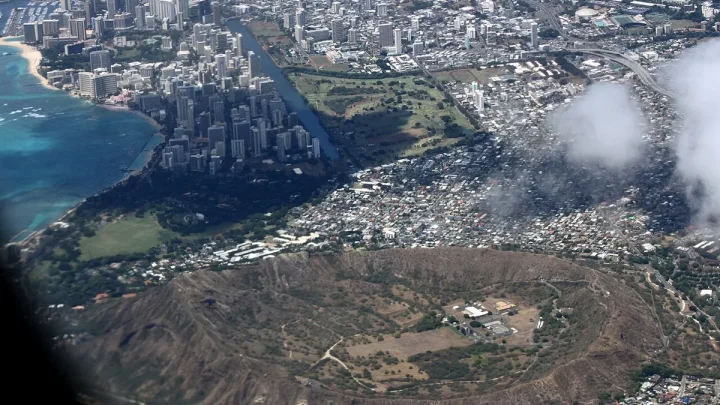
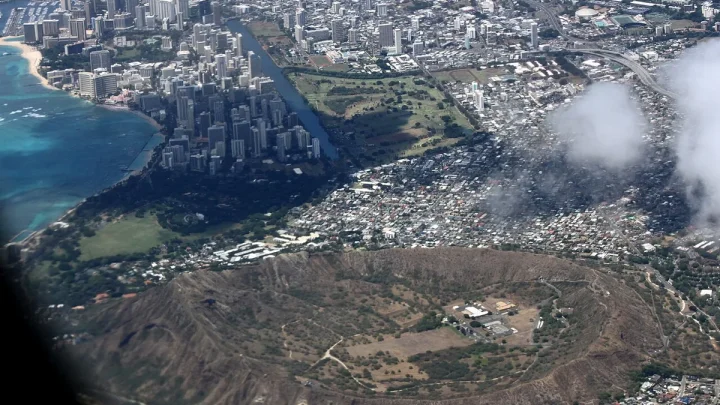
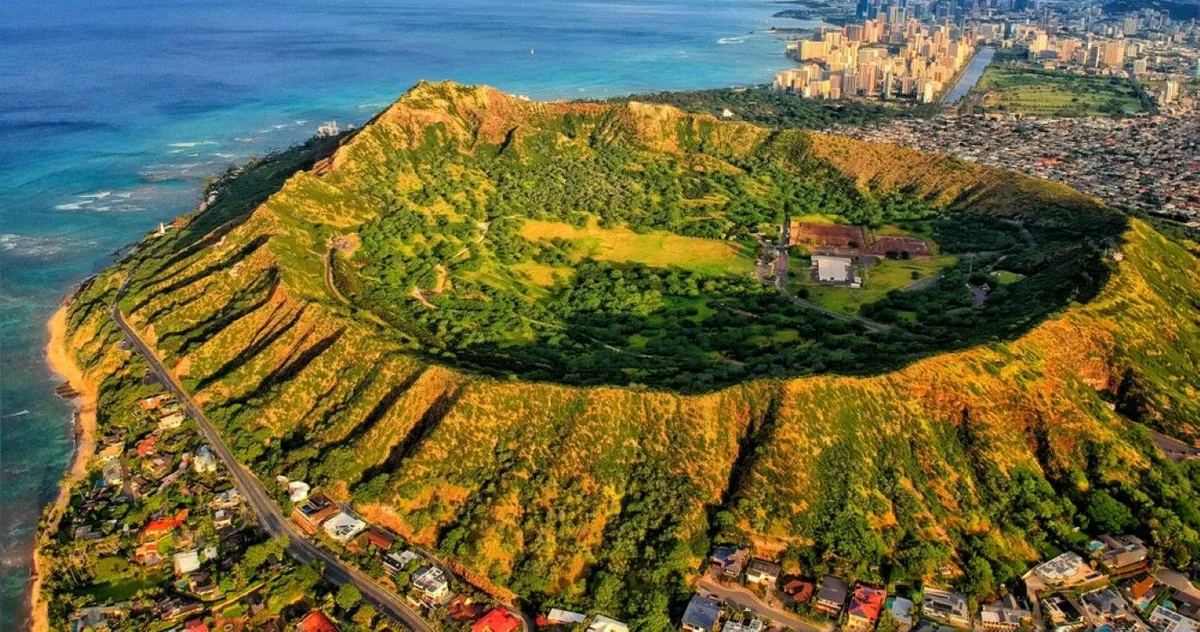
Secondary vents like Diamond Head last erupted roughly 30,000 years ago. Active volcanic eruptions in Hawaii happen only on Hawaii Island.
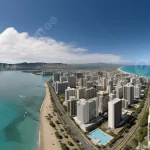
Image source: Web (Bing) / thetravel.com (Web image (fair-use with source credit))
Why Oahu’s Volcanoes Went Extinct (The Hotspot Engine)
To understand why Oahu is volcanically dead, you have to look at how the Hawaiian Islands formed. The Hawaiian archipelago sits over a stationary mantle plume known as the Hawaiian Hotspot. This hotspot pumps magma upward through the Earth's crust, building giant shield volcanoes from the ocean floor.
The Pacific Plate beneath Hawaii constantly shifts to the northwest at a rate of roughly 7 to 9 centimeters per year. As the plate moves, it carries older volcanoes away from the stationary magma supply. Once a volcano drifts off the plume, its conduit closes permanently.
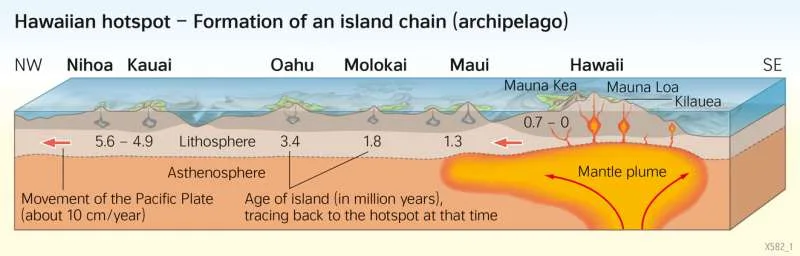
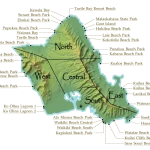
Image source: Web (Bing) / diercke.com (Web image (fair-use with source credit))
Oahu was built by two separate shield volcanoes:
- Waiʻanae Volcano: Formed the western mountains between 2.5 and 3.9 million years ago.
- Koʻolau Volcano: Formed the eastern mountain range between 1.8 and 2.9 million years ago.
Long after both main shields died, Oahu experienced a brief period of rejuvenation known as the Honolulu Volcanic Series. This event created landmarks like Diamond Head and Hanauma Bay. As documented by the USGS Hawaiian Volcano Observatory, even this secondary phase ended between 30,000 and 70,000 years ago.
As of 2026, Oahu sits more than 200 miles away from the active hotspot, with zero chance of reigniting.
Decision Path: What Is Your Goal on Oahu?
Travelers usually ask about Oahu's volcanoes for one of three reasons. Follow this decision guide to find the right plan for your itinerary.
What is your main volcanic travel goal?
 │
 ├── 1. "I want to see active, glowing lava."
 │     └── GO TO ROUTE A: Book an inter-island flight to Hawaii Island.
 │
 ├── 2. "I want to hike inside volcanic craters and see coastal views."
 │     └── GO TO ROUTE B: Explore Oahu's extinct tuff cones and state monuments.
 │
 └── 3. "I want to make sure my family and flight are safe from eruptions."
       └── GO TO ROUTE C: Relax. Oahu has a 0% eruption risk.
Route A: "I Want to See Glowing Lava and Active Eruptions"
If your dream is to watch glowing molten rock, you cannot do it on Oahu. You need to book a 45-minute inter-island flight from Honolulu (HNL) to either Hilo (ITO) or Kona (KOA) on Hawaii Island. That is where Kīlauea and Mauna Loa are located.
Route B: "I Want to Hike Famous Volcanic Craters on Oahu"
If you want sweeping summit views without eruption hazards, Oahu is ideal. You can walk inside world-famous tuff rings, climb old military lookout stairs, and snorkel inside flooded volcanic vents right near Waikīkī.
Route C: "I'm Worried About Eruption Safety During My Trip"
If you are concerned about volcanic ash, flight cancellations, or lava threats, you have nothing to worry about on Oahu. The island is completely safe from eruptions. The only occasional effect is light volcanic smog (vog) blown across the ocean when southern "Kona" winds push emissions from Kīlauea northward.
Oahu’s Best Extinct Volcanic Landmarks and How to Visit Them
Oahu offers some of the most accessible extinct volcanic landscapes in the world. Because these formations are long dead, they have formed lush ridges, stable hiking paths, and calm ocean bays.
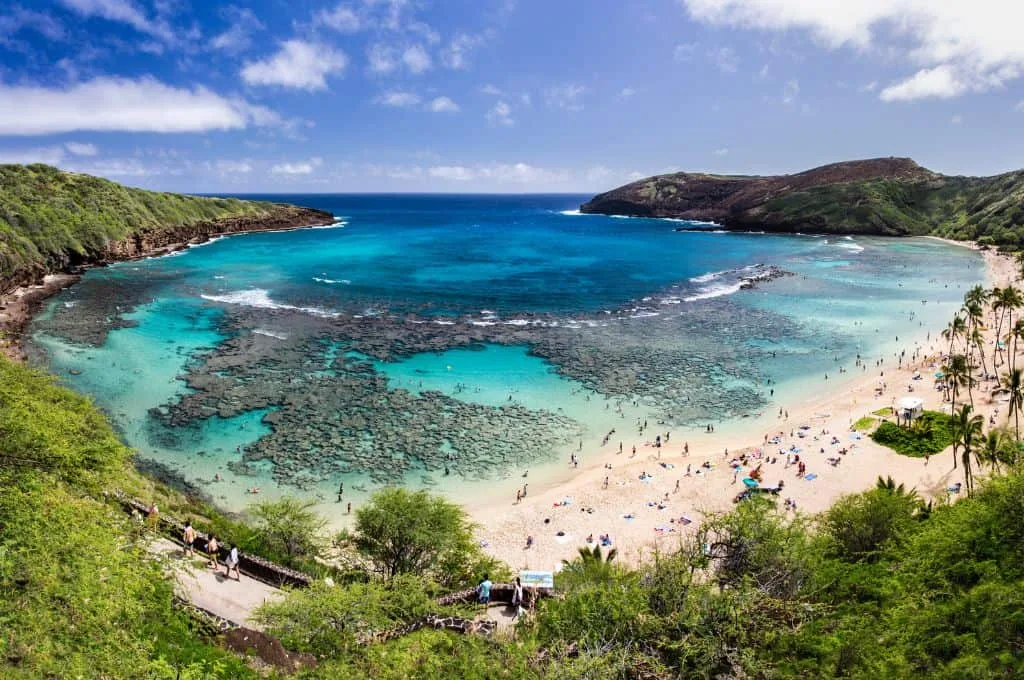
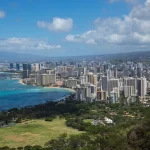
Image source: Bing (Web (fair-use with source credit))
Diamond Head (Lēʻahi)
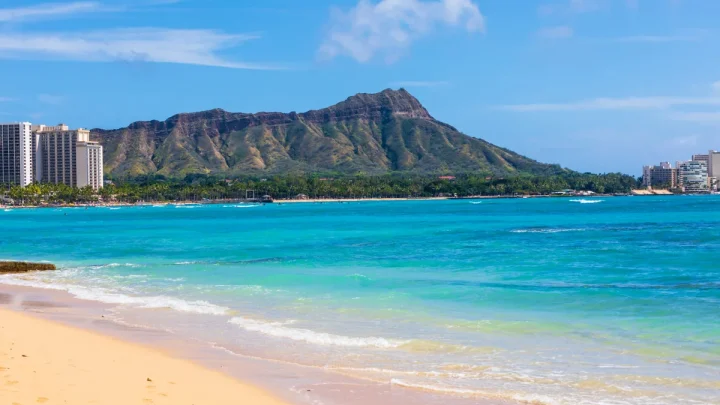
Diamond Head is an extinct monogenetic tuff cone formed during the Honolulu Volcanic Series. The crater was created by violent, steam-driven explosions when rising magma hit groundwater.
- Trail Distance: 1.6 miles round trip.
- Elevation Gain: 560 feet.
- Visitor Tip: Non-residents must make an advance parking and entry reservation online through the Hawaii Division of State Parks.
Hanauma Bay Nature Preserve
Hanauma Bay is a pair of breached, flooded volcanic craters along Oahu's southeastern coast. When the ocean breached the crater wall, it created a sheltered bay that now houses a thriving coral reef.
- Best For: Snorkeling, marine education, and viewing exposed volcanic ash layers.
- Visitor Tip: The preserve requires online timed reservations and is closed to the public on Mondays and Tuesdays to protect marine life.
Koko Crater (Kohelepelepe)
Koko Crater is a massive tuff cone rising over 1,200 feet above the coast. Its interior houses the Koko Crater Botanical Garden, while its outer rim features the popular Koko Crater Railway Trail.
- Trail Profile: 1,048 abandoned railway ties straight up the crater ridge.
- Difficulty: Strenuous. Bring plenty of water and avoid hiking in the midday heat.
Punchbowl Crater (Pūowaina)
Punchbowl Crater is a circular tuff cone located in central Honolulu. Today, the crater floor houses the National Memorial Cemetery of the Pacific. It offers quiet walking paths and elevated views of downtown Honolulu and the Pacific Ocean.
Oahu vs. Other Hawaiian Islands: Volcanic Activity Compared
The Hawaiian Island chain functions like a geological timeline. As you travel southeast down the chain, the islands become progressively younger and volcanically active.
| Hawaiian Island | Primary Volcanoes | Volcanic Status | Last Known Eruption | Active Lava Viewing? |
|---|---|---|---|---|
| Oahu | Waiʻanae, Koʻolau | Extinct | ~30,000 years ago | No |
| Kauai | Mount Waiʻaleʻale | Extinct | Over 4 million years ago | No |
| Maui | Haleakalā, West Maui | Dormant (Haleakalā) | Circa 1790 | No |
| Hawaii Island (Big Island) | Kīlauea, Mauna Loa, Hualālai | Active | Ongoing (Kīlauea) | Yes (when erupting) |
Kauai and Oahu are the oldest main islands, which means their volcanic engines shut down millions of years ago. Maui sits in a middle stage with dormant volcanoes that could erupt again in the distant future. Hawaii Island sits directly over the active hotspot, making it the only Hawaiian island where active lava flows occur today.
How to Plan a Day Trip from Honolulu to See Active Lava
If you are staying on Oahu but want to see real volcanic action, a day trip to Hawaii Island is completely feasible. With early flights and a rental car, you can explore Hawaiʻi Volcanoes National Park and return to your Waikīkī hotel the same night.
Follow these practical steps to build your day-trip itinerary:
- Check Live Activity Status: Check the USGS Hawaiian Volcano Observatory daily update. Eruptions at Kīlauea can pause or restart without much warning. Confirm that lava is visible before buying tickets.
- Book Early Morning Flights to Hilo: Fly from Honolulu (HNL) directly to Hilo International Airport (ITO). Hilo is only a 45-minute drive from the national park entrance. Flying into Kona (KOA) works too, but requires a two-hour drive across the island.
- Pick Up a Rental Car: Secure a rental vehicle directly at the Hilo airport terminal. Public transit does not run reliable routes into the park.
- Drive to Hawaiʻi Volcanoes National Park: Take Highway 11 South straight to the park gates. Pay the vehicle entrance fee, which covers entry for seven consecutive days.
- Visit the Kīlauea Visitor Center: Ask the park rangers on duty where the best viewing areas are located for that specific day. Viewing sites shift depending on wind direction and where the lava is pooling.
- Stay for the Night Glow: Active lava lakes look dramatically brighter after sunset. Watch the orange glow fill the caldera from safe overlooks like Uēkahuna or Kīlauea Overlook before driving back to the airport for a late-evening flight.
Frequently Asked Questions About Volcanoes on Oahu
Could Diamond Head erupt again?
Diamond Head will never erupt again. It is a monogenetic volcanic cone, meaning it was created by a single, short eruptive sequence. The magma conduit feeding the vent solidified millions of years ago.
Oahu has moved completely off the hotspot, so there is no magma source remaining beneath the crater.
Is Oahu affected by volcanic smog (vog)?
Oahu occasionally experiences volcanic smog, known locally as vog. Regular northeast trade winds blow volcanic gases safely away to the southwest. However, when trade winds drop and southern "Kona" winds take over, light haze from Kīlauea can drift northwest across Oahu, causing mild irritation for people with asthma.
Which Hawaiian island has active volcanoes?
Hawaii Island, commonly called the Big Island, is the only Hawaiian island with active volcanoes. It is home to Kīlauea, Mauna Loa, and Hualālai. Kīlauea remains one of the most active volcanoes on Earth, producing frequent summit and rift-zone eruptions.
How far is Oahu from Hawaii's active volcanoes?
Oahu is located roughly 200 to 250 miles northwest of the active volcanic zone on Hawaii Island. That vast oceanic distance protects Oahu from lava flows, ash falls, and localized volcanic earthquakes.
Are there any active underwater volcanoes near Oahu?
There are no active submarine volcanoes near Oahu. The only active submarine volcano in the Hawaiian chain is Kamaʻehuakanaloa, formerly known as Lōʻihi Seamount. It sits about 22 miles off the southeastern coast of Hawaii Island, well over 250 miles away from Oahu.
🥾 Field-Tested Gear: Hawaii Trail & Sightseeing Protection
From rugged Kualoa filming valleys to sharp volcanic ridgelines, tackle Oahu’s premier attractions safely with trail-proven footwear and sun protection:
- High-Traction Breathable Water Hiking Shoes:Check Quick-Dry Water Hiking Shoes on Amazon →
- UPF 50+ UV Sun Protection Long-Sleeve Rash Guard:Check UPF 50+ Sun Protection Shirts on Amazon →
*FTC Disclosure: As an Amazon Associate, Hawaii Travel Bureau earns from qualifying purchases. Learn more about our field-tested travel research methodology.*
🌺 Related Hawaii Sights, Culture & Filming Guides:

Similar Posts