What Is Hawaii Most Famous For? 10 Iconic Answers
If you ask what is Hawaii most famous for, the short answer is volcanoes, beaches, and Native Hawaiian culture. Those three show up in nearly every visitor survey and travel photo. The fuller answer runs deeper than a resort brochure, though.
Hawaii is the only U.S. state made entirely of islands, and it holds Mauna Kea, which rises 13,803 feet (4,207 meters) above sea level per USGS measurements. Two active volcanoes on Hawaiʻi Island are monitored every single day. So which of these actually made the place famous?
Start with the icons people recognize first.
Quick Answer
🌺 Local Island Guide Quick Answer
Hawaii is most famous for its volcanoes, beaches, and Native Hawaiian culture. Kīlauea and Mauna Loa are among the world's most active volcanoes. Waikīkī and the North Shore draw surfers worldwide.
Hula, lei, and luau define Hawaiian identity. Pearl Harbor adds deep historical weight.
Why Hawaii's Fame Is More Than a Postcard
Hawaii earns its reputation from three overlapping sources. The first is geology. The second is a living Indigenous culture.
The third is a specific place in American history.
Most people picture a beach first, and that's fair. The beaches really are world-class. But these islands are volcanic peaks, not sandbars.
Every cliff, bay, and black-sand cove traces back to lava.
Native Hawaiian culture isn't a performance staged for tourists either. Hula, mele (song), and ʻōlelo Hawaiʻi (the Hawaiian language) are alive and actively taught in schools. Roughly 1.4 million people live across the islands today.
Then there's history. Pearl Harbor, the 1893 overthrow of the Hawaiian Kingdom, and statehood in 1959 all belong to the same story. So the honest answer is a blend.
A volcano, a dance, a beach, a battleship, and a plate of poke. Each one explains a different part of the islands.
The Landscapes That Made Hawaii Iconic
Hawaii contains 137 islands, atolls, and reefs in total. Eight main islands carry nearly all the population and tourism. Each looks different enough that travelers pick an island the way they'd pick a country.
Kīlauea, Mauna Loa, and Hawaiʻi Volcanoes National Park
Kīlauea is one of the most active volcanoes on Earth. Mauna Loa, its neighbor on Hawaiʻi Island, is the largest active volcano in the world. Both sit inside Hawaiʻi Volcanoes National Park, where rangers close sections during eruptions.
The USGS Hawaiian Volcano Observatory tracks both daily. Check the current alert level before you drive up. Vog, toxic gas, and fast-moving lava are real hazards, not theoretical ones.
Waikīkī, North Shore, and the Colors of Hawaiian Sand
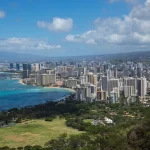
Waikīkī is the postcard beach most people recognize. Oʻahu's North Shore is the opposite: calm in summer, monstrous in winter. Waves at Waimea Bay and Banzai Pipeline can pass 30 feet during peak swell.
Sand color changes by island and lava chemistry. Punaluʻu is black. Papakōlea on Hawaiʻi Island is green.
Kaihalulu on Maui is red. Hanauma Bay on Oʻahu is a protected marine preserve.
Nā Pali Coast, Road to Hana, and Haleakalā
The Nā Pali Coast runs about 17 miles along Kauaʻi. Sea cliffs drop thousands of feet straight into the ocean, and there's no road access at all. You hike, boat, or fly.
The Road to Hana covers roughly 64 miles with about 620 curves and 59 bridges. It's a drive, not a race. Haleakalā rises 10,023 feet and is famous for sunrise above the clouds.
| Landmark | Island | Signature draw |
|---|---|---|
| Kīlauea | Hawaiʻi Island | Active lava and crater views |
| Mauna Kea | Hawaiʻi Island | 13,803 ft summit and stargazing |
| Nā Pali Coast | Kauaʻi | Sea cliffs and boat tours |
| Road to Hana | Maui | Waterfalls and rainforest curves |
| Waikīkī | Oʻahu | Surf, sand, and skyline |
Native Hawaiian Culture You Can See and Hear
Hawaiian culture is the part visitors most often misread. It isn't a costume or a theme. It's a living system of language, land stewardship, and genealogy.
Hula, Mele, and the Merrie Monarch Festival
Hula is a dance tradition with two main branches. Hula kahiko is the older, chant-driven form. Hula auana is the modern style performed with instruments.
The Merrie Monarch Festival, held each April in Hilo, is the most prestigious hula competition anywhere. It's also a genuine cultural event, not a tourist show.
Lei, ʻUkulele, and the Aloha Shirt
A lei is a garland given as a greeting or an honor. Plumeria and orchid leis are common for visitors. Maile and ti leaf leis carry deeper ceremonial meaning.
The ʻukulele arrived with Portuguese immigrants in the 1800s. Slack-key and steel guitar grew out of island ranching communities. The aloha shirt went mainstream in the 1930s.
Heiau, Fishponds, and Sacred Places
Heiau are traditional Hawaiian temples. Some are restored, some are ruins, and many remain culturally sensitive. Fishponds and loʻi kalo (taro terraces) show how sophisticated Hawaiian agriculture was centuries ago.
Rule of thumb: if a site looks sacred, treat it that way.
Food and Flavors That Define Hawaii
Hawaii's food is a fusion story. Native Hawaiian, Portuguese, Japanese, Chinese, Filipino, and Puerto Rican laborers all contributed. Plantation-era work camps are why plate lunch exists at all.
Poke, Plate Lunch, Shave Ice, and Loco Moco
Poke is cubed raw fish, usually ahi, seasoned with soy sauce, sesame, and seaweed. It's sold in mainland grocery stores now, but the islands still do it best.
Plate lunch means two scoops of rice, macaroni salad, and a protein. Loco moco tops rice with a burger patty, gravy, and a fried egg. Shave ice is finer than a snow cone, so it holds syrup instead of letting it pool.
Kona Coffee, Macadamia Nuts, and Pineapple
Kona coffee grows on the slopes of Mauna Loa and Hualālai on Hawaiʻi Island. Volcanic soil and afternoon cloud cover shape how it tastes. Authentic single-origin Kona runs roughly $20 to $40 per pound.
Macadamia nuts and pineapple became export icons, though pineapple farming peaked decades ago. Dole Plantation on Oʻahu works mostly as a visitor attraction now.
Luau, Kālua Pig, Poi, and Laulau
A luau is a feast, not just a show. Kālua pig cooks in an imu, an underground oven heated with rocks. Poi is pounded taro.
Laulau wraps pork and fish in taro and ti leaves.
Commercial luau vary widely in authenticity. Smaller, community-run ones usually teach you more.
History and Wildlife That Shape Hawaii's Reputation
Two threads keep Hawaii in the global conversation. One is a complicated modern history. The other is wildlife you won't find anywhere else on the planet.
Pearl Harbor, ʻIolani Palace, and the Hawaiian Kingdom
The attack on Pearl Harbor on December 7, 1941, pulled the U.S. into World War II. The USS Arizona Memorial sits above the sunken battleship and remains Oʻahu's most visited site.
Earlier, the Hawaiian Kingdom was an independent nation. ʻIolani Palace in Honolulu is the only royal palace on U.S. soil. The monarchy was overthrown in 1893, and Hawaii became a state in 1959.
Humpback Whales, Honu, and Monk Seals
Humpback whales migrate to Hawaiian waters each winter. Peak season runs roughly January through March, and about 10,000 whales make the trip.
Honu (green sea turtles) haul out on beaches, and the Hawaiian monk seal is one of the rarest seals on Earth. Both are protected. Federal law requires you to keep your distance.
As of 2026, the state still draws roughly nine to ten million visitors a year. That pressure is exactly why marine and land protections matter.
Common Mistakes, Cultural Respect, and Safety Around Famous Sites
The biggest mistake visitors make is treating Hawaii like a theme park. It isn't. Sacred sites, private land, and restricted beaches exist everywhere, and locals notice when you ignore the signs.
Here's what trips people up most often.
- Wearing sunscreen that contains oxybenzone or octinoxate. Hawaii banned both in 2021 to protect coral reefs.
- Touching or chasing honu, monk seals, or whales. Federal law sets minimum distances you must respect.
- Taking sand, rocks, or coral home. It damages beaches and carries cultural weight in Hawaiian belief.
- Walking onto a heiau or into a lo'i kalo without permission.
- Turning up at Hanauma Bay or Diamond Head without a reservation.
- Swimming at unguarded beaches during high surf.
Distances matter, and rangers do enforce them. NOAA guidance puts sea turtles at 10 feet, monk seals at 50 yards on land or in water, and humpback whales at 100 yards. Drones face separate FAA and park rules.
Ocean safety deserves real respect. Rip currents kill more visitors than sharks do, and they look calm from shore.
If the water looks flat, that's often exactly when a rip is pulling. Swim near lifeguards. Ask about jellyfish and box jellyfish arrival patterns, which follow a lunar cycle.
Volcano areas have their own rules. Check the USGS alert level, stay out of closed zones, and treat vog like smoke. It aggravates asthma and heart conditions.
The simplest guideline is mālama ʻāina. Leave places better than you found them, and ask before you enter.
Quick Reference Guide: What Hawaii Is Famous For at a Glance
Use this as a fast reference when you're planning or explaining Hawaii to someone else. Each row covers one reason the islands are recognizable worldwide.
| What | Where | Why it stands out |
|---|---|---|
| Kīlauea and Mauna Loa | Hawaiʻi Island | Two of the world's most active volcanoes |
| Waikīkī and North Shore | Oʻahu | Beach culture and big-wave surfing |
| Nā Pali Coast | Kauaʻi | 17 miles of sea cliffs, no road access |
| Road to Hana | Maui | 64 miles, roughly 620 curves |
| Pearl Harbor | Oʻahu | USS Arizona Memorial and WWII history |
| Hula and Merrie Monarch | Hilo, Hawaiʻi Island | Top hula competition each April |
| Poke and plate lunch | Statewide | Local food born from plantation history |
| Kona coffee | Hawaiʻi Island | Volcanic-soil coffee, $20 to $40 per pound |
| Humpback whales | All islands | Peak sightings January to March |
A few numbers help frame the scale. Hawaii includes 137 islands, atolls, and reefs. About 1.4 million people live there, and roughly nine to ten million visit each year as of 2026.
So if you only remember one line, remember this. Hawaii is famous for volcanic landscapes, Native Hawaiian culture, and a specific American history. Everything else branches from those three.
Frequently Asked Questions
What is Hawaii best known for?
Hawaii is best known for its volcanoes, beaches, and Native Hawaiian culture. Kīlauea and Mauna Loa are among the most active volcanoes on Earth. Waikīkī and the North Shore draw surfers from everywhere.
Hula, lei, and luau carry the culture. Pearl Harbor adds major historical weight.
Is Hawaii famous for anything besides beaches?
Yes, plenty. Hawaii is the only U.S. state made entirely of islands. It has the only royal palace on American soil, ʻIolani Palace.
Its food scene blends Native Hawaiian, Portuguese, Japanese, Chinese, and Filipino traditions. Humpback whales and Hawaiian monk seals also draw global attention.
Why is Hawaii so famous for volcanoes?
Hawaii sits over a volcanic hotspot in the Pacific, which built the entire island chain. Kīlauea has erupted almost continuously in recent decades. Mauna Loa is the largest active volcano in the world.
Hawaiʻi Volcanoes National Park lets visitors see active geology up close.
What food is Hawaii most famous for?
Poke is the number one answer. Plate lunch, loco moco, shave ice, and Spam musubi follow closely. Kālua pig from an imu appears at every luau.
Kona coffee and macadamia nuts round out the list. These dishes come from plantation-era mixing of many cultures.
What should you avoid doing in Hawaii?
Don't touch wildlife, take sand or rocks, or enter sacred sites without permission. Don't swim at unguarded beaches during high surf. Don't use sunscreen containing oxybenzone or octinoxate.
Don't ignore volcano warnings or closed trails. Respect locals, and you'll have a better trip.
🥾 Field-Tested Gear: Hawaii Trail & Sightseeing Protection
From rugged Kualoa filming valleys to sharp volcanic ridgelines, tackle Oahu’s premier attractions safely with trail-proven footwear and sun protection:
- High-Traction Breathable Water Hiking Shoes:Check Quick-Dry Water Hiking Shoes on Amazon →
- UPF 50+ UV Sun Protection Long-Sleeve Rash Guard:Check UPF 50+ Sun Protection Shirts on Amazon →
*FTC Disclosure: As an Amazon Associate, Hawaii Travel Bureau earns from qualifying purchases. Learn more about our field-tested travel research methodology.*
🌺 Related Hawaii Sights, Culture & Filming Guides:

Similar Posts