How Many Military Bases Are on Oahu? Complete List
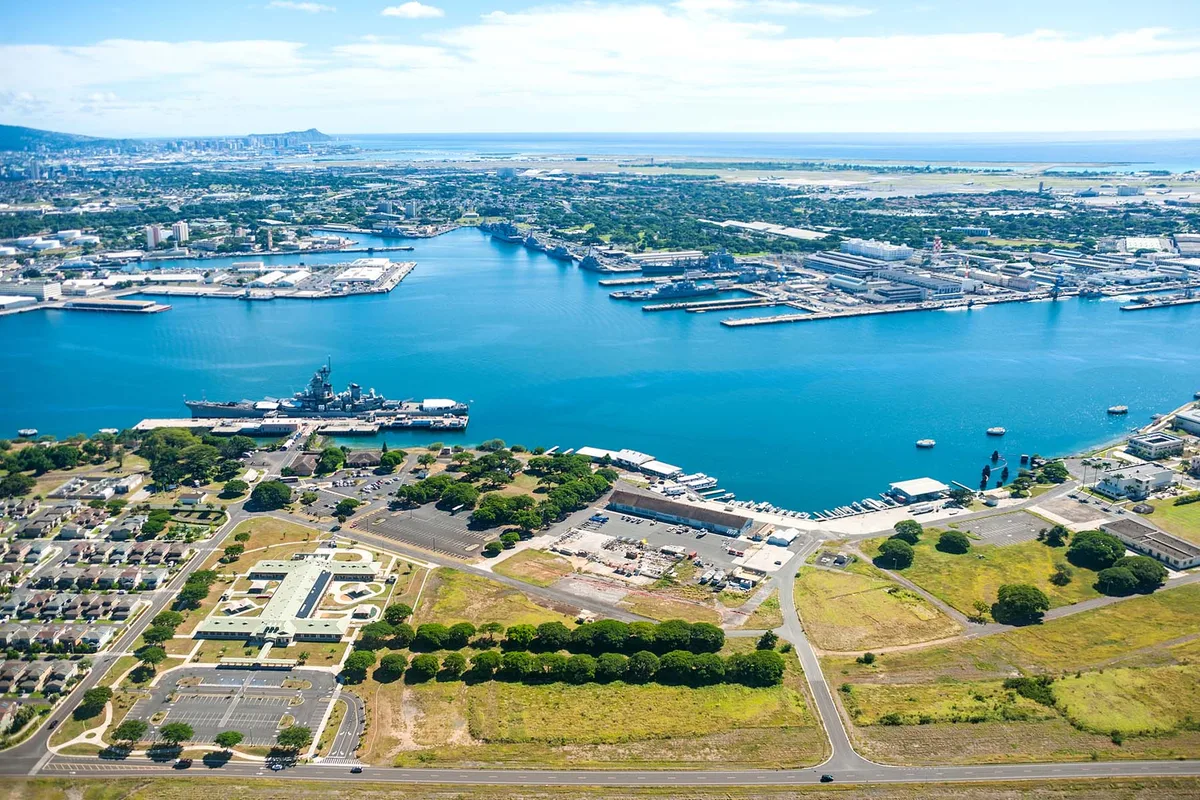
Image source: Bing (Web (fair-use with source credit))
If you are trying to find out how many military bases on Oahu exist today, the answer depends on how you count them. The island hosts every branch of the armed forces across a tight network of active operational hubs, airfields, and support annexes. Counting them is not as simple as checking a single map label.
According to data from the U.S. Department of Defense, the military controls roughly 20 to 25 percent of the total land on Oahu. That footprint includes 5 major multi-branch base hubs and more than 20 named military reservations, communications stations, and training annexes.
Understanding how these sites fit together requires looking at both their operational commands and their geographic placement.
Quick Answer
🌺 Local Island Guide Quick Answer
There are 5 major active military base hubs on Oahu.
The island also contains over 20 separate military installations and annexes.
Every branch of the United States armed forces operates on Oahu.
The military manages nearly a quarter of the island's land.
As of 2026, Joint Base Pearl Harbor-Hickam remains the largest active installation.
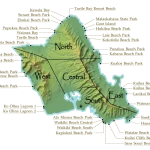
Oahu’s Military Map by Region: Why Visual Geography Matters
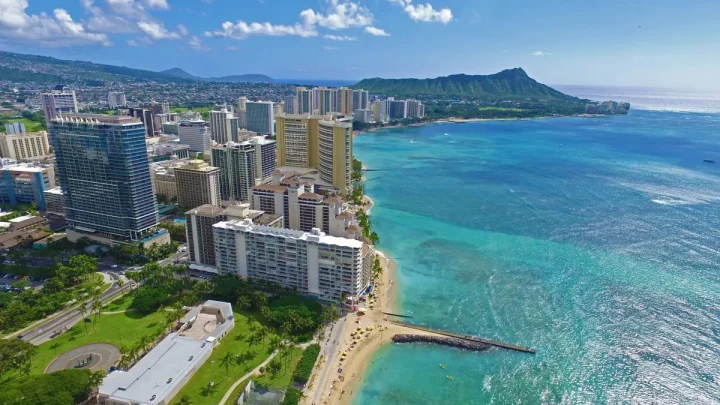
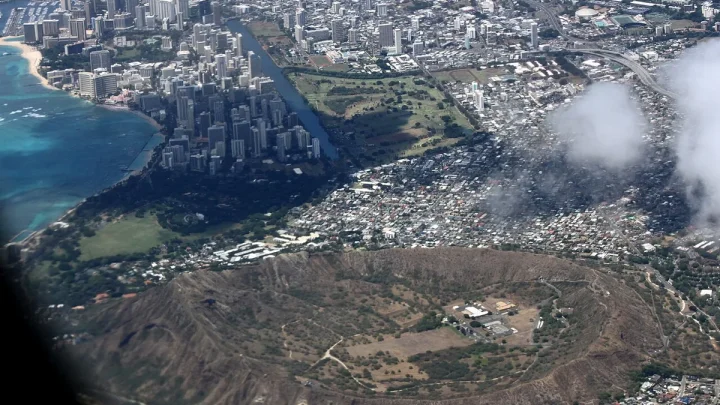
To understand Oahu's military presence, you have to picture the island's unique layout. Oahu is divided by two primary mountain ranges, the Waianae Range in the west and the Koolau Range in the east. These ridgelines naturally separate the island into distinct zones, shaping where and why each base was built.
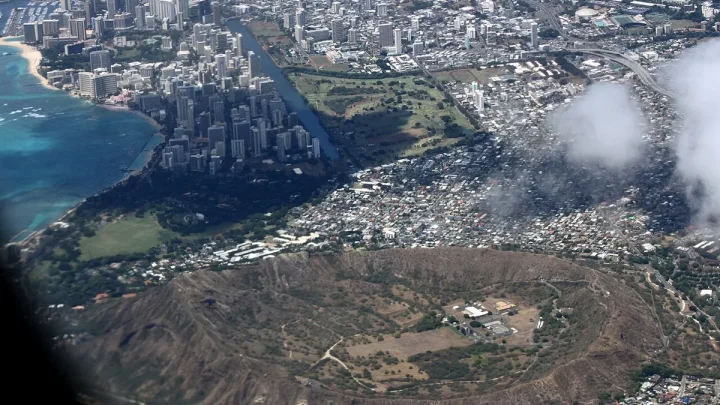
In the south, deep water and flat coastal plains support massive naval and aviation hubs like Pearl Harbor and Hickam. The central plateau between the mountain ranges offers flat terrain and high elevations, making it the historic home for large ground forces at Schofield Barracks.
The windward coast faces the open Pacific, providing direct amphibious access for the Marine Corps in Kaneohe. Meanwhile, the rugged northern and western shores offer isolated mountain terrain for tactical training, communications arrays, and radar stations.
                    [ NORTH SHORE ]
             Kahuku Training Area / Dillingham
                            |
 [ LEEWARD / WEST ]         |         [ WINDWARD / EAST ]
 Makua Valley / Lualualei   |         MCBH Kaneohe Bay
                            v         Bellows AFS
                     [ CENTRAL OAHU ]
                   Schofield Barracks
                 Wheeler Army Airfield
                            |
                            v
                    [ SOUTH SHORE ]
             Joint Base Pearl Harbor-Hickam
             Fort Shafter / Camp Smith / Tripler
The Major Active Installations: Primary Hubs and Functions
When defense officials count major operational bases on Oahu, they point to a core group of primary installations. These large hubs host the bulk of active-duty personnel, aviation wings, fleet units, and regional headquarters.
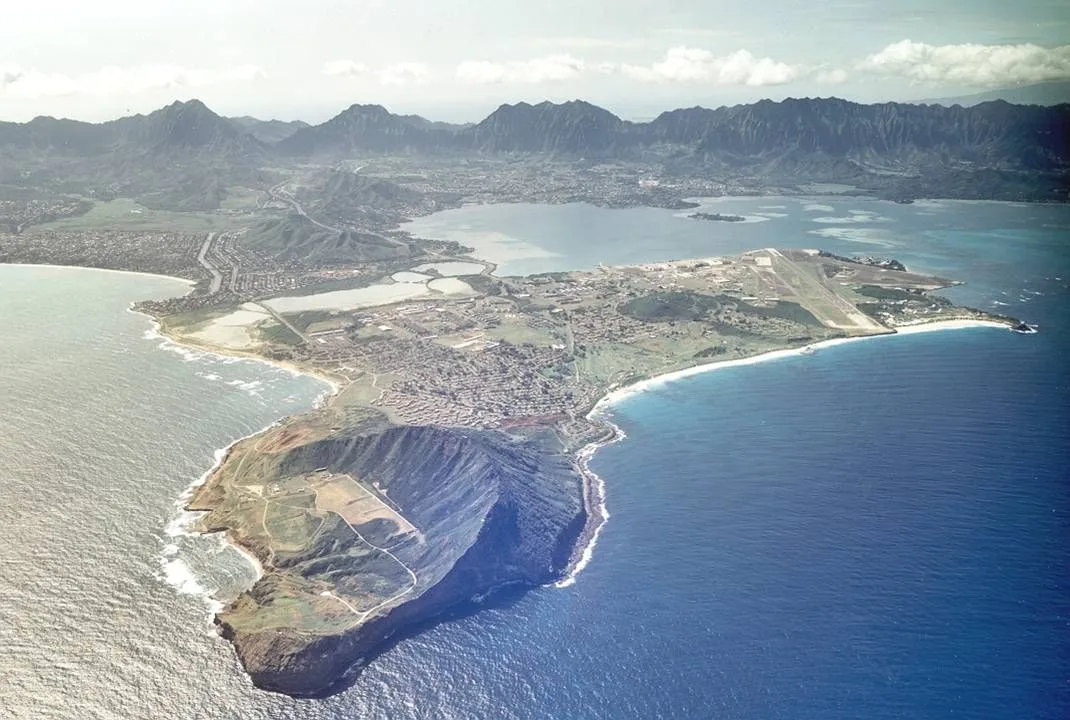
Image source: Web (Bing) / pinterest.com (Web image (fair-use with source credit))
Joint Base Pearl Harbor-Hickam (JBPHH)
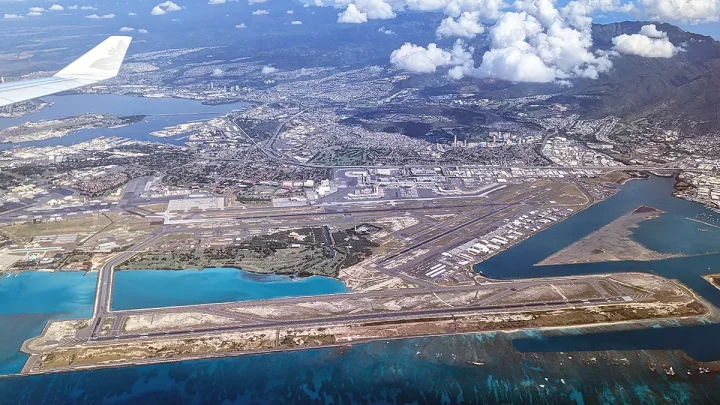
Formed by combining Naval Station Pearl Harbor and Hickam Air Force Base, JBPHH is the operational anchor of the South Shore. It provides full support for naval surface fleets, submarine squadrons, and heavy airlift wings. The base also hosts the headquarters for Pacific Air Forces and the U.S.
Pacific Fleet.
Marine Corps Base Hawaii (MCBH Kaneohe Bay)
Located on the Mokapu Peninsula on the windward side, MCBH Kaneohe Bay occupies roughly 2,951 acres. It serves as the primary home for Marine operational units, aviation squadrons, and amphibious warfare groups. The base has its own active airfield and deep-water bay access.
Schofield Barracks and Wheeler Army Airfield
Sitting in Central Oahu near Wahiawa, Schofield Barracks is the largest Army post in the state. It is home to the historic 25th Infantry Division, known as Tropic Lightning. Directly adjacent lies Wheeler Army Airfield, which houses Army aviation assets, including combat and transport helicopter units.
Fort Shafter and Camp H.M. Smith
Fort Shafter is the oldest military installation on Oahu, founded in 1907. It serves as the administrative command center for U.S. Army Pacific.
Nearby, perched on the hills above Aiea, sits Camp H.M. Smith, the headquarters for U.S. Indo-Pacific Command, overseeing all American military operations throughout the Pacific theater.
Coast Guard Base Honolulu and Barbers Point
The U.S. Coast Guard maintains a strong presence on Sand Island at Coast Guard Base Honolulu. This base supports regional cutters, patrol boats, and maritime safety units.
Coast Guard aviation assets operate out of Air Station Barbers Point at Kalaeloa on the southwest coast.
Secondary Installations, Annexes, and Training Areas
Beyond the major operational hubs, Oahu is dotted with specialized cantonments, medical campuses, and vast field training zones. These sites are vital to overall defense logistics and readiness.
Medical and Administrative Centers
Tripler Army Medical Center stands prominently on Moanalua Ridge with its coral-pink structure. It is the premier military medical facility in the Pacific Basin, providing comprehensive care to active-duty personnel, dependents, and veterans. Nearby Aliamanu Military Reservation provides extensive military family housing and community support facilities.
Dedicated Training Ranges and Reservations
The Army and Marine Corps manage several remote training areas across the island:
- Kahuku Training Area (KTA): Over 9,000 acres on the North Shore used for tactical jungle maneuvers and helicopter air assault training.
- Makua Military Reservation (MMR): A 4,000-acre valley on the Leeward Coast historically used for combined-arms maneuvers, now managed under strict environmental protocols.
- Marine Corps Training Area Bellows (MCTAB): Windward coastal acreage used for non-live-fire amphibious assault simulations and urban operations.
- Dillingham Military Reservation: A joint-use airfield and drop zone on the northwestern tip of the island used for night-vision exercises and paratroop training.
Communication, Logistics, and Fuel Sites
The Navy manages the Lualualei Naval Radio Transmitter Facility in the western valleys, broadcasting long-range signals to submarines throughout the Pacific. West Loch Annex acts as the primary munitions and ordnance storage area for the fleet. In Central Oahu, Helemano Military Reservation supports critical military communications and intelligence personnel.
Visualizing Oahu's Base Footprint: Side-by-Side Installation Breakdown
To see how these facilities differ in size, branch focus, and geographic location, refer to the breakdown below.
| Installation Name | Primary Branch | Island Region | Primary Function |
|---|---|---|---|
| JB Pearl Harbor-Hickam | Navy / Air Force | South Shore | Naval fleet support, heavy airlift, air defense |
| MCBH Kaneohe Bay | Marine Corps | Windward Coast | Amphibious strike, rotary aviation, coastal defense |
| Schofield Barracks | Army | Central Oahu | Infantry command, light tactical ground combat |
| Wheeler Army Airfield | Army | Central Oahu | Combat aviation, air cavalry, airfield operations |
| Fort Shafter | Army | South Shore | Theater Army command and administration |
| Camp H.M. Smith | Joint (USMC Lead) | South Shore | Joint combatant command headquarters |
| Tripler AMC | Army (Joint Use) | South Shore | Regional tertiary military medicine and trauma care |
| Base Honolulu | Coast Guard | South Shore | Maritime law enforcement, search and rescue |
| Kahuku Training Area | Army | North Shore | Jungle warfare, field exercises, land navigation |
| Lualualei Facility | Navy | Leeward Coast | Strategic submarine radio telecommunications |
| Bellows AFS / MCTAB | Air Force / USMC | Windward Coast | Amphibious training and military recreation |
Every site in this network plays a role in national defense, disaster response, and regional security across the Pacific.
Navigating Military Oahu: Traffic Corridors, Inter-Base Commuting, and Access
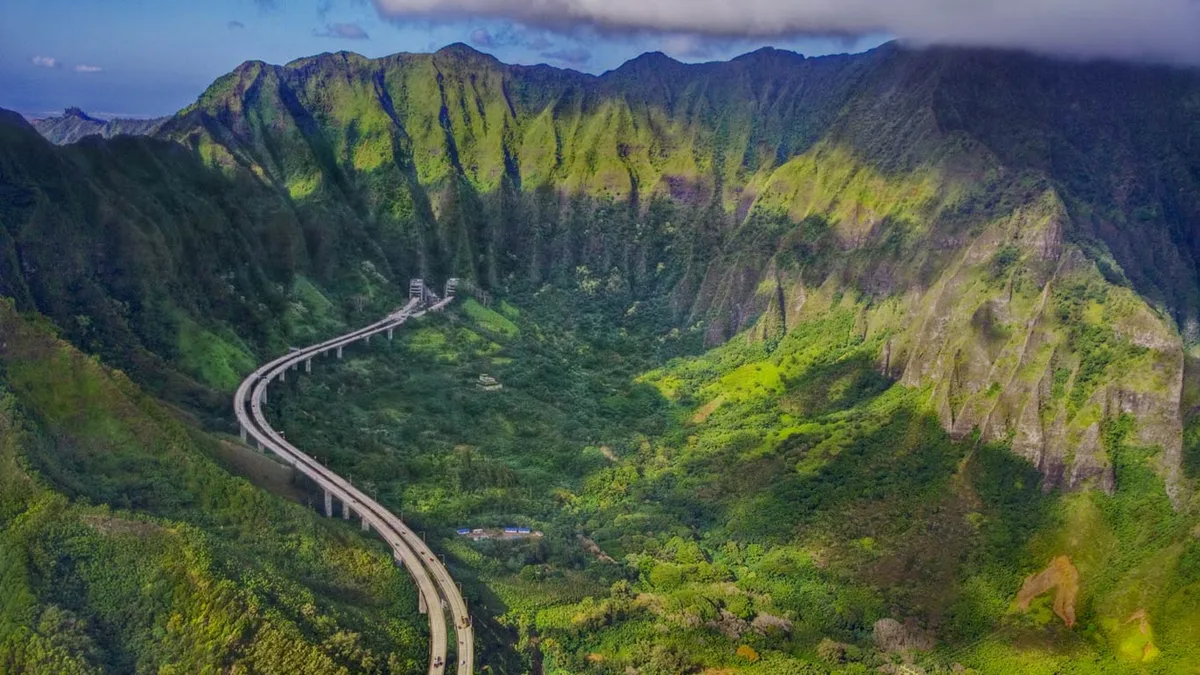
Image source: Web (Bing) / peapix.com (Web image (fair-use with source credit))
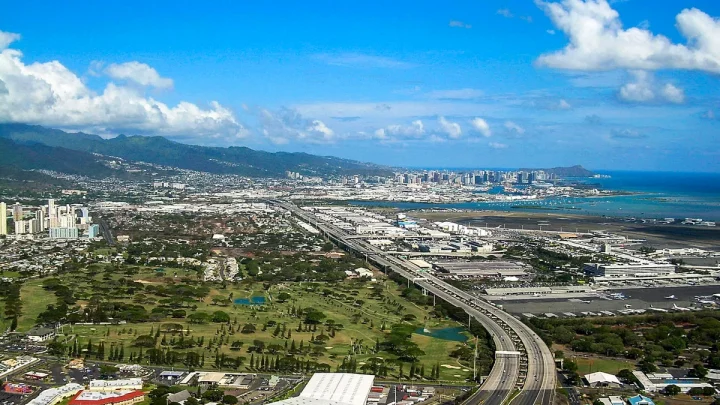
Moving between installations on Oahu requires understanding the island's unique transit bottlenecks. Because mountain ranges separate the major bases, travel options are limited to specific highway corridors.
The Critical Highway Arteries (H-1, H-2, and H-3)
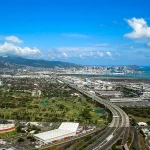
Interstate H-3 was specifically funded under defense authorizations to link Joint Base Pearl Harbor-Hickam with Marine Corps Base Hawaii. It cuts directly through the Koolau Mountains via the Tetsuo Harano Tunnels, offering the fastest route between the south and windward coasts.
Interstate H-2 links Pearl Harbor directly north to Schofield Barracks and Wheeler Army Airfield. Interstate H-1 carries high-density traffic across the southern urban corridor from Kapolei past JBPHH, Fort Shafter, and downtown Honolulu.
Commuter traffic peaks sharply during physical training hours around 0530, as well as during afternoon shift changes between 1530 and 1730. Planning your travel around these specific gate release windows can save significant transit time.
Access Control and Gate Rules
All active installations enforce strict entry procedures under Department of Defense security regulations. You must present a valid Common Access Card (CAC), Uniformed Services ID, or an approved pass issued through the Defense Biometric Identification System (DBIDS).
Visitors without a military ID sponsor must register at base pass and ID offices. You will need a REAL ID-compliant driver's license, current vehicle registration, safety inspection documentation, and valid proof of auto insurance.
Frequently Asked Questions About Oahu’s Military Installations
Which military branch has the largest presence on Oahu?
The U.S. Army maintains the largest active-duty personnel presence on Oahu. The 25th Infantry Division and U.S.
Army Pacific represent thousands of soldiers stationed between Schofield Barracks, Fort Shafter, and Wheeler Army Airfield. The Navy follows closely behind with fleet personnel across Pearl Harbor.
Can civilians access military bases on Oahu?
Civilians cannot freely enter active operational bases without a valid military ID or an approved visitor pass. Certain historical landmarks, such as the Pearl Harbor National Memorial, welcome public visitors daily. However, moving beyond security checkpoints requires an active sponsor and security credential vetting.
Is Pearl Harbor separate from Hickam Air Force Base?
Pearl Harbor and Hickam Air Force Base merged into a single operational entity in 2010. This joint base operates under the official title of Joint Base Pearl Harbor-Hickam. While the Navy handles base operating support, Air Force and Navy units maintain their distinct command structures side by side.
Why are there so many military bases on Oahu?
Oahu serves as the strategic crossroad for American defense operations throughout the Indo-Pacific. Its deep natural harbors, central geographic position, and established logistics networks make the island an ideal command center. The footprint allows coordinated sea, air, and land rapid deployment across the entire Pacific theater.
What is the difference between Schofield Barracks and Fort Shafter?
Schofield Barracks serves as the primary tactical ground combat hub, housing combat brigades and aviation units in Central Oahu. Fort Shafter functions as the primary administrative and theater command headquarters on the South Shore. Fort Shafter focuses on high-level operational planning rather than field unit housing.
Final Takeaways for Stationing, Visiting, or Living Near Oahu Bases
Understanding Oahu's military footprint comes down to recognizing the difference between primary operational hubs and supporting cantonments. While there are 5 major base complexes on the island, the full Department of Defense footprint covers more than 20 distinct sites.
If you are moving to Oahu on Permanent Change of Station (PCS) orders, map your daily commute carefully. Living on the wrong side of a mountain pass can turn a simple ten-mile drive into an hour-long gridlock. Focus on housing near your specific installation corridor to keep travel manageable.
For visitors, researchers, and new residents, Oahu's base distribution shows how deeply military infrastructure is woven into local history and daily life. From coastal naval berths to ridgeline radio towers, each base contributes to the island's strategic role across the Pacific.
🥾 Field-Tested Gear: Hawaii Trail & Sightseeing Protection
From rugged Kualoa filming valleys to sharp volcanic ridgelines, tackle Oahu’s premier attractions safely with trail-proven footwear and sun protection:
- High-Traction Breathable Water Hiking Shoes:Check Quick-Dry Water Hiking Shoes on Amazon →
- UPF 50+ UV Sun Protection Long-Sleeve Rash Guard:Check UPF 50+ Sun Protection Shirts on Amazon →
*FTC Disclosure: As an Amazon Associate, Hawaii Travel Bureau earns from qualifying purchases. Learn more about our field-tested travel research methodology.*
🌺 Related Hawaii Sights, Culture & Filming Guides:

Similar Posts