Where to See Manta Rays in Oahu: The Best Spots
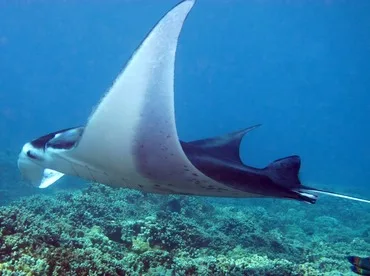
If you are searching for where to see manta rays in Oahu, the honest truth might surprise you. Oahu does not have dedicated manta ray night tours or large resident populations like neighboring islands do.
Marine observation logs show that wild manta encounters on Oahu occur on fewer than ten percent of coastal dives. Understanding where wild rays occasionally cruise, or knowing when to take a quick island hop, will make sure your Hawaii vacation meets your expectations.
Image source: Bing (Web (fair-use with source credit))
Quick Answer
🌺 Local Island Guide Quick Answer
Oahu has no guaranteed manta ray tours. Wild manta rays visit western dive sites like Makaha Caverns occasionally. Most rays seen along Oahu beaches are spotted eagle rays.
Kona on Hawaii Island offers true guaranteed manta night snorkels.
The Reality of Seeing Manta Rays on Oahu
If you browse tour brochures in Waikiki, you will not find dedicated manta ray night swims. That is because the coastal topography of Oahu differs significantly from the Big Island of Hawaii. Oahu lacks the concentrated nearshore drop-offs and sheltered embayments where zooplankton aggregates heavily under artificial lights.
Reef manta rays (Mobula alfredi) do live in the waters surrounding Oahu, but they remain nomadic and pelagic. They travel along the outer drop-offs of the Waianae Coast and North Shore to feed on seasonal plankton blooms or visit deep cleaning stations.
Seeing a manta ray on Oahu is an opportunistic thrill rather than a scheduled excursion. When you book a snorkel or scuba charter on Oahu, treat any manta sighting as a lucky bonus. If an operator promises a guaranteed manta encounter on Oahu, look elsewhere.
Reliable oversight by the Hawaii Division of Aquatic Resources protects these wild populations, ensuring operators cannot use harmful corralling or feeding tactics.
Identifying Your Ray: Manta Rays vs. Spotted Eagle Rays
Most visitors who spot a large, graceful ray gliding over an Oahu reef have actually encountered a spotted eagle ray (Aetobatus narinari), known locally as hīhīmanu. Both species are magnificent, but they have distinct physical traits and feeding behaviors.
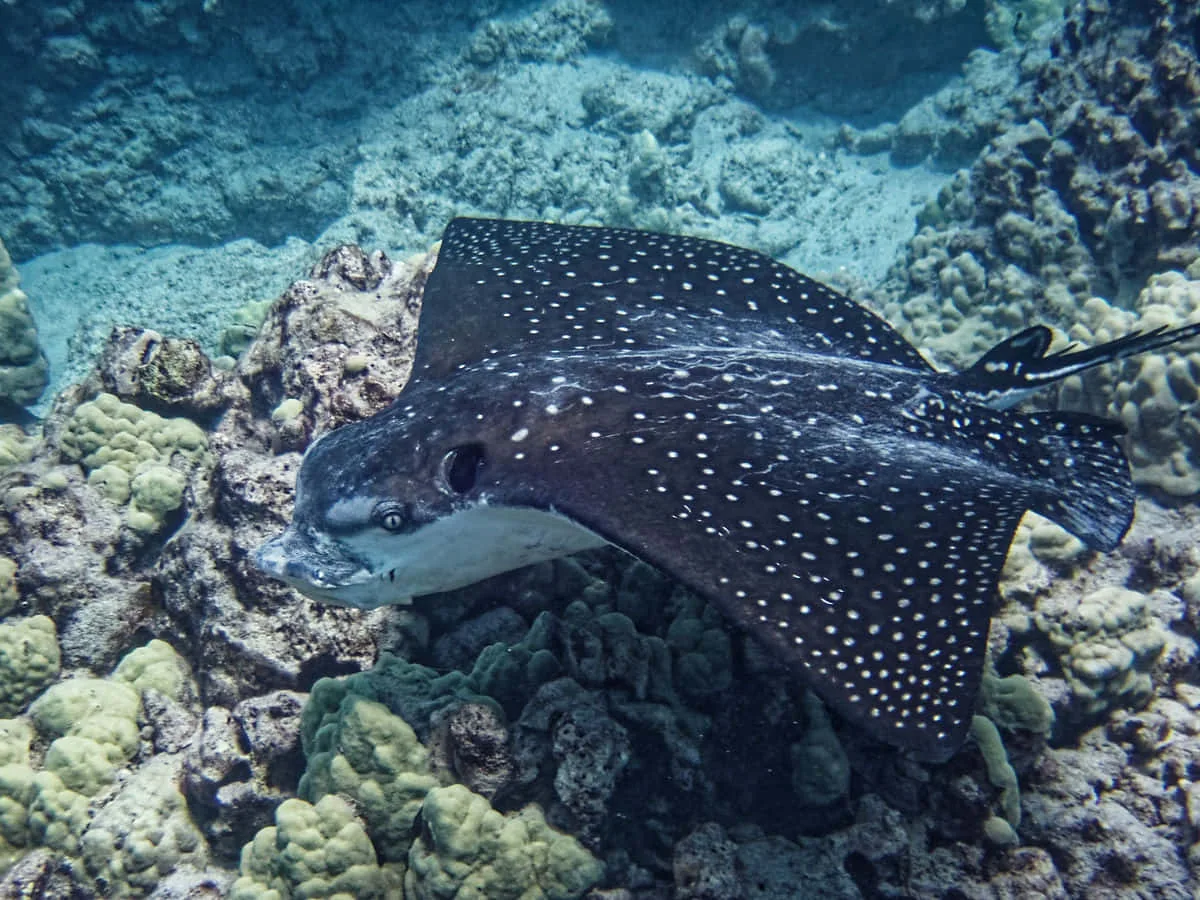
Image source: Web (Bing) / wallpapers.com (Web image (fair-use with source credit))
Manta rays possess a forward-facing mouth flanked by two flexible cephalic fins that unroll to funnel plankton into their throats. They have no stinging barb on their tails and feed continuously in the water column. Spotted eagle rays feature a distinct duck-billed snout on the underside of their heads, bright white spots across their dark backs, and a venomous barb near the base of a long, whip-like tail.
| Feature | Reef Manta Ray (Mobula alfredi) | Spotted Eagle Ray (Aetobatus narinari) |
|---|---|---|
| Wingspan | 10 to 14 feet | 4 to 6 feet |
| Mouth Position | Forward-facing (terminal) | Underside of head (ventral snout) |
| Diet | Microscopic zooplankton | Crustaceans, mollusks, worms |
| Tail Barb | None (harmless tail) | Venomous barb present |
| Back Pattern | Solid black or dark chevron patterns | Dark background with white rings or spots |
| Oahu Frequency | Rare and nomadic | Common across shallow sand flats |
The Decision Flow: Choosing the Right Ray Encounter for Your Trip
To get the exact marine life experience you want, match your travel plans to your comfort level in the water and your personal priorities.
                  [What is your primary ray-watching goal?]
                                     |
         +---------------------------+---------------------------+
         |                                                       |
[Casual beach snorkeling]                              [Guaranteed manta encounter]
         |                                                       |
[Explore Oahu shallow reefs]                           [Book a day trip to Kona]
 (Kahe Point, Hanauma Bay)                              (45-min flight from HNL)
         |                                                       |
(Expect Eagle Rays & Honu)                             (90%+ Manta Night Snorkel)
         |
         v
[Scuba certified diver?]
  - YES: Book Makaha Caverns / Waianae boat dive
  - NO:  Stick to safe shore snorkels at Shark's Cove
- If you prefer to stay on Oahu and snorkel from the beach: Focus on west-coast reefs and shallow sandy bays. You will likely see spotted eagle rays, green sea turtles (honu), and reef fish, with a slim chance of a passing manta.
- If you are a certified scuba diver staying on Oahu: Book a two-tank charter to the Waianae Coast. Deep ledges and offshore cleaning stations offer the best wild pelagic encounter rates on the island.
- If your bucket-list dream is swimming alongside massive mantas: Plan a single-day flight to Kona on the Big Island. That is the only place in the state with structured, high-probability manta night encounters.
Top Oahu Snorkel and Dive Sites for Ray Sightings
If you want to maximize your chances of seeing rays in the wild while staying on Oahu, certain locations offer significantly better odds due to water clarity, currents, and bottom structure.
1. Kahe Point Beach Park (Electric Beach)
Located on Oahu's west shore, this site sits next to an electric power plant that discharges clean, warm cooling water into the ocean. The warm outflow attracts massive clouds of baitfish, invertebrates, and plankton. Both spotted eagle rays and occasional reef mantas patrol the edge of the pipe discharge in 15 to 30 feet of water.
Entry requires swimming through beach shorebreak, so bring fins and check the surf forecast first.
2. Makaha Caverns
Makaha is the premier scuba diving site on the Waianae Coast. Underwater lava tubes and caverns sit at depths of 30 to 45 feet. Cleaner wrasses inhabit the reef tops here, creating active cleaning stations.
Wild manta rays occasionally stop at these stations to let small fish pick parasites from their skin and gills. This site is best accessed by a licensed dive boat out of Waianae Boat Harbor.
3. Shark's Cove and Three Tables (Pupukea Marine Life Conservation District)
During the calm summer months from May through September, the North Shore offers spectacular water clarity. The rocky shelves and sand channels inside this marine preserve frequently attract spotted eagle rays feeding on crabs in the sand. Manta rays occasionally pass by the outer ledges in deeper water.
Winter ocean swells make this entire area dangerous, so snorkel here only during summer flat spells.
4. Kaneohe Bay Barrier Reef
The protected inner patch reefs and outer barrier reef of Kaneohe Bay on the Windward Coast provide calm, nutrient-rich water. While scuba divers rarely visit due to low visibility in the lagoon, kayakers and snorkelers frequently observe spotted eagle rays foraging in the shallow sand flats.
The Guaranteed Alternative: How to Do the Kona Manta Trip from Oahu
If you want to ensure you see feeding manta rays up close, the world-famous manta night snorkel in Kailua-Kona is unbeatable. As of 2026, local tour logs in Kona report sighting success rates between 85% and 95% year-round.
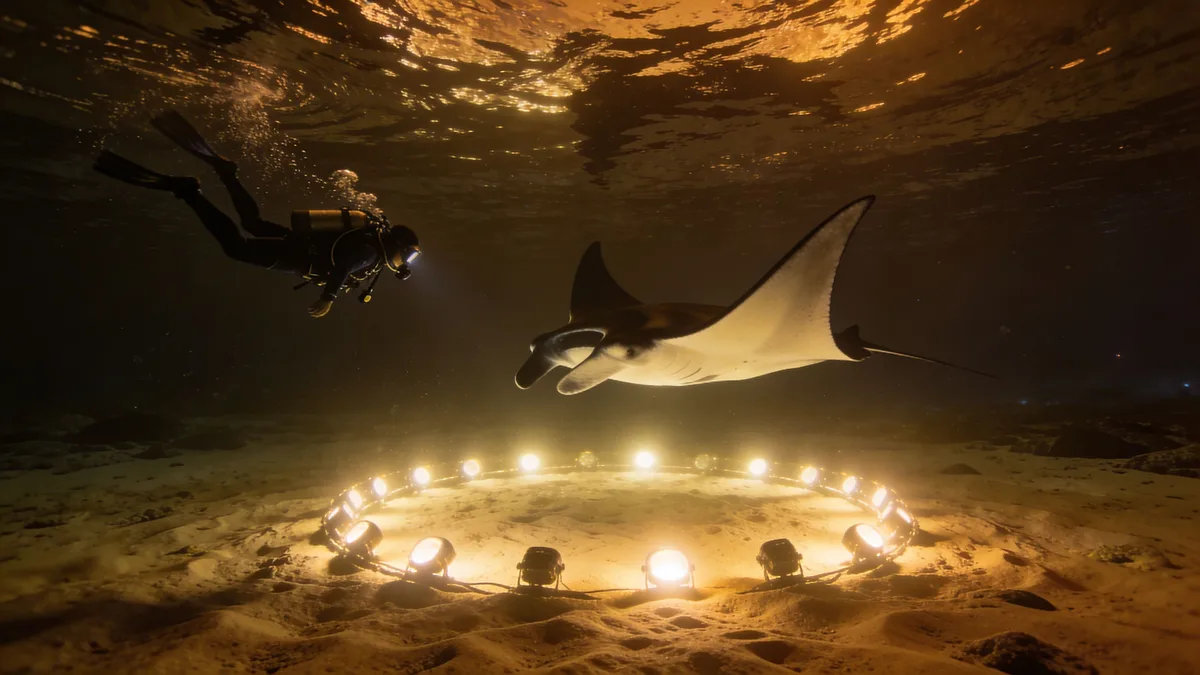
Image source: Bing (Web (fair-use with source credit))
Doing a same-day trip from Honolulu (HNL) to Kona (KOA) is straightforward and popular among travelers based on Oahu.
- Book a morning or early afternoon flight: Hawaiian Airlines and Southwest offer multiple 45-minute inter-island flights each day between HNL and KOA.
- Arrange ground transportation: Rent a car or take a short ride-share from Kona International Airport to Keauhou Bay or Honokohau Harbor.
- Join a sunset manta tour: Tour operators bring you out at dusk. Snorkelers hold onto floating light boards that illuminate the water column below. High-powered lights attract swarms of plankton, drawing giant manta rays directly to the surface to feed in barrel rolls.
- Choose your return schedule: Book the final late-night flight back to Honolulu, or stay one night in Kona and catch an early flight back to Oahu the next morning.
Essential Ray Etiquette and Wildlife Protection Laws in Hawaii
Hawaii has strict legal protections for all ray species. Under Hawaii Revised Statutes Section 188-39.5, it is illegal to kill, capture, or harm manta rays within state waters. Violations carry substantial fines and criminal penalties.
When you encounter any ray in the ocean, practice passive observation. The NOAA Fisheries Pacific Islands Regional Office recommends maintaining a distance of at least 10 feet. Give the animal plenty of open water so it never feels cornered against a reef wall.
Never touch a manta ray or spotted eagle ray. Touching removes their protective mucus layer, leaving their skin vulnerable to harmful bacterial infections.
Float calmly at the surface and keep your movements gentle. Avoid splashing, kicking rapidly, or diving directly on top of the animal. If you stay still, rays will often cruise directly underneath you out of natural curiosity.
Common Mistakes Snorkelers Make When Hunting for Rays on Oahu
Planning an ocean excursion requires realistic expectations. Avoiding a few frequent missteps will save you money and keep you safe in the water.
- Booking unverified Oahu manta tours: Some third-party ticket brokers list generic Hawaii manta snorkel packages that actually operate in Kona. Always verify the harbor departure location before entering your credit card details.
- Visiting North Shore dive sites during winter: Between October and April, massive North Pacific swells hit places like Shark's Cove. Snorkeling in these conditions brings zero visibility and severe current hazards. Save northern reefs for the summer months.
- Chasing rays across shallow reefs: Swimming aggressively after a spotted eagle ray causes it to flee immediately. Float motionless above sand channels and let the ray forage naturally.
- Neglecting surf and wind reports: Shore entries at Kahe Point require swimming through coastal shorebreak. Check local swell models before packing your gear to ensure safe entries and exits.
Frequently Asked Questions About Oahu Manta Rays
Can you swim with manta rays on Oahu?
You can encounter wild manta rays while snorkeling or scuba diving on Oahu, but sightings are rare and unguided. Oahu does not offer commercial manta ray night tours. If you want an organized swim with guaranteed sightings, book an excursion in Kailua-Kona on Hawaii Island.
Where are you most likely to see rays on Oahu?
Kahe Point Beach Park and Makaha Caverns on the west coast provide the highest probability of ray sightings on Oahu. For spotted eagle rays, shallow sand channels at Shark's Cove in summer or Hanauma Bay offer frequent viewing opportunities.
What is the best time of year to see rays on Oahu?
Summer months from May through September offer the best ocean conditions. Calm seas improve underwater visibility across the North Shore and West Coast. Winter swells reduce water clarity and close many top snorkeling sites along exposed shorelines.
Are the rays in Oahu dangerous to swimmers?
Manta rays have no stingers, teeth, or barbs, making them completely harmless to humans. Spotted eagle rays possess a venomous barb at the base of their tail for defense. They are docile creatures and will not strike unless stepped on, grabbed, or cornered.
How much does a day trip to Kona cost from Oahu?
A same-day trip from Honolulu to Kona typically costs between $300 and $500 per person. This budget includes round-trip inter-island airfare, a rental car or rideshare, and the guided evening manta ray night snorkel charter.
ðŸ–ï¸ Field-Tested Gear: Hawaii Beach & Ocean Protection
To protect Oahu’s fragile coral reef ecosystems and navigate sharp volcanic basalt shorelines comfortably, our on-island team recommends packing these certified travel essentials:
- Hawaii Act 104 Reef-Safe Mineral Sunscreen:Check Certified Mineral Reef Sunscreen on Amazon →
- Heavy-Duty Waterproof Dry Bag & Phone Pouch:Check Waterproof Ocean Dry Bags on Amazon →
*FTC Disclosure: As an Amazon Associate, Hawaii Travel Bureau earns from qualifying purchases. Learn more about our field-tested travel research methodology.*
🌺 Related Oahu Ocean, Beach & Snorkel Guides:

Similar Posts