Where to See Big Waves on Oahu: Best Viewing Spots
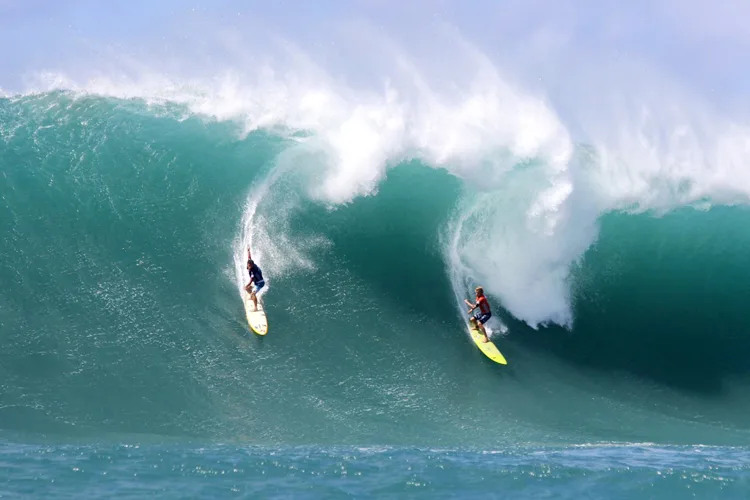
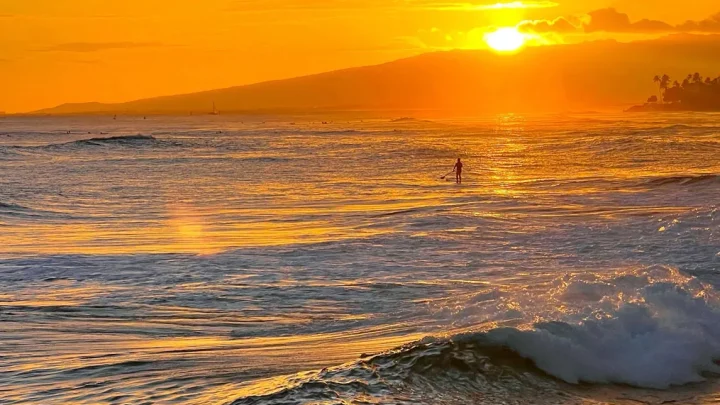
Finding where to see big waves in Oahu comes down to timing your visit with ocean swell cycles. Oahu's legendary surf does not break year-round. It peaks during distinct winter weather patterns that send massive groundswells straight toward the northern reefs.
During peak winter months, wave faces frequently reach heights between 20 and 50 feet along the Seven Mile Miracle. The National Weather Service Honolulu regularly issues high surf warnings when face heights exceed 25 feet. Understanding these seasonal shifts ensures you arrive when the ocean is actually performing.
Image source: Web (Bing) / epicsurf.com.au (Web image (fair-use with source credit))
Quick Answer
🌺 Local Island Guide Quick Answer
The best places to see big waves in Oahu are on the North Shore. Visit between November and February for massive swells. Top spots include Banzai Pipeline, Waimea Bay, and Sunset Beach.
Waimea Bay needs massive 30-foot faces to break properly. Pipeline offers the closest view of heavy barreling waves.
When to Catch Big Waves on Oahu: Seasonality and the Hawaiian Scale
Oahu has two distinct ocean seasons. The North Shore goes completely flat in the summer, looking more like a calm swimming pool than a world-class surf venue. Winter changes everything.
From October through March, deep low-pressure storms near Alaska and Japan push powerful energy across the Pacific toward Hawaii.
Peak swell activity occurs from November through February. As of 2026, real-time buoy networks confirm that the biggest swells reliably arrive during this four-month window. If you visit between May and September, you will not see large waves on the North Shore.
During summer, ocean swells shift entirely to the South Shore around Waikiki, producing fun summer waves that rarely exceed 6 to 8 feet.
Understanding wave height reports in Hawaii requires learning the Hawaiian scale. Local surf reports measure waves from the back of the swell rather than the breaking front face.
- Local Hawaiian Scale: A "10-foot wave" in Hawaii refers to the crest-to-trough back measurement.
- Wave Face Height: That same wave has an actual front breaking face of 18 to 20 feet.
- Double Overhead: Waves breaking twice the height of a standing surfer, usually around 12-foot faces.
- Triple Overhead / XL Surf: Waves measuring 18-foot faces and larger, common during winter warnings.
When news outlets or surf forecasts announce a 15-foot Hawaiian swell, prepare for 30-foot walls of water slamming into the shoreline reefs.
The Three Forecast Variables That Dictate Where Waves Break
Watching big waves successfully requires checking ocean data before getting in the car. Three main variables determine whether a break is firing or completely messy.
First, check the swell direction. Northwest (NW) and West-Northwest (WNW) swells provide the ideal angle for Pipeline and Waimea Bay. Pure North (N) swells bypass certain reefs but light up Sunset Beach and eastern North Shore breaks.
Second, check the swell period, which is measured in seconds between wave crests. You can monitor open-ocean readings via the NOAA National Data Buoy Center Northwest Hawaii buoys.
- Short-Period Swell (8 to 11 seconds): Choppy, weak windswell with disorganized peaks.
- Medium-Period Swell (12 to 14 seconds): Clean, standard surf with consistent sets.
- Long-Period Groundswell (15 to 22 seconds): Massive open-ocean energy that stands up violently over shallow reefs, creating true big-wave conditions.
Third, look at local wind conditions. The North Shore requires East or Northeast trade winds to stay clean. These winds blow offshore against the incoming wave faces, holding the barrels open and preventing messy surface chop.
The Big Wave Decision Matrix: Where to Go Based on Swell Size
Different surf breaks need specific swell volumes to work. If you head to the wrong beach on a moderate swell, you might see nothing. If you go to a shallow reef on an oversized swell, the waves will simply wash out.
Use this decision workflow to pick your viewing spot based on current Hawaiian scale forecasts:
| Swell Size (Hawaiian Scale) | Wave Face Height | Best Viewing Location | What You Will Experience |
|---|---|---|---|
| 4 to 8 feet | 8 to 14 feet | Banzai Pipeline, Haleiwa Beach Park | Clean, peeling barrels and high-performance surfing close to shore. |
| 8 to 15 feet | 15 to 25 feet | Banzai Pipeline, Sunset Beach | Heavy, spitting barrels and powerful wide-angle deepwater drops. |
| 15 to 20+ feet | 25 to 40+ feet | Waimea Bay, Sunset Beach, Makaha | Waimea begins breaking across the bay with ground-shaking drop-ins. |
| 20 to 30+ feet (Giant/XXL) | 40 to 60+ feet | Waimea Bay, Outer Reefs (Phantoms) | True big-wave territory. Pipeline closes out; Waimea Bay becomes a spectator arena. |
If the swell is under 10 feet Hawaiian, skip Waimea Bay because the bay requires massive deepwater energy to break at all. Head straight to Ehukai Beach Park instead.
If the swell reaches 20 feet Hawaiian, Pipeline will "close out," meaning waves break uncontrollably across the entire channel. When this happens, direct your route to Waimea Bay or head around the point to Makaha on the West Coast.
Oahu's Best Big Wave Viewing Spots Compared
Every major North Shore break offers a unique vantage point, crowd dynamic, and wave character.
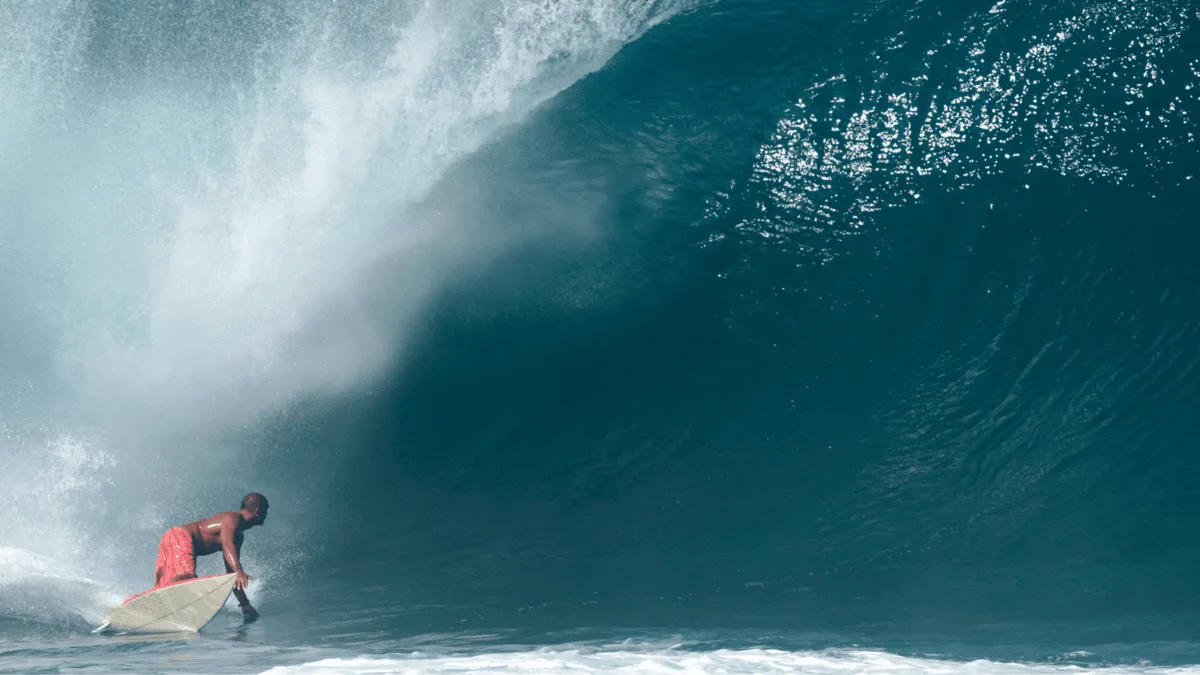
Image source: Web (Bing) / hawaii.gaycities.com (Web image (fair-use with source credit))
Banzai Pipeline (Ehukai Beach Park)
Pipeline provides the most dramatic close-up surf spectacle on earth. The wave breaks over a shallow cavernous reef just 50 to 100 yards off the sand. You can clearly see surfers taking vertical drops into hollow, cavernous barrels.
- Best Viewing Angle: Sit directly on the elevated sand berm in front of the lifeguard tower.
- Ideal Conditions: 6 to 12-foot Hawaiian swell from the West-Northwest with light offshore trade winds.
- Spectator Drawback: Parking is extremely scarce, with only roughly 30 public stalls in the main lot.
Waimea Bay Beach Park
Waimea is the birthplace of modern big-wave surfing. When massive winter swells overwhelm other spots, Waimea turns into a natural stadium. Waves break across the mouth of the bay, sending giant walls of whitewater racing toward the beach.
- Best Viewing Angle: Walk up to the high perimeter berm or sit on the rock cliffs on the bay's left side.
- Ideal Conditions: 15 to 25+ foot Hawaiian swell from the Northwest.
- Spectator Drawback: Shorebreak surges at the water's edge are violent and can drag standing onlookers into deep water.
Sunset Beach Park
Sunset features a broad, shifting playing field that extends a quarter-mile out to sea. The wave is known for massive, thick peaks and brutal inside sections known as the Boneyard.
- Best Viewing Angle: Set up beach chairs along the wide sand stretch near the center parking lot.
- Ideal Conditions: 8 to 15-foot Hawaiian swell from the North or Northwest.
- Spectator Drawback: The break sits much farther from shore than Pipeline, so binoculars or telephoto camera lenses are essential.
Makaha Beach Park (West Oahu)
When northwest swells are too unruly on the North Shore, Makaha on Oahu's leeward coast lights up. Waves wrap around the western point over a deep bowl, offering long rights and heavy wall sections. It offers a great alternative if you want to avoid North Shore traffic jams.
How to Plan Your Swell-Chasing Day Along Kamehameha Highway
Watching big waves on Oahu requires smart logistical planning. Kamehameha Highway is a narrow, two-lane road connecting Haleiwa to the eastern side of the island. On major swell days, thousands of spectators and local commuters share this single corridor.
Follow these practical steps to guarantee a hassle-free day:
- Depart Early in the Morning: Plan to pass through Haleiwa Town before 7:00 AM. Traffic begins backing up heavily by 8:30 AM during high surf warnings.
- Secure Legal Parking: Use dedicated beach park stalls at Waimea, Ehukai, or Sunset. If parking on the shoulder of Kamehameha Highway, ensure all four tires sit fully outside the white pavement line to avoid getting ticketed or towed.
- Pack Full Day Provisions: Food trucks and grocery stops in Haleiwa and Shark's Cove become packed by lunchtime. Carry plenty of drinking water, snacks, reef-safe sunscreen, and beach towels.
- Bring Proper Optical Gear: Bring binoculars or a camera with at least a 200mm to 400mm telephoto lens to capture surf action clearly from the sand.
- Plan Your Exit Route: If heading back toward Honolulu after 2:00 PM, consider continuing east around the island through Laie and Kaneohe. This route is often faster than sitting in Haleiwa gridlock.
Crucial Shoreline Safety Rules for Big Wave Spectators
Spectating giant surf requires constant situational awareness because shorebreak waves surge unexpectedly up the sand. Even when sitting far from the water, rogue wave sets can sweep over dry sand and knock spectators off their feet.
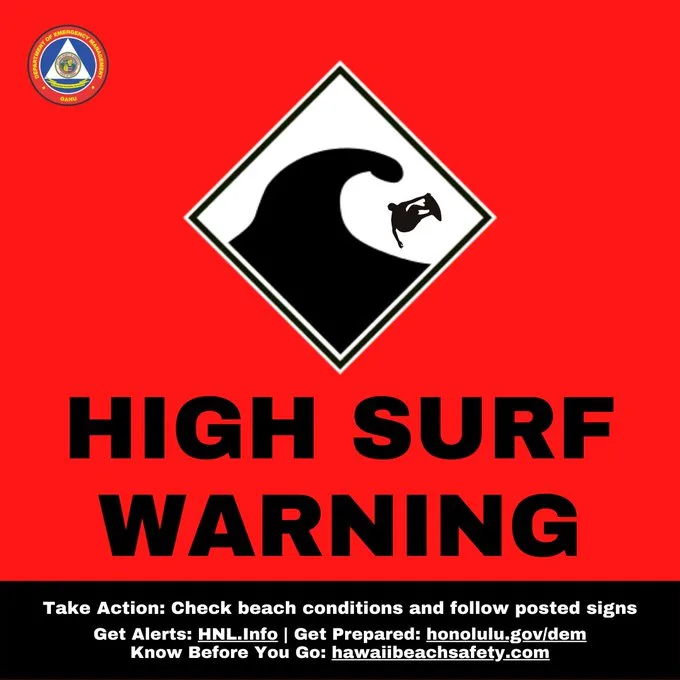
Image source: Web (Bing) / thenwfireblog.com (Web image (fair-use with source credit))
Follow these safety rules established by the City and County of Honolulu Ocean Safety Division:
- Obey the Wet Sand Rule: Never place towels, cameras, or chairs on dark, packed sand. Wet sand marks the reach of recent high-tide surges. Set up your camp well above the high-water berm.
- Never Turn Your Back on the Ocean: Large swell sets arrive in pulses every 15 to 20 minutes. A calm shoreline can become flooded by a sudden surge within seconds.
- Stay Completely Out of the Water: During high surf advisories and warnings, entering the ocean at North Shore beaches is prohibited for non-experts. Shorebreak currents produce severe spinal injuries and sudden drownings.
- Respect Lifeguard Warnings: Lifeguards actively broadcast warnings over beach PA speakers. If a lifeguard tells you to move up the beach, grab your gear and move immediately.
- Stay Clear of Sand Dune Edges: Heavy winter surf erodes the base of beach berms. Standing on loose, undercut sand ledges can cause them to collapse beneath you.
Frequently Asked Questions About Watching Big Waves on Oahu
Can you see big waves in Oahu during summer?
No, big waves do not break on Oahu's North Shore during the summer. Between May and September, northern beaches remain calm and flat. Summer swells hit the South Shore around Ala Moana and Waikiki instead, but these waves rarely exceed 6 to 8-foot faces.
What is the best month to see big waves in Oahu?
December and January are the best months to see massive waves on Oahu. This peak window produces the most consistent Northwest groundswells. Powerful storm activity across the North Pacific frequently triggers high surf warnings during these two months.
Where is the safest place to watch big waves on the North Shore?
Waimea Bay Beach Park is the safest place to watch giant waves. The beach features a wide, elevated sand berm and high rocky perimeter bluffs. These natural elevated viewing areas keep you well above sweeping ocean surges while providing panoramic views.
Do I need tickets to watch the big wave surf competitions?
No, major surf contests on Oahu are free public spectator events. Contests like the Billabong Pro Pipeline and the Vans Triple Crown take place at public beach parks. You simply walk onto the sand, find an open spot, and watch.
How far away are the waves from the beach at Pipeline?
Waves at Banzai Pipeline break roughly 50 to 100 yards from the sand. This close proximity makes Pipeline the most intimate big-wave viewing location in Hawaii. Spectators on the beach can clearly hear the wave barrels collapsing over the shallow reef shelf.
ðŸ–ï¸ Field-Tested Gear: Hawaii Beach & Ocean Protection
To protect Oahu’s fragile coral reef ecosystems and navigate sharp volcanic basalt shorelines comfortably, our on-island team recommends packing these certified travel essentials:
- Hawaii Act 104 Reef-Safe Mineral Sunscreen:Check Certified Mineral Reef Sunscreen on Amazon →
- Heavy-Duty Waterproof Dry Bag & Phone Pouch:Check Waterproof Ocean Dry Bags on Amazon →
*FTC Disclosure: As an Amazon Associate, Hawaii Travel Bureau earns from qualifying purchases. Learn more about our field-tested travel research methodology.*
🌺 Related Oahu Ocean, Beach & Snorkel Guides:

Similar Posts